Microplastics act like a Trojan horse delivering toxic pollutants and antibiotic-resistant bacteria through global agricultural soils

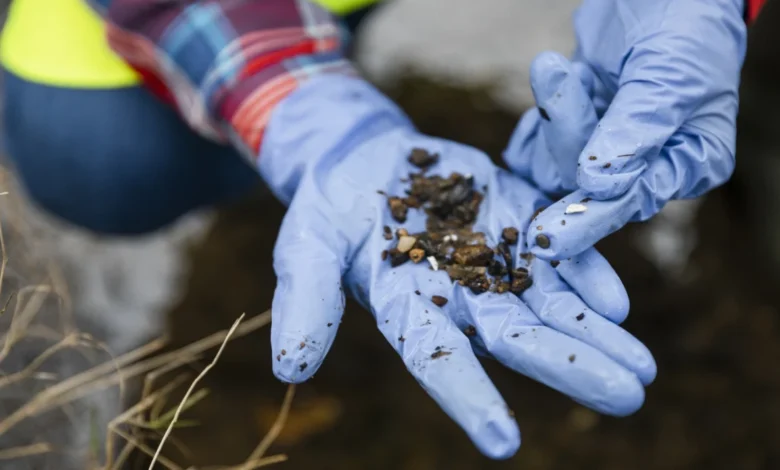
The integrity of the world’s agricultural foundations is facing an unprecedented, invisible threat. A comprehensive five-year multinational research initiative, funded by the European Union and involving a consortium of environmental scientists, has revealed that microplastics are not merely inert debris—they are active, hazardous vectors. By infiltrating the soil matrix, these microscopic plastic fragments are functioning as a "Trojan horse," carrying a toxic cargo of pesticides, heavy metals, and antibiotic-resistant genes into the very earth that produces our food supply.
The findings, derived from the extensive Minagris project, represent one of the most rigorous examinations of soil contamination to date. Researchers analyzed 227 agricultural fields across 11 European countries, finding evidence of microplastic pollution in every single site. This pervasive contamination suggests that the problem is no longer confined to oceanic gyres or urban waterways; it has become a fundamental component of the terrestrial ecosystem.
A Chronology of the Crisis: From Field to Lab
The Minagris (Micro- and Nano-plastics in Agricultural Soils) project was launched to fill a critical gap in environmental science. While ocean plastics have dominated public and political discourse for decades, soil health has remained a secondary concern. Over the past five years, the consortium—which includes the Countryside and Community Research Institute at the University of Gloucestershire—systematically sampled farmland across Europe to determine the scale of the infiltration.
The timeline of this research reflects a growing alarm within the scientific community. Initial assessments in 2021 began by identifying the types of polymers present in agricultural settings, ranging from low-density polyethylene used in greenhouse films to synthetic fibers from clothing and tire-wear particles. By 2023, the scope expanded to include the biological implications of these particles, leading to a series of 22 peer-reviewed studies that highlight the intersection of plastics with agrochemicals. By late 2026, the final synthesis of these studies confirmed the alarming reality: plastic contamination is persistent, systemic, and functionally dangerous.
The Mechanism of the Trojan Horse
The term "Trojan horse" is not merely metaphorical. It refers to the physical and chemical properties of microplastics that allow them to concentrate hazardous substances. As these plastics break down into smaller fragments, their surface area-to-volume ratio increases significantly. This creates an ideal substrate for the adsorption of hydrophobic organic pollutants, such as pesticides and herbicides commonly used in modern industrial farming.
Professor Edoardo Puglisi, a microbiologist at the Catholic University of the Sacred Heart in Piacenza, Italy, notes that the smaller the plastic particle, the more efficiently it binds with DNA, microbes, and pollutants. When these "loaded" particles enter the soil, they become focal points for chemical and biological activity.
This environment, termed the "plastisphere," serves as a hotspot for microbial interaction. The research team discovered that the plastisphere fosters an environment where antibiotic-resistant genes (ARGs) flourish. When exposed to pesticides, the rate of gene transfer among bacteria increases, creating a potential reservoir of resistance that could eventually move from the soil into the food chain.
Supporting Data: The Scale of Contamination
The data gathered from the 227 test sites paints a bleak picture of historical and contemporary land management. In Switzerland, specific studies focused on the impact of tire-wear particles—a significant source of microplastic pollution resulting from road runoff and atmospheric deposition. These studies found a direct correlation between the density of tire-wear fragments and the concentration of toxic heavy metals, such as zinc and cadmium, in the soil.
Furthermore, the impact on soil biology is profound. Earthworms, the primary engineers of soil health and nutrient cycling, are among the first to suffer. Microplastics disrupt the gut microbiome of these organisms, hindering their ability to process organic matter and cycle nutrients. When these critical ecological processes are interrupted, the long-term fertility of the soil declines.
Plant health is equally compromised. Experiments on crops like lettuce have shown that exposure to microplastics leads to measurable decreases in chlorophyll content, reduced leaf area, and lower overall biomass. These negative outcomes are exacerbated by climate-related stressors. In simulations of drought conditions, the presence of microplastics in the soil caused plants to perform significantly worse than they would under drought or plastic pollution individually, suggesting a cumulative stress effect that could threaten crop yields as global climates shift.
The Myth of Biodegradability
One of the most significant findings of the Minagris project is the debunking of the assumption that biodegradable plastics offer a panacea for soil pollution. Manufacturers have long marketed biodegradable plastics as a sustainable alternative to traditional polymers. However, the research indicates that these materials often do not break down into harmless organic matter under field conditions.
Instead, they frequently fragment into smaller, persistent microplastics that remain in the soil long after the original object has vanished. This "hidden" pollution contributes to the same Trojan horse effect as conventional plastics, proving that the shift to biodegradable materials, while well-intentioned, is not a standalone solution for soil integrity.
Official Responses and Policy Implications
The scientific consensus emerging from this project is that current environmental regulations are insufficient. Most regulatory frameworks evaluate pollutants on an individual basis, failing to account for the synergistic effects of chemicals, plastics, and microbial life acting in concert.
Esperanza Huerta Lwanga, a soil physics researcher at Wageningen University, has been vocal about the need for a paradigm shift in environmental policy. "Once these plastics fragment into the ground, they’re practically impossible to remove, acting as vectors for agrochemicals and altering critical soil ecosystems," Lwanga stated.
The research team advocates for several urgent policy interventions:
- Standardized Monitoring: Implementing a unified global standard for measuring microplastic concentrations in soil, allowing for longitudinal tracking of pollution levels.
- Manufacturer Transparency: Requiring companies to provide full chemical disclosures for plastic products used in agriculture, particularly those labeled "biodegradable."
- Integrated Risk Assessments: Moving away from single-substance toxicity tests to holistic assessments that evaluate how microplastics interact with various co-pollutants and biological species.
The Broader Impact: Food Security and Ecosystem Stability
The implications of these findings extend far beyond the laboratory. If soil quality is fundamentally altered, the ability of farmers to maintain long-term, high-yield food production is jeopardized. Soils are non-renewable resources on human timescales; once degraded by chemical and plastic saturation, they cannot be easily remediated.
The link between soil health and human health is direct. If antibiotic-resistant genes are being amplified in the plastisphere of agricultural fields, there is a legitimate concern regarding the potential for these genes to enter the human population through food consumption. While the path from soil-borne microplastics to clinical antibiotic resistance is complex and requires further study, the baseline presence of these hazards is a clear signal of ecological imbalance.
As the global population approaches 9 billion, the pressure on agricultural land to provide consistent yields is intensifying. The Minagris project serves as a stark warning: the convenience of plastic, which has revolutionized modern farming, carries a long-term debt that the planet is currently ill-equipped to pay. Addressing this will require a move toward radical transparency in the agricultural supply chain and a complete re-evaluation of how we categorize and regulate plastic materials in the environment.
The research is not just an academic exercise; it is an early-warning system. By revealing that microplastics are not merely a visual blight but a functional component of soil degradation, the scientific community has set the stage for a new era of environmental policy—one that must prioritize the long-term, invisible health of the earth over the short-term convenience of synthetic materials.
Related posts: