United Airlines Confident in Full Jet Fuel Cost Recovery Despite Recent Commodity Price Spikes

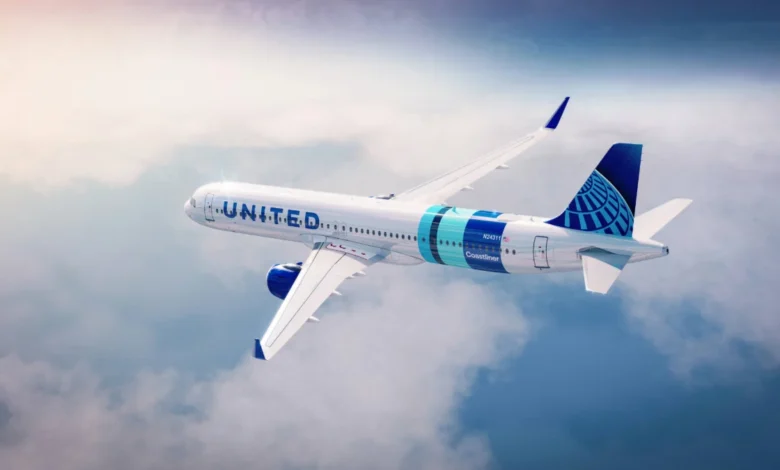
United Airlines remains steadfast in its financial strategy, projecting a complete recovery of surging jet fuel expenses by the conclusion of the fourth quarter. Speaking at the prominent Morgan Stanley Laguna investor conference, United Airlines Chief Financial Officer Michael Leskinen addressed the financial community with an optimistic outlook regarding the airline’s capacity to absorb commodity shocks. Despite a rapid and unexpected appreciation in global petroleum prices, executive leadership at the Chicago-based carrier insists that structural pricing power, combined with sustained consumer demand for upscale travel experiences, will bridge the gap between rising operational expenditures and top-line revenue.
The aviation sector has long grappled with the volatile nature of jet fuel, which historically constitutes one of the largest and most unpredictable variable expenses for commercial carriers. Leskinen acknowledged the immediate mathematical hurdles posed by sudden commodity surges, noting that forward-booking windows inherently create a temporary disconnect between market realities and realized ticket prices. Nevertheless, the airline’s overarching thesis relies heavily on the resilience of contemporary air travelers, particularly those willing to pay a premium for enhanced comfort, dedicated services, and cutting-edge onboard connectivity features such as SpaceX’s Starlink integration.
Understanding the Mechanics of Airline Fuel Recovery
To comprehend United Airlines’ current financial posture, industry analysts must examine the intricate mechanics of airline revenue management and yield control. When crude oil and refined jet fuel benchmarks experience sudden upward trajectories, carriers cannot instantaneously adjust the prices of seats that have already been purchased. Leskinen explicitly highlighted this operational constraint during his presentation at the Laguna conference.
With approximately 35 percent of United’s fourth-quarter tickets already booked and issued at the time of the recent fuel price escalation, the carrier must absorb the immediate margin compression. This structural delay—widely recognized by financial modelers and aviation economists as the "pricing lag"—means that the financial impact of higher fuel expenses is felt immediately, while the offsetting revenue measures take weeks or even months to flow through the P&L statement.
Despite this transitional friction, Leskinen expressed unwavering confidence that the remaining 65 percent of unbooked fourth-quarter capacity can be priced dynamically to recapture 100 percent of the incremental fuel costs. This strategy relies on sophisticated revenue management algorithms that continuously evaluate demand elasticity, seat availability, and competitor pricing behavior. By tightening inventory and gradually raising base fares across domestic and international networks, United aims to neutralize the macroeconomic headwinds without suffering a catastrophic decline in load factors.
The Macroeconomic Backdrop and Global Energy Volatility
The recent volatility in jet fuel markets is not an isolated phenomenon but rather the byproduct of a complex interplay of geopolitical tensions, supply chain realignments, and shifting OPEC+ production quotas. Throughout the year, energy markets have experienced periods of sudden tightening, driven by unexpected supply disruptions, robust global demand for distillates, and fluctuating refining margins.
For major legacy carriers like United Airlines, American Airlines, and Delta Air Lines, fuel represents anywhere from 20 percent to 30 percent of total operating expenses depending on market fluctuations. When per-barrel prices climb by double-digit percentages within a compressed timeframe, airline treasuries must immediately reallocate capital or adjust forward earnings guidance.
Historically, airlines have utilized various hedging strategies to protect themselves against these exact types of price shocks. However, in the wake of the pandemic-era financial restructuring across the industry, many U.S. carriers—including United—significantly scaled back or entirely eliminated their traditional fuel-hedging programs. The rationale was twofold: hedging instruments are costly to maintain and can result in massive cash outflows if commodity prices drop unexpectedly, and carriers preferred to rely on natural hedging through dynamic pricing power. United’s leadership bet that in a post-pandemic environment characterized by robust consumer demand, passing costs directly to the consumer would prove more reliable than complex financial derivatives.
Chronology of the Fourth-Quarter Pricing Strategy
The timeline leading up to United’s current fourth-quarter revenue projections reflects a continuous balancing act between capacity expansion and yield optimization.
As the summer peak travel season transitioned into the shoulder months of September and October, global jet fuel crack spreads—the measure of the difference between the price of crude oil and the price of refined petroleum products—began to widen significantly. By mid-September, major industry conferences provided a platform for airline executives to offer mid-quarter updates to Wall Street.
During the Morgan Stanley Laguna investor conference, Leskinen mapped out the specific timeline and mathematical reality facing the airline:
- Early to Mid-Quarter Shift: Jet fuel prices experienced a sharp and rapid upward movement, catching some market participants off guard and compressing near-term operating margins.
- Booking Threshold: By the time the commodity price spike fully materialized in the markets, United had already locked in approximately 35 percent of its anticipated fourth-quarter passenger volume through advance ticket sales.
- The Pricing Lag Phase: Because those tickets could not be retroactively repriced, United absorbed the initial cost disparity, creating a temporary earnings squeeze that analysts factored into their short-term models.
- The Recovery Window: With roughly two-thirds of fourth-quarter inventory still available for purchase, the airline initiated targeted fare adjustments and yield management protocols designed to recoup the entirety of the fuel cost increase by December 31.
The Role of Premium Cabins and In-Flight Amenities
A critical pillar supporting United’s confidence in its ability to pass on rising costs is the fundamental structural shift in consumer behavior observed over the past several years. The traditional air travel market has evolved, with a permanent or semi-permanent elevation in demand for premium experiences.
Passengers are increasingly demonstrating a willingness to pay substantially higher fares for business class, premium economy, extra legroom, and superior in-flight services. United has heavily invested in upgrading its narrowbody and widebody fleets with signature interiors, larger overhead bins, and enhanced entertainment systems. Furthermore, the carrier’s forward-looking initiative to integrate SpaceX’s Starlink high-speed, low-latency satellite internet across its entire mainline and regional fleet represents a major differentiator in the marketplace.
By offering high-speed connectivity that rivals home broadband, United positions itself to capture high-yielding corporate travelers and digital-first consumers who view connectivity not as a luxury, but as an operational necessity. When leisure and business travelers perceive tangible added value in their travel experience—whether through a more comfortable seat, superior service, or uninterrupted work connectivity—they are statistically less sensitive to incremental base fare increases driven by external fuel costs.
Wall Street Reactions and Industry-Wide Implications
The broader financial community has closely monitored United’s commentary, as the airline’s ability to successfully pass on fuel costs serves as a bellwether for the entire commercial aviation sector. Competitors such as Delta Air Lines and American Airlines face identical macroeconomic pressures, and their respective management teams have similarly emphasized pricing agility.
Aviation analysts note that while consumer demand has proven remarkably durable, there is an ongoing debate regarding the ultimate ceiling of pricing elasticity. If macroeconomic pressures—such as persistent inflation, elevated interest rates, and cooling labor markets—begin to weigh more heavily on household budgets, consumer resistance to higher airfares could intensify. Under such a scenario, maintaining a 100 percent fuel cost recovery rate through fare hikes alone could become increasingly challenging, forcing carriers to reevaluate capacity growth or implement internal cost-containment measures.
Nevertheless, United’s executive team remains confident that the supply-demand balance in aviation remains fundamentally favorable. Domestic and transatlantic business travel continues to recover toward pre-pandemic baselines, and international long-haul demand remains robust, buffering carriers against domestic economic soft spots.
Broader Economic and Consumer Impact
For the everyday traveler, United’s strategy signals that cheap airfares may become increasingly rare during periods of energy market turbulence. As airlines utilize sophisticated revenue management systems to protect their operating margins, ticket prices will continue to absorb commodity shocks dynamically.
Consumers booking flights well in advance may find themselves somewhat insulated from short-term spikes, but last-minute bookers and travelers during peak holiday periods will likely bear the brunt of these adjustments. At the same time, the competitive pressure to attract high-paying customers means that airlines will continue pumping capital into product enhancements, lounge expansions, and technological upgrades like seamless Wi-Fi.
As the fourth quarter progresses toward its conclusion, financial analysts and industry observers will closely scrutinize United Airlines’ upcoming quarterly earnings report to determine whether the carrier successfully achieved its targeted 100 percent fuel cost recovery. The outcome will not only validate United’s revenue management strategy but also set a crucial benchmark for how the global airline industry navigates ongoing macroeconomic volatility in the years ahead.