Tesla Shuts Down Cybertruck Production as Automakers Pivot to Affordability and Autonomous Future

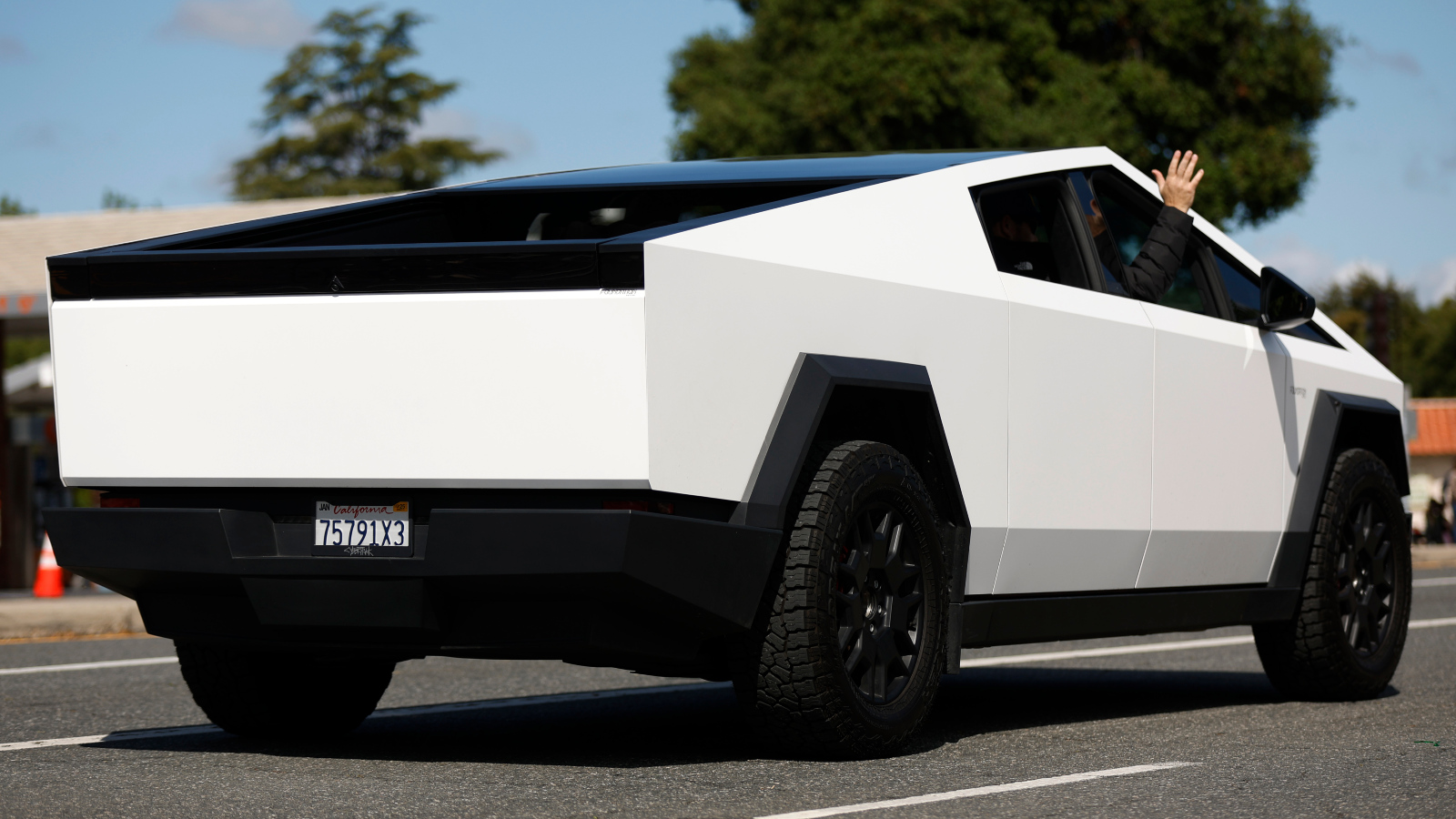
After a tumultuous three-year run on public roads that yielded some of the most polarizing cultural reactions in modern automotive history, Tesla is officially bringing the Cybertruck experiment to a close. Elon Musk announced that the Texas Gigafactory will wind down production of the polarizing, stainless-steel-clad vehicle next year. The abrupt shift is designed to clear manufacturing lines for the upcoming Cybercab, an autonomous robotaxi platform that Tesla executives hope will redefine the future of urban transportation and fleet mobility.
The end of the Cybertruck’s manufacturing lifecycle marks a definitive milestone for the broader electric vehicle industry. It underscores a painful lesson for automakers that attempted to marry aggressive, macho styling with bleeding-edge technology, only to collide with harsh economic realities, shifting political landscapes, and steep consumer price resistance.
A Chronology of Polarization: From High Hopes to Fading Sales
When Tesla first unveiled the Cybertruck prototype in late 2019, it immediately captured the global imagination. With its stark, polygonal geometry and claims of a virtually impenetrable exoskeleton, it was marketed as a radical departure from traditional automotive design. Weeks before the vehicle officially rolled out to customers in late 2023, Elon Musk stoked massive investor expectations, predicting that Tesla would eventually manufacture and sell roughly 250,000 units annually.
Those projections, however, proved wildly optimistic. The vehicle never came close to achieving mass-market adoption. Last year, Tesla managed to sell just over 20,000 units globally—a fraction of the initial target. Despite the meager sales figures, the vehicle’s retail price moved in the opposite direction; Tesla hiked the starting price for the 2026 model year to $92,500.
Throughout its abbreviated lifespan, the Cybertruck became a cultural touchstone, drawing intense criticism and fervent adoration in equal measure. Detractors labeled it a "MAGA hat on wheels" and likened its stainless-steel aesthetic to a household dumpster—a resemblance that proved literal enough to fool wild raccoons in Minnesota, which infamously chewed through a parked vehicle’s rear vault. Others have unceremoniously dubbed it one of the greatest automotive flops in history, drawing frequent comparisons to Ford’s ill-fated 1957 Edsel.
Conversely, the truck cultivated a distinct demographic of buyers who viewed it as a vision of the future realized. Dan Krassner, executive director of the American EV Jobs Alliance—an advocacy group dedicated to bridging the partisan divide surrounding electric vehicles—noted that the vehicle appealed to consumers drawn to science-fiction aesthetics and popular culture. Prominent entertainment figures, including WWE superstars Seth Rollins, Becky Lynch, The Miz, and Liv Morgan, purchased the vehicles, though some later expressed buyer’s remorse, with Morgan publicly categorizing the purchase as one of her worst financial investments.
The Rise and Fall of Macho Electrification
The Cybertruck is not alone in its struggles. Its demise is part of a broader, systemic cooling of the high-end electric pickup truck market. For years, major legacy automakers sought to shed the environmentally conscious, sterile image traditionally associated with compact hybrids like the Toyota Prius. By introducing massive, high-powered electric trucks, manufacturers hoped to seduce traditional American pickup buyers who prioritize utility, towing capacity, and road presence.
These efforts have largely fallen flat. In December of last year, Ford announced the discontinuation of the F-150 Lightning—the all-electric variant of America’s best-selling vehicle—after determining that the production line was generating steep financial losses. Rivian has seen a steady downward slide in its electric pickup sales year-over-year since 2023. Meanwhile, sales for General Motors’ high-end Hummer EV pickup plummeted so steeply that industry analysts labeled it the worst-selling pickup truck of 2026.
Automotive analysts point to a fundamental miscalculation regarding consumer priorities. While automakers focused on crafting high-performance, ultra-expensive halo vehicles, they failed to account for the pressures of an inflationary economy and rising cost-of-living concerns.
"The first electric trucks weren’t priced for the people who buy trucks, and buyers still have fair questions about charging and towing," Krassner observed. "Macho advertising can’t fix the monthly payment."
Whereas a conventional, gas-powered Ford F-150 starts at roughly $52,000, the electric alternatives required buyers to fork over tens of thousands of dollars more. The cheapest GMC Hummer EV starts at $97,200. Fulfilling the rigorous hauling and towing requirements demanded by traditional truck owners necessitated extraordinarily large, heavy lithium-ion battery packs, which in turn drove production costs and retail sticker prices out of reach for the average consumer.
Political Friction and Changing Market Demographics
Beyond sheer economics, market analysts emphasize that political polarization has played a non-trivial role in the adoption rates of specific EV brands. A comprehensive study published by the MIT Center for Energy and Environmental Policy Research revealed that roughly half of all new EV registrations in the United States between 2012 and 2023 were concentrated within the top 10 percent most Democratic-leaning counties.
While electric trucks historically demonstrated slightly better penetration in Republican-leaning areas compared to luxury sedans, they still underperformed corporate forecasts. Alexander Edwards, president of the research consultancy Strategic Vision, notes that Tesla’s brand image became increasingly entangled in political discourse—particularly following Musk’s high-profile involvement with government efficiency initiatives.
"I think price, product frustrations, Musk’s politics, and the changing meaning of owning one all need to be part of the discussion," Edwards explained, cautioning against writing off the entire electric pickup segment based solely on the Cybertruck’s failure.
Despite persistent ideological divides, polarization may be slowly softening. Polling data from Evs for All America indicates that the proportion of self-identified Republicans who view electric vehicles as exclusively "for people who see the world differently than I do" dropped from 59 percent in November 2023 down to 49 percent by late 2025.
The Next Frontier: Affordability and Hybridization
As the initial wave of luxury electric trucks recedes, the automotive industry is frantically pivoting toward affordability and practicality. The landscape is already shifting to accommodate mass-market sensibilities.
Following the cancellation of the F-150 Lightning, used models have flooded the secondary market at steep discounts—sometimes selling for 50 percent off their original sticker prices—resulting in a massive surge in secondhand demand. Looking ahead, automakers are preparing a second wave of vehicles engineered specifically to undercut traditional internal-combustion pricing. Ford, for instance, has announced plans for its upcoming electric pickup, tentatively named the Fathom, slated to debut with a starting price of roughly $28,400—significantly lower than the average gas-powered truck.
Simultaneously, broader macroeconomic headwinds—including persistent fuel price volatility driven by geopolitical tensions in the Middle East—have fueled a massive surge in consumer demand for hybrid electric vehicles, even as pure battery-electric vehicle sales experienced temporary dips following the rollback of federal tax credits by the Trump administration. Furthermore, industry stakeholders remain optimistic about the development of range-extended electric vehicles (EREVs), which combine battery-electric propulsion with onboard gas-powered generators to comprehensively eliminate consumer range anxiety.
Ultimately, market experts view the winding down of Cybertruck production not as the death knell of electrified utility vehicles, but as the conclusion of a costly, exploratory first chapter.
"I’d say round one went to the gas truck," Krassner concluded. "Round two hasn’t started yet."
Related posts: