A Patchwork of Outcomes: Midterm Ballot Measures on Abortion and Transgender Issues Reveal Complex Voter Dynamics Across the United States

The sweeping momentum that carried Democratic candidates to victory in Tuesday’s midterm elections did not translate into uniform outcomes for high-profile state ballot initiatives concerning reproductive rights and transgender healthcare. Across the United States, voters navigated a complex landscape of social policy questions, producing starkly divergent results that underscored the distinct political cultures and local priorities shaping individual states.
While progressive candidates capitalized on widespread voter enthusiasm in several regions, direct democracy measures addressing abortion access and gender-affirming care yielded a deeply nuanced patchwork of results. Nowhere was this complexity more evident than in Missouri, a reliably conservative stronghold, where voters decisively rejected a combined constitutional amendment that sought to roll back abortion protections and ban gender-affirming medical treatments for minors. Conversely, in traditionally progressive states like Washington and Colorado, voters advanced measures restricting transgender athletes in youth sports, illustrating that public opinion on social issues does not neatly align with traditional partisan lines.
The divergence in state-level outcomes has prompted health policy experts, political analysts, and campaign strategists to reevaluate how electorate motivations are shifting. As states continue to grapple with the post-Dobbs v. Jackson Women’s Health Organization reality, Tuesday’s ballot box decisions offer a vital window into how Americans weigh competing social concerns when given a direct voice in policymaking.
Chronology of a High-Stakes Legislative Battle in Missouri
Missouri’s path to Tuesday’s ballot was forged through a multi-year legislative and legal struggle that set the stage for one of the most closely watched referendums in the country. Following the U.S. Supreme Court’s landmark 2022 ruling in Dobbs v. Jackson Women’s Health Organization, which eliminated federal constitutional protections for abortion and returned the authority to regulate the procedure to individual states, Missouri became the first in the nation to enact a near-total ban on abortion.
For two years, the state’s restrictive policy stood firm. However, reproductive rights advocates successfully mobilized a counter-offensive. In the 2024 midterm cycle, Missouri voters approved a constitutional amendment that overturned the state’s ban and enshrined reproductive freedom protections directly into the state constitution. That measure passed despite Donald Trump carrying the state by an 18-point margin, securing a victory by a margin of fewer than 100,000 votes while the presidential candidate won the state by over 550,000 ballots.
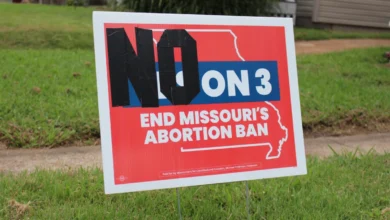
Unwilling to accept the constitutional protection of abortion, Missouri’s Republican-dominated legislature mounted a legislative challenge. Lawmakers placed a repeal measure on the 2026 ballot, deliberately bundling the effort to undo the 2024 abortion protections with strict limitations on transgender healthcare for minors. The proposed amendment sought to permanently enshrine bans on gender-transition surgeries, cross-sex hormone therapy, and puberty blockers for individuals under the age of 18—therapies that lawmakers had already restricted via statutory bans and temporary administrative pauses set to expire in August 2027.
When election night returns confirmed the defeat of the legislature’s combined initiative, supporters of the measure expressed deep disappointment. James Lawson, campaign manager for Her Health, Her Future—the primary coalition advocating for the bans—characterized the outcome as a setback during a St. Louis watch party. Lawson emphasized that the campaign had successfully unified a diverse coalition of medical professionals, religious leaders, parents, and grassroots volunteers, vowing to continue advocacy efforts despite the loss.
In contrast, opponents of the measure celebrated with jubilation. For many organizers, the victory mirrored the emotional scenes from two years prior when the initial abortion protections were successfully passed. Shira Berkowitz, representing the LGBTQ+ advocacy organization PROMO Missouri, credited an intensive, door-to-door canvassing strategy with bridging the gap among undecided voters. Berkowitz highlighted the impact of fielding a team of transgender Missourians who engaged directly with residents to share personal narratives and address concerns.
Divergent Results Across the Nation
While Missouri voters rejected the bundling of reproductive rights rollbacks and trans healthcare bans, other states experienced very different outcomes as ballots were tallied throughout the week. The national landscape demonstrated that voter attitudes toward youth sports participation and medical treatments for transgender minors varied significantly by geography and local demographics.
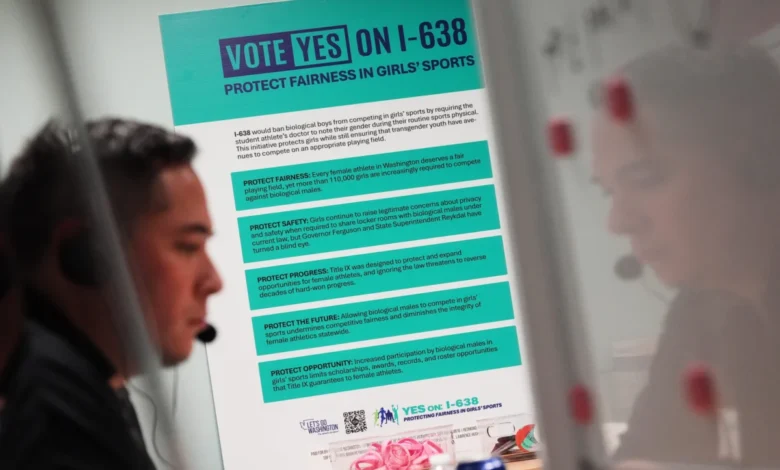
In Washington state, where President Trump lost by 18 percentage points in the most recent presidential election, preliminary results from Wednesday indicated that approximately 60 percent of voters supported Initiative 638. The measure was designed to restrict transgender girls from participating in girls’ K-12 and youth sports leagues, reflecting a strong current of voter concern regarding competitive fairness in athletics. Similar ballot measures and proposed restrictions on transgender athletes advanced successfully in Arizona and Nebraska. In Colorado, as of Wednesday afternoon, comparable athletic restrictions alongside a proposed ban on gender-affirming surgical procedures for minors were leading with roughly 80 percent of the vote counted.
On the reproductive rights front, outcomes were similarly bifurcated. Voters in Virginia and Nevada lent their support to measures reinforcing abortion protections, whereas voters in Idaho rejected similar constitutional amendments aimed at securing reproductive healthcare access.

Alina Salganicoff, director of Women’s Health Policy at KFF, a health information nonprofit that includes KFF Health News, noted that these regional variances highlight the profound impact of local context. "Each state also has its own culture," Salganicoff observed, pointing out that Missouri was unique in explicitly combining abortion access and transgender healthcare into a single ballot proposition, whereas other states addressed the topics through separate legislative or political messaging.
Public Opinion Data and Voter Motivations
To better understand the underlying dynamics of these electoral outcomes, researchers from the NORC research organization, in collaboration with KFF, conducted a comprehensive survey of midterm voters in key states. The resulting data provided empirical insight into how voters prioritized the two distinct social issues when standing in the voting booth.
In Missouri, the survey revealed that abortion access served as a significantly stronger motivator than transgender healthcare policy, particularly among individuals who opposed the proposed restrictions. Among residents who voted against the combined ballot measure, 59 percent reported that abortion policy was the primary factor influencing their vote, while 33 percent stated that abortion and transgender care for minors carried equal weight. Furthermore, the survey data uncovered a notable cross-section of the electorate: approximately 40 percent of voters who opposed the combined ban expressed personal support for restricting certain types of gender-affirming care for minors, yet they voted against the measure because they firmly opposed repealing abortion rights.
Conversely, among voters who supported the conservative ballot initiative, priorities were distributed differently. Only 26 percent indicated that abortion was the single most important issue, while 60 percent weighted abortion and transgender care equally, and 11 percent identified transgender care for minors as their primary concern.
Salganicoff noted that while a sizable minority of the electorate held split opinions on the two issues, the linkage was insufficient to override the broader protective stance many voters maintained regarding reproductive rights. "This is the first time we saw these two issues linked," Salganicoff said. "And while a sizable minority might be split on the two issues, it’s not enough to move the needle on abortion rights when you have support in a state."
Lindsey Dawson, director of LGBTQ Health Policy at KFF, added that the survey findings and nationwide election returns suggest that political strategies heavily reliant on anti-transgender messaging may not carry the sweeping electoral power that some political strategists previously assumed.
The limits of this messaging strategy drew commentary from political figures across the ideological spectrum. Outgoing Florida Governor Ron DeSantis, a Republican, reflected on the broader national campaign strategies during a media appearance shortly after the election. DeSantis remarked that he recognized vulnerability in Republican messaging when observing the allocation of hundreds of millions of dollars toward advertisements focused on transgender issues. While such messaging proved potent in prior election cycles, DeSantis suggested that by the 2026 midterms, the strategy had lost much of its persuasive edge, functioning more as an attempt to mobilize the party’s base rather than convince persuadable voters.
Fact-Based Analysis of Broader Implications
The results of the midterm ballot initiatives carry substantial implications for the future of state-level direct democracy, healthcare policy, and civil rights litigation across the United States.
First, the outcomes demonstrate the enduring potency of abortion access as a mobilizing force at the ballot box. Even in conservative-leaning states where presidential voting margins strongly favor the Republican Party, ballot measures designed to protect or restore reproductive rights continue to attract coalition support that transcends traditional partisan affiliations. The willingness of a portion of the electorate to split tickets or balance conflicting personal beliefs underscores the complexity of voter psychology regarding bodily autonomy and medical decision-making.
Second, the mixed results concerning transgender healthcare and athletic participation suggest that public opinion on LGBTQ+ policy remains highly malleable and heavily dependent on framing. While statewide campaigns in progressive and moderate states like Washington and Colorado found traction with restrictions on youth sports and surgical interventions for minors, progressive organizing in Missouri successfully defended healthcare access by emphasizing personal narratives, community visibility, and the dangers of government overreach into private family medical decisions.
Finally, the bundling strategy employed by the Missouri legislature represents a novel legislative tactic that may be replicated—or avoided—in future election cycles. By tethering a popular conservative priority (restrictions on transgender care for minors) to an unpopular attempt to reverse a newly established constitutional right (abortion access), lawmakers discovered the limits of forcing voters into an all-or-nothing choice on socially contentious matters.
As legal challenges surrounding these state policies inevitably wind their way through the judicial system, lawmakers and advocacy groups on all sides will be forced to recalibrate their strategies. The 2026 midterms have demonstrated that while the national debate over social policy remains fiercely polarized, the American electorate approaches these deeply personal issues with a pragmatic, state-by-state calculus that defies easy generalization.