Cornwall prepares for a historic leap as Cosmic Girl readies for the United Kingdom’s first orbital space launch

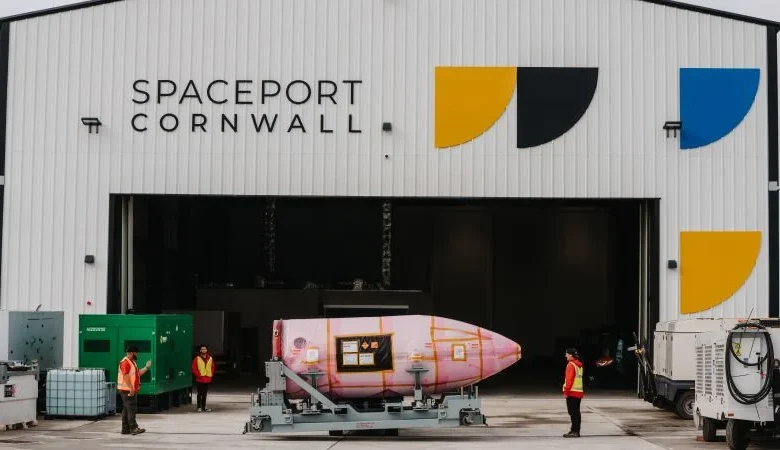
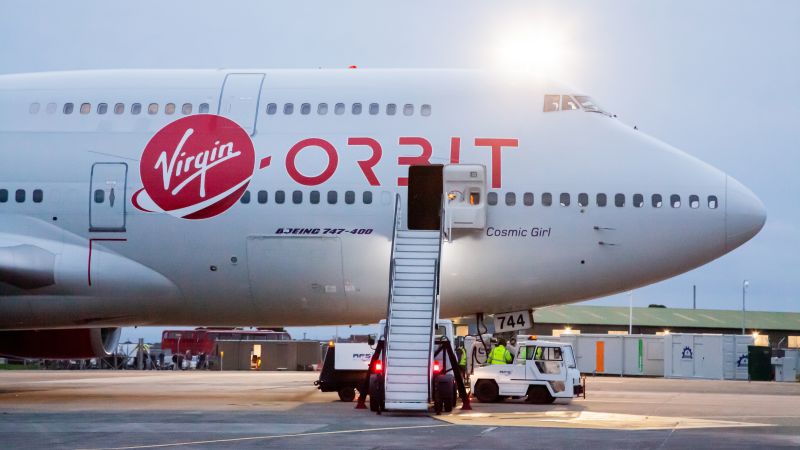
At the far southwestern tip of England, dangling into the Atlantic, the remote region of Cornwall rarely feels like the center of the world. Yet, the quiet coastal county is rapidly transforming into the unlikely epicenter of a new space age. Residents of Newquay have recently found themselves looking skyward, witnessing the distinctive silhouette of a Boeing 747 circling above the rugged coastline—a sight that marks a profound shift in the United Kingdom’s aerospace ambitions. This is no standard commercial flight; the aircraft, affectionately known as "Cosmic Girl," is the modified centerpiece of Virgin Orbit’s mission to conduct the first-ever orbital satellite launch from British soil.
The Evolution of the Queen of the Skies
The aircraft at the heart of this operation is a repurposed Boeing 747-400, which spent years serving as a conventional passenger jet for Virgin Atlantic until its retirement from commercial service in 2015. Rather than heading to a scrapyard, the aircraft underwent a radical transformation to become a mobile launchpad. The most significant structural modification involves the addition of a specialized pylon under the left wing, designed specifically to carry the LauncherOne rocket.
This horizontal launch methodology represents a departure from traditional vertical launches, which typically require massive, stationary launch complexes and clear-weather windows at remote sites. By utilizing a 747, Virgin Orbit can essentially treat any runway capable of supporting a jumbo jet as a potential spaceport. Once the aircraft reaches an altitude of approximately 34,000 feet, it performs a dynamic maneuver, releasing the rocket to ignite its engines and propel itself—and its satellite cargo—into low Earth orbit (LEO).
A New Era for Spaceport Cornwall
Spaceport Cornwall, situated at the modest Newquay Airport—the 29th largest in the UK—has undergone a rigorous certification and infrastructure upgrade process to facilitate this mission. The facility represents a collaboration between Cornwall Council, the UK Space Agency, and Virgin Orbit. For the region, the spaceport is not merely a launch site but a catalyst for regional economic development, aiming to create high-skilled jobs in engineering, data analysis, and aerospace logistics.
The arrival of Cosmic Girl at Newquay on October 11, 2022, served as a symbolic milestone for the local community. For residents like Marc Andrew, who traveled to the perimeter of the airport to witness the aircraft’s landing, the moment was transformative. “It was amazing to watch, and will be a nice bit of history to tell my little boy when he’s older,” he remarked. This sentiment reflects a broader sense of civic pride as the UK moves from being a major manufacturer of satellites to an active participant in their deployment.
Chronology of the Mission
The path to the upcoming launch has been meticulously planned through a series of technical rehearsals and international coordination:
- October 2, 2022: LauncherOne completes its final full launch rehearsal in Long Beach, California, confirming all systems are flight-ready.
- October 11, 2022: Cosmic Girl arrives at Spaceport Cornwall, marking the first time the launch aircraft touches down in the UK for this specific mission.
- October 14, 2022: The aircraft conducts a three-hour test flight over Cornwall and the surrounding Southwest England, verifying flight paths and communication protocols.
- November 2022 (Scheduled): The projected window for the historic orbital launch, pending final regulatory approvals and weather conditions.
Strategic Implications and Technical Advantages
The use of horizontal launch systems offers distinct strategic advantages. According to a statement provided by Virgin Orbit, this method enables a "broader range of orbits" than traditional vertical ground-launched systems. By flying the launch vehicle to the optimal release point, operators can avoid the limitations of fixed-latitude launch sites, allowing for more precise orbital insertion.
This flexibility is particularly relevant for the growing small-satellite market. As organizations—ranging from academic institutions to private telecommunications firms—seek to deploy constellations of small satellites, the ability to launch on demand from diverse locations becomes a critical economic advantage. The upcoming launch will carry seven distinct payloads, marking a significant advancement in the UK’s sovereign space capabilities.
Ian Annett, deputy CEO of the UK Space Agency, has highlighted the importance of this event, noting that it will be not only the first orbital space launch for the United Kingdom but also the first international launch for Virgin Orbit and the first successful satellite launch from European soil. This milestone solidifies the UK’s position in the global space sector, which is increasingly focused on the "New Space" economy—a shift toward private sector-led innovation and cost-effective access to orbit.
Official Perspectives and Future Projections
The anticipation among project stakeholders is palpable. Matthew Stannard, Virgin Orbit’s chief pilot tasked with the inaugural UK mission, expressed the gravity of the moment: “It feels amazing to bring Cosmic Girl home to the UK. We are weeks away now from the first UK launch at Spaceport Cornwall so it’s all very real.”
Melissa Thorpe, head of Spaceport Cornwall, echoed this sentiment, emphasizing the tangible nature of the infrastructure: “Seeing the infrastructure in place makes our launch ambitions a reality.” The project has successfully navigated the complexities of international aviation law, environmental impact assessments, and the rigorous safety standards required by the Civil Aviation Authority (CAA).
Looking beyond the immediate mission, the success of the Cornwall launch is viewed as a blueprint for future operations. Virgin Orbit has signaled intentions to export this model of horizontal launch to other nations, with prospective partnerships or interests noted in Australia, Brazil, Japan, Poland, and the Republic of Korea.
The Broader Economic and Scientific Impact
The implications of a successful launch extend far beyond the technical achievement. The UK currently possesses a robust aerospace sector, particularly in the design and manufacture of small satellites. However, until now, the lack of domestic launch capability meant that British companies had to rely on international launch providers in the United States, Russia, or French Guiana. Domesticating this supply chain reduces costs, mitigates geopolitical risks, and ensures that the UK remains a competitive player in the rapidly expanding LEO market.

Furthermore, the data collected from these seven satellites will contribute to various fields, including climate monitoring, urban planning, and global communications. As the satellites begin their journey into orbit, they will underscore the shift toward democratization of space access. Where once only superpowers could afford the costs and logistics of an orbital launch, commercial entities and regional partnerships are now making space operations routine.
Challenges and Looking Ahead
Despite the optimism, the mission is not without its challenges. Orbital launches are notoriously difficult, and the "horizontal" method, while innovative, faces the same harsh physics as any other rocket launch. Atmospheric conditions, technical integration between the 747 and the rocket, and the complex software required for flight control all present potential points of failure.
However, the team behind the Cornwall mission has conducted extensive simulations and test flights to mitigate these risks. The trial flight on October 14 was a critical step, demonstrating that the heavy aircraft, burdened with the weight and aerodynamic profile of the rocket, could operate safely within the confines of the Newquay airspace.
As the date for the November launch approaches, all eyes in the aerospace world are turning toward the southwestern tip of England. If successful, the mission will be remembered as the moment the UK officially entered the space race as a launch-capable nation. The sight of Cosmic Girl soaring over the Atlantic will serve as a powerful symbol of how a quiet, remote region can become a gateway to the stars, fundamentally altering the trajectory of the nation’s technological future.
For the people of Cornwall, the project is a point of immense local pride. What was once a regional airport is now a Spaceport, a designation that carries with it the promise of high-tech growth and the excitement of witnessing history in the making. Whether the mission succeeds on its first attempt or requires subsequent refinements, the foundation has been laid. The United Kingdom is no longer just looking at the sky; it is reaching into it, with a repurposed jumbo jet and a vision that reaches far beyond the Cornish coast.