Proposed OMB Rule Threatens to Sever Federal Funding for Critical Voter Registration Drives and Disability Access

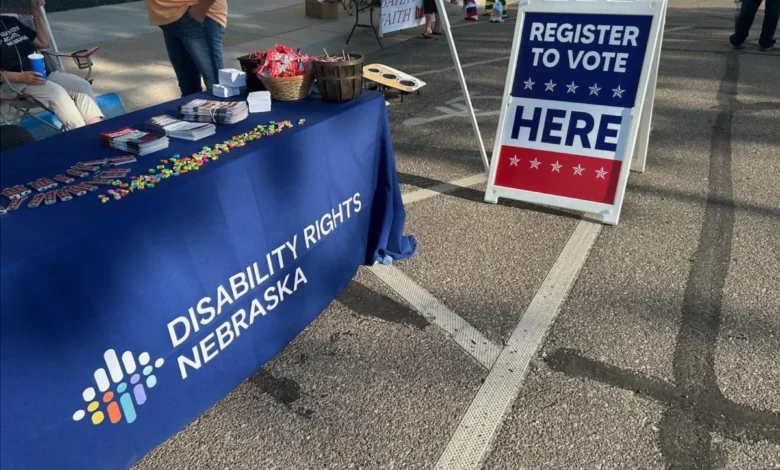
For Amy Miller, an attorney at Disability Rights Nebraska, the ballot box is not merely a political symbol; it is a fundamental point of access for the most vulnerable citizens. As she travels across the state, conducting site visits to nursing homes and assisted living facilities to investigate claims of abuse and neglect, she carries with her a vital tool: voter registration forms. For many of the individuals Miller serves—veterans with traumatic brain injuries, elderly residents with limited mobility, and citizens in rural areas lacking reliable internet or transportation—her presence represents their only viable path to democratic participation. Last month, she assisted a veteran struggling with the physical requirements of writing to ensure his voice could be heard in the upcoming midterm elections. His intent was clear, but without the logistical support provided by Miller’s organization, his right to vote would have remained effectively inaccessible.
This essential work, currently bolstered by federal grants authorized by Congress, is now facing an existential threat. The White House Office of Management and Budget (OMB), under the leadership of Director Russell Vought, has proposed a sweeping change to federal spending regulations. The draft rule seeks to prohibit the use of federal grant funds for any activities related to voter registration drives or what the proposal vaguely classifies as "related activities." If finalized, this directive would create a significant barrier for hundreds of nonprofit organizations that rely on federal support to provide services to the disabled and the elderly, effectively dismantling a cornerstone of election accessibility in the United States.
A Pattern of Administrative Curbs on Voting Access
The proposed OMB rule is not an isolated policy shift but rather the latest development in a broader, multi-year administrative effort to centralize executive control over voting-related funding and limit the scope of voter outreach. Since the beginning of the second Trump term, the administration has signaled a pivot toward more restrictive oversight of civic engagement activities.
On his first day in office, President Donald Trump rescinded an executive order issued by the Biden administration that had directed federal agencies to expand opportunities for voter registration. The Biden-era order was predicated on the understanding that marginalized populations, including Black citizens and people with disabilities, face systemic barriers to entry that require proactive remediation. By contrast, the current administration has framed such initiatives as unnecessary or politically biased.
This shift has been mirrored across various federal departments. Last year, the Department of Education issued a directive to colleges and universities, cautioning them against using federal work-study funds to support student-led voter registration efforts. While this directive remains the subject of ongoing legal challenges, its impact has been felt on campuses nationwide, where students previously served as a primary labor force for local voter engagement. Furthermore, the administration’s temporary, litigation-heavy attempt to ban nongovernmental organizations from conducting registration drives at naturalization ceremonies underscores a consistent pattern of discouraging outreach efforts, even in settings traditionally viewed as patriotic and civic-oriented.

The Power of the Purse and Constitutional Conflict
The move to restrict federal funding for registration has drawn sharp criticism from legal scholars and former government officials who argue that the OMB is overstepping its constitutional authority. Samuel Bagenstos, a former general counsel at the OMB and current professor at the University of Michigan, characterizes the move as an unprecedented expansion of executive power.
"This is not even a surgical power grab," Bagenstos said. "It is a massive across-the-board power grab."
The core of the legal dispute lies in the "power of the purse," a constitutional doctrine that vests the authority to budget and distribute federal funds with Congress. When Congress passes legislation—such as the Help America Vote Act (HAVA) of 2002—it provides clear mandates for how those funds should be utilized. By unilaterally deciding to block the use of these funds for voter registration, the OMB is effectively contradicting the legislative intent of Congress. Legal experts anticipate that once the final rule is released, it will trigger a wave of litigation centered on administrative law, arguing that the OMB lacks the authority to override congressional mandates through regulatory changes.
The Human Impact: Disenfranchisement of the Vulnerable
The ramifications of this policy extend far beyond the abstract realm of administrative law. Organizations like Disability Rights Nebraska are direct beneficiaries of the Help America Vote Act, which provides roughly $10 million in annual funding distributed among 57 nonprofit groups nationwide. This funding supports disability-focused advocacy in every state, as well as Puerto Rico, Washington, D.C., and Native American territories.
Data from the Rutgers University Program for Disability Research highlights the critical nature of this funding. In the 2024 election cycle, despite ongoing efforts, 3.6% of registered voters with disabilities reported significant difficulties in the registration process, compared to 1.4% of voters without disabilities. While the percentage gap may appear narrow, researchers emphasize that it represents the experiences of approximately 740,000 disabled citizens who faced barriers that could have been mitigated by the services provided by these nonprofits.
For the residents Miller encounters in rural assisted living facilities, the obstacles are tangible. Many are effectively isolated from the digital world, and their nearest election commissioner’s office may be a long, difficult drive away. Without the guidance of advocates who visit their facilities, these citizens are often unaware of their rights or how to exercise them. Miller recalls a recent interaction with a young man who was stunned to learn that he possessed the right to vote. After being walked through the process, he was able to register for the first time in his life.

"If I could just bring a politician with me to stand in the front hall of a nursing home and see how people react when they realize they can vote again," Miller said. "I wish they could see that and realize how important the work is."
Implications for the 2028 Election Cycle
The proposed rule is not slated to go into effect until after the 2026 midterms, but the chilling effect on the nonprofit sector is already becoming apparent. Many organizations that receive federal funding are now forced to navigate a landscape of uncertainty. For groups that provide vital social services—such as Medicaid assistance or food stamp distribution—and are legally required to provide voter registration forms under the National Voter Registration Act, the new rule creates a dangerous contradiction. These organizations fear that even if they rely on private donations for their registration drives, the mere association with federal grant-funded programs could subject them to punitive audits or the threat of funding loss.
Experts in the nonprofit sector predict that many organizations will choose to cease or significantly curtail their voter outreach efforts rather than risk a protracted legal or bureaucratic battle with the federal government. This defensive posture could lead to a measurable decline in voter registration among the populations most dependent on these services, potentially impacting turnout in the 2028 presidential election and beyond.
A Nonpartisan Service Under Siege
Proponents of the restrictive measures, including OMB Director Russell Vought, have previously argued that federal voter registration drives serve to "increase voter registration and turnout, especially among Democratic Party supporters." However, organizations on the ground, such as Disability Rights Nebraska, maintain that their work is strictly nonpartisan. In their public comments submitted to the OMB in opposition to the rule, the organization noted that their outreach often yields a diverse range of political affiliations. During a recent field visit, for example, 30% of newly registered voters identified as Republican, 20% as Democrat, and 50% as nonpartisan or third-party.
To maintain this nonpartisan integrity, staff members are required by law to conduct registration work in pairs, with representatives from different parties present. Despite these legal safeguards, the OMB’s proposed rule fails to distinguish between partisan campaigning and the neutral, mandated provision of registration access to disabled citizens.
As the comment period closes and the administration moves toward finalizing the rule, the future of the Help America Vote Act remains in question. For now, Miller and her colleagues continue their work, aware that the window of opportunity for many of their clients to participate in the democratic process is narrowing. The debate over the rule is a microcosm of a larger national struggle over who gets to participate in the American experiment and the extent to which the federal government should facilitate, or obstruct, that participation.
Related posts: