With one of the world’s most diverse and geographically expansive food scenes, China presents a culinary landscape that is nearly impossible to encapsulate in a single definitive list. The nation’s gastronomic heritage, which spans thousands of years and varies drastically from the arid north to the humid, tropical south, is a testament to the country’s complex history, trade routes, and regional environmental adaptations. For the international traveler or the curious home cook, navigating this expanse requires an introductory roadmap—a curated selection of dishes that define the core pillars of Chinese identity, flavor profiles, and cooking techniques.

The evolution of Chinese cuisine is intrinsically linked to the movement of political power. As dynasties rose and fell, the court’s preference for certain ingredients and cooking methods spread from regional hubs to the imperial capitals, eventually crystallizing into the foundational recipes recognized today. Understanding these dishes is not merely a matter of taste; it is an exercise in history.
The Imperial Legacy: Peking Duck and the Art of Roast Poultry
Peking Duck, or Beijing Kao Ya, stands as arguably the most recognizable symbol of Chinese culinary export. While the dish is synonymous with the capital, historical records suggest its origins trace back over 1,500 years to the ancient imperial kitchens of Nanjing. When the Ming Dynasty moved the capital to Beijing in the 15th century, the court brought its elite chefs and, consequently, its refined poultry preparations.

The dish is defined by the meticulous process of air-drying and roasting the duck until the skin reaches a glass-like crispness while the meat remains succulent. Traditionally served with thin crepes, scallions, cucumber, and a complex sweet bean sauce, the meal represents the height of imperial indulgence. Modern culinary analysis indicates that the success of the dish relies on the "fat-rendering" process, which requires specialized wood-fired ovens—often using fruitwoods like date or pear—to impart a subtle, aromatic smoke.
The Evolution of Street Food and Regional Specialities
While imperial dishes commanded the high tables, the backbone of Chinese food culture is the street stall, where innovation was born out of necessity. Consider the "Dan Dan Mian," or Sichuanese carrying-pole noodles. The dish derives its name from the bamboo poles street hawkers used to carry their cooking equipment and ingredients in the 19th century. Originally a simple, portable meal, it has evolved into a global phenomenon, though purists argue that the true version requires the specific "numbing and spicy" (ma la) profile achieved by Hanyuan peppercorns and high-quality lard.

Similarly, the "Cross-the-Bridge" rice noodles (Guo Qiao Mi Xian) of Yunnan province offer a narrative of historical ingenuity. Folklore recounts a story of a wife delivering lunch to her husband, who was studying on a remote island. To ensure the broth remained hot and the noodles did not turn mushy during her commute, she separated the components: a layer of chicken oil on top of the broth acted as an insulator, allowing the ingredients to be "flash-cooked" table-side. This technique remains a staple of modern Yunnanese dining, emphasizing the importance of texture and temperature control.
The Technical Mastery of Seafood and Dim Sum
The coastal provinces, particularly Guangdong and Fujian, have pioneered techniques that prioritize the "original flavor" of the ingredient. Cantonese-style steamed fish is a masterclass in timing; a difference of thirty seconds can mean the difference between delicate, flaky meat and a rubbery texture. This style of cooking reflects the Chinese culinary philosophy of xian (umami/freshness), where the goal is to enhance, not mask, the protein.

In the realm of social dining, the Cantonese tradition of dim sum—which literally translates to "touch the heart"—functions as a curated collection of bite-sized delicacies. From the soup-filled xiaolongbao (small basket buns) to siu mai, the dim sum experience is less about individual dishes and more about the communal sharing of a wide array of flavors and textures. Economically, dim sum culture has become a massive sector of the hospitality industry, driving innovation in dumpling wrappers and filling compositions.
Hunan and Sichuan: The Science of Spice
The southern provinces of Hunan and Sichuan have long engaged in a friendly, albeit fierce, rivalry over which region masters the chili pepper. Hunan cuisine, often described as "dry hot," utilizes duo jiao (chopped salted chilies) preserved in jars with ginger, garlic, and baijiu for at least a week. The signature dish, duo jiao yu tou (steamed fish head with salted chilies), is a testament to the province’s belief that "a dish is not a dish without chili."

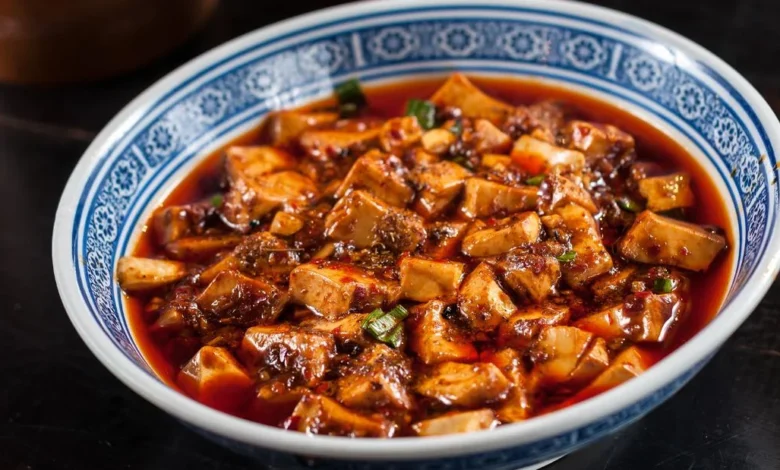
Conversely, Sichuan’s mapo tofu utilizes the Ma La flavor profile—a combination of peppercorn-induced numbness and chili-induced heat. Research into the chemical properties of the Sichuan peppercorn has shown it induces a vibration on the tongue at a frequency of 50 hertz, which subtly changes how the palate perceives salt and spice. This neuro-gastronomic effect is what keeps the dish consistently ranked as one of the most addictive in China.
The Socio-Economic Impact of Traditional Eats
Beyond the palate, these dishes represent a massive economic and cultural infrastructure. The production of jian bing guozi (savory crepes) in Tianjin, for instance, supports a vast network of local farmers and small-business owners. These street-side operations provide affordable, nutrient-dense breakfast options for millions of commuters.

Furthermore, the rise of "heritage branding" has seen dishes like Dongpo Rou (braised pork belly) move from rural home kitchens to high-end restaurant menus worldwide. Named after the poet Su Dongpo, the dish is a prime example of how cultural history is preserved through food. The long, slow braising process—which requires precise control of temperature and sugar caramelization—serves as a benchmark for professional chefs in the Jiangnan region.
Chronology of Culinary Influence
- Pre-1400s (Nanjing/Imperial era): Roast duck techniques developed for the imperial court.
- 1800s (Sichuan/Qing Dynasty): Invention of Kung Pao chicken, allegedly by the governor Ding Baozeng, combining Shandong fried chicken with local Sichuan aromatics.
- Early 20th Century: The industrialization of street food culture leads to the standardization of recipes like the "Cross-the-Bridge" noodles.
- Present Day: Global integration of Chinese cuisine through social media, leading to a rise in "regional specificity" where diners now seek out authentic, non-Westernized versions of dishes like rou jia mo (Chinese-style meat sandwich) from Xi’an.
Expert Analysis and Future Implications
Industry analysts note that Chinese food consumption is currently undergoing a "premiumization" phase. As the middle class in China expands, there is a growing demand for heritage-protected ingredients, such as specific breeds of duck or regionally sourced peppercorns. This trend is creating a symbiotic relationship between rural agricultural development and urban restaurant growth.

Furthermore, the "nutritional balance" inherent in dishes like congee—which serves as a digestive aid—is being integrated into modern health-conscious diets. Even simple items like mei cai (pickled mustard greens) are being re-examined by food scientists for their probiotic properties, bridging the gap between traditional medicine and modern nutrition.
Conclusion
To eat one’s way through China is to travel through time and geography. From the meticulously folded xiaolongbao that require a specific technique of "sipping the soup" before eating the dumpling, to the robust, hearty stews of the Hakka people, every dish carries a story of migration, survival, and celebration. While this list is by no means exhaustive, it serves as a foundational curriculum for understanding the complexity, nuance, and sheer scale of Chinese gastronomy. For the traveler, it offers a guide; for the historian, it offers a record; and for the diner, it offers a world of flavor that remains one of humanity’s greatest cultural achievements.