
Supreme Court Trump Ballot
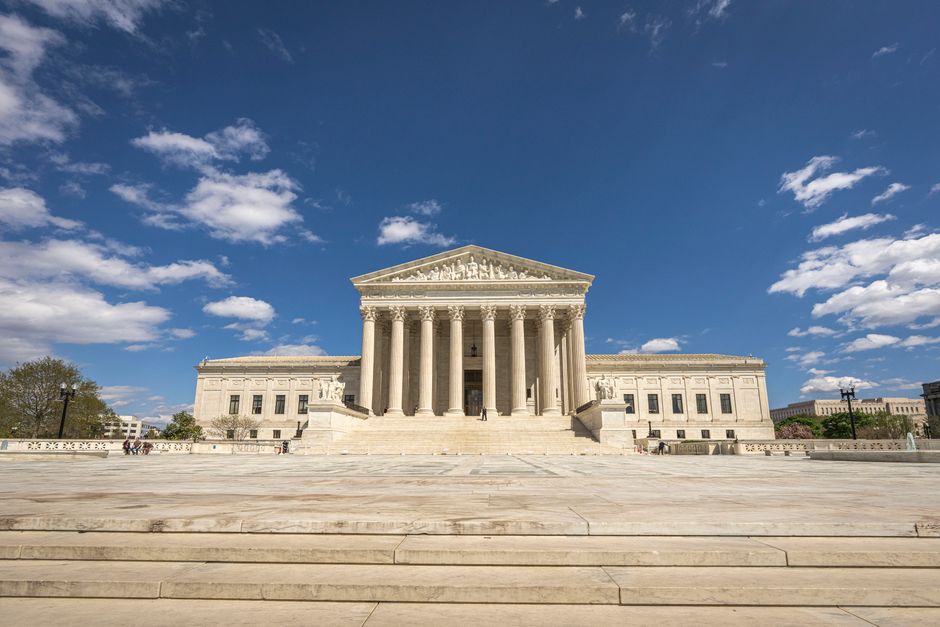
Supreme Court Trump Ballot: Navigating the Legal Labyrinth of Presidential Eligibility
The question of whether former President Donald Trump can appear on future ballots, particularly in the context of the 2024 presidential election, has been a subject of intense legal and political debate, culminating in significant U.S. Supreme Court intervention. At the heart of this controversy lies Section 3 of the Fourteenth Amendment, often referred to as the "disqualification clause," which prohibits individuals who have previously taken an oath to support the Constitution and subsequently engaged in insurrection or rebellion against the United States from holding any office, civil or military, under the U.S. or any state. The Supreme Court’s ruling in Trump v. Anderson on March 4, 2024, decisively settled the immediate question of Trump’s ballot eligibility at the state level, impacting the Colorado Supreme Court’s prior decision. This ruling, while providing a clear directive, does not fully resolve the underlying legal and constitutional questions surrounding the application of Section 3 of the Fourteenth Amendment to presidential candidates and the broader implications for future elections.
The legal challenges to Trump’s ballot access primarily originated from state-level actions, most notably in Colorado, where a group of voters filed a lawsuit arguing that his actions leading up to and during the January 6th Capitol attack constituted an insurrection, thereby disqualifying him under the Fourteenth Amendment. The Colorado Supreme Court, in a landmark December 2023 decision, agreed, ruling that Trump was ineligible to appear on the state’s presidential primary ballot. This decision immediately ignited a national firestorm, raising profound questions about the balance of power between states and the federal government, the interpretation of constitutional provisions, and the role of the judiciary in electoral processes. The Colorado ruling was based on a broad interpretation of Section 3, concluding that the presidency is an "office" covered by the amendment and that Trump’s conduct met the threshold of engaging in insurrection.
The U.S. Supreme Court, in its per curiam decision in Trump v. Anderson, overturned the Colorado Supreme Court’s ruling, establishing that states do not have the authority to enforce Section 3 of the Fourteenth Amendment against federal candidates through their own ballot access laws. The Court’s reasoning centered on the principle that only Congress, through appropriate legislation, can enforce the disqualification clause against federal officeholders. The majority opinion emphasized the potential for chaos and inconsistency if each state were allowed to unilaterally determine the eligibility of federal candidates based on varying interpretations of the Constitution. This ruling effectively neutralized the immediate threat to Trump’s ballot access in Colorado and, by extension, set a precedent for how other states might approach similar challenges. The Court found that Section 5 of the Fourteenth Amendment, which grants Congress the power to enforce the amendment’s provisions, implies that such enforcement must be done through federal legislation, not through individual state actions.
The Supreme Court’s decision in Trump v. Anderson was unanimous in its outcome but was accompanied by concurring opinions that highlighted different nuances of the legal reasoning. While the majority focused on the enforcement mechanism of Section 5, some justices expressed concerns about the broader applicability of Section 3 to the presidency. Justice Barrett, in her concurrence, noted the significant interpretive challenges in applying Section 3 to the office of the President, particularly concerning the definition of "insurrection" and the lack of a clear judicial or congressional process for determining such a finding in the context of a presidential candidate. This suggests that even though the immediate ballot access issue was resolved, the underlying constitutional questions remain complex and open to further debate. The Court’s reluctance to definitively rule on whether the President is an "officer of the United States" under the Fourteenth Amendment, and whether Trump’s actions constituted insurrection, indicates a strategic move to resolve the procedural issue of state authority without wading into deeper, potentially more divisive, constitutional interpretations.
The implications of the Supreme Court’s ruling are far-reaching. Firstly, it reasserts federal authority over the qualifications of federal officeholders, preventing a patchwork of state-by-state determinations that could disenfranchise voters or create electoral instability. This strengthens the argument for a uniform national standard in matters of federal election law. Secondly, it shifts the focus of any potential disqualification proceedings to Congress. For Section 3 of the Fourteenth Amendment to be enforced against a federal candidate in the future, Congress would likely need to pass specific legislation outlining the process and criteria for such enforcement. This would require a significant political undertaking, involving bipartisan agreement on a highly contentious issue. The Court’s decision essentially punted the political question to the legislative branch, where it arguably belongs in the first instance.
The debate over Section 3 of the Fourteenth Amendment is not new, but it gained unprecedented prominence with the challenges to Trump’s ballot eligibility. Ratified in the aftermath of the Civil War, the amendment was intended to prevent former Confederates from regaining power in the federal government. Its application in modern times, particularly to the unique office of the presidency and in the context of contemporary political polarization, presents novel legal and constitutional challenges. Critics of the Supreme Court’s decision argue that it effectively shields individuals from constitutional accountability and that it undermines the intent of the Fourteenth Amendment by making it exceedingly difficult to disqualify candidates for engaging in insurrection. They contend that the ruling allows political considerations to overshadow constitutional principles.
Conversely, supporters of the Supreme Court’s decision argue that it upholds the rule of law and prevents states from overstepping their constitutional boundaries. They emphasize that the decision ensures a consistent and predictable electoral process, preventing a scenario where presidential candidates could be disqualified by a simple majority vote in various state legislatures or courts, leading to widespread election disputes and undermining democratic legitimacy. The concern articulated by the Court is that allowing individual states to make such critical determinations about federal officeholder eligibility would lead to an unworkable and chaotic system, where a candidate could be eligible in one state but disqualified in another, creating an insurmountable barrier to running for federal office. This would undermine the fundamental right of citizens to vote for the candidate of their choice, as interpreted through the lens of federal election law.
The Trump v. Anderson case also highlights the ongoing tension between the judiciary’s role in interpreting constitutional law and the political realities of elections. The Supreme Court’s intervention, while providing a resolution to the immediate legal dispute, has not resolved the underlying political questions or the broader debate about accountability for actions perceived as threats to democratic institutions. The Court’s decision can be seen as a judicial restraint, opting to resolve a clear procedural issue rather than engage in a deep, potentially politically charged, substantive constitutional interpretation that could have further implications for the presidency and future elections. This approach aims to maintain judicial impartiality and avoid appearing to engage in political decision-making.
Looking ahead, the Supreme Court’s ruling has significant implications for the future application of Section 3 of the Fourteenth Amendment. While states are now precluded from using their ballot access laws to disqualify federal candidates, Congress remains empowered to legislate on the matter. Whether Congress will take up this issue, and if so, what form such legislation might take, remains uncertain. Given the current political climate, achieving bipartisan consensus on legislation to enforce Section 3 would be a formidable challenge. This leaves a significant constitutional provision in a state of limited enforceability at the federal level through state-initiated legal challenges.
Furthermore, the interpretation of "insurrection" and "rebellion" in the context of modern political activity will likely continue to be a subject of legal and academic debate. The threshold for such conduct, and the evidentiary standards required to prove it, are not clearly defined, leaving ample room for differing interpretations. The Supreme Court’s decision did not offer a definitive interpretation of these terms, leaving that to potential future congressional action or further litigation. This ambiguity ensures that the constitutional questions surrounding Section 3 will likely persist and resurface in future electoral cycles, particularly in instances of significant political unrest or challenges to democratic norms.
The ruling in Trump v. Anderson is a pivotal moment in American constitutional law and electoral politics. It has clarified the legal authority of states in enforcing the Fourteenth Amendment’s disqualification clause against federal candidates, firmly placing that power within the purview of Congress. While this decision provides a clear directive for current and future elections regarding state-level ballot access challenges, it also underscores the complex and evolving nature of constitutional interpretation, particularly when applied to unprecedented political circumstances. The underlying questions about accountability for actions that challenge the integrity of democratic processes remain, and their resolution will likely depend on future legislative action or subsequent judicial review in different contexts. The long-term impact of the Supreme Court’s decision will be measured by how Congress chooses to address the enforcement of Section 3 and how future political events and legal challenges test the boundaries of constitutional provisions designed to safeguard the republic. The decision has underscored the necessity of a robust federal legislative framework for matters of national election integrity, while simultaneously highlighting the enduring challenges of applying historical constitutional provisions to contemporary political realities.
