Justice Ketanji Brown Jackson Criticizes Supreme Court Emergency Docket and Treatment of Lower Courts

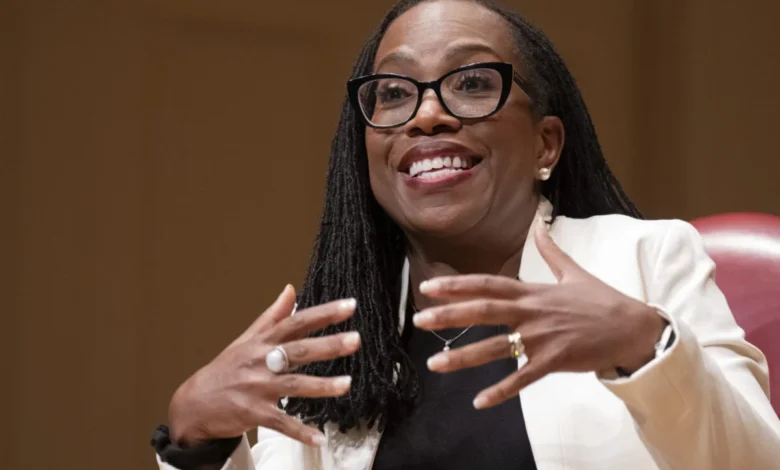
U.S. Supreme Court Justice Ketanji Brown Jackson delivered a sharp and public critique of the high court’s mounting reliance on its emergency docket, arguing that the practice grants the federal government an unfair "fast pass" to judicial review while undermining the meticulous work of lower-court trial judges. Speaking during a university address on Thursday, September 24, 2026, Jackson warned that the frequent deployment of emergency stay requests—particularly those filed by the executive branch—risks eroding public confidence in the integrity and impartiality of the American judicial system.
The remarks, delivered at the University of the District of Columbia David A. Clarke School of Law and first reported by Law.com, mark a significant escalation in ongoing internal debates among Supreme Court jurists regarding the expanding scope of the court’s shadow docket. Jackson specifically pointed to instances where the conservative majority intervened to reinstate blocked administration policies, asserting that such actions bypass ordinary procedural fairness and display a lack of institutional respect for the district and appellate judges who spend months evaluating complex evidentiary records.
The Controversy Over the Emergency Docket
The Supreme Court’s emergency docket—historically referred to by legal scholars and critics as the "shadow docket"—encompasses urgent requests for stays, injunctions, and extraordinary relief that are handled outside the court’s traditional, highly rigorous merits review process. These matters are typically decided without full briefing, oral arguments, or comprehensive signed opinions, and they frequently emerge late at night or during recesses.
In recent years, the shadow docket has evolved from a mechanism reserved for exceptional crises, such as impending executions or imminent threats to public safety, into a routine battleground for high-stakes ideological and administrative policy disputes. Both Republican and Democratic administrations have utilized this mechanism to freeze lower-court injunctions targeting major federal regulations, immigration directives, and executive orders.
However, Justice Jackson’s critique focused acutely on the institutional imbalance created by these procedures. By highlighting that certain litigants appear to have the court on "speed dial," she drew a vivid contrast between the privileged access enjoyed by government entities and the standard path required of ordinary citizens, corporations, and civil rights organizations.
"Why is it that one party should get a fast pass to the Supreme Court of the United States when so many other parties are queued up, waiting patiently for the Supreme Court’s attention?" Jackson posed to the audience of legal scholars, students, and practitioners.
Disrespect for the Trial Bench
Beyond procedural fairness, Jackson used her platform to defend the foundational role of federal trial and appellate judges. When the Supreme Court abruptly steps in to vacate preliminary injunctions or stays issued by judges who have presided over extensive discovery, expert testimony, and multi-day hearings, it sends a troubling signal about the value of the judicial hierarchy.
Trial judges, Jackson suggested, invest immense time and judicial resources into examining the merits of a dispute, weighing equities, and crafting nuanced preliminary relief. When the highest court in the land sets aside these considered decisions via brief, unsigned orders—often split along ideological lines—it diminishes the rigorous fact-finding process that forms the bedrock of American jurisprudence.
Legal analysts note that Jackson’s commentary speaks directly to the friction points within an increasingly polarized legal landscape. While proponents of emergency relief argue that swift intervention is necessary to prevent executive policy paralysis and nationwide administrative chaos, critics contend that the practice normalizes erratic policymaking and transforms the Supreme Court into a political arbiter rather than a deliberative constitutional tribunal.
Background and Chronology of the Shadow Docket Debate
The modern debate surrounding the Supreme Court’s emergency docket is not entirely new, but its volume and intensity have surged significantly over the past decade.
During the Trump administration’s initial term from 2017 to 2021, the Justice Department notably increased its frequency of emergency stay applications to the Supreme Court after facing nationwide injunctions from lower federal courts regarding travel bans, environmental rollbacks, and immigration policies. Legal scholars observed a distinct uptick in the court’s willingness to grant these stays, effectively allowing disputed executive policies to take effect while litigation proceeded slowly through the appellate pipeline.
This trend continued into the Biden administration, as conservative-leaning states and advocacy groups frequently turned to federal district courts in Texas, Louisiana, and elsewhere to block major federal rules concerning student loan forgiveness, environmental standards, and workplace regulations. In response, the federal government repeatedly sought emergency intervention from the Supreme Court to halt lower-court blockades.
Chronology of Recent Developments:
- February 2025: Justice Ketanji Brown Jackson delivers remarks emphasizing the institutional health of the judiciary during events honoring Supreme Court fellows at the Library of Congress.
- Throughout 2025 and Early 2026: Legal scholars and various circuit court judges publicly debate the parameters of emergency stays, noting an ongoing rise in emergency applications.
- September 24, 2026: Law.com publishes a report detailing Justice Jackson’s sharp remarks at the University of the District of Columbia David A. Clarke School of Law.
- September 25, 2026: Legal communities and media outlets widely analyze the implications of Jackson’s comments regarding executive branch access and public trust.
Implications for Public Trust and Judicial Independence
The core of Justice Jackson’s warning centers on public trust—a metric that recent polling indicates has reached historic lows for the U.S. Supreme Court. When the judiciary is perceived as acting hastily, opaquely, or in alignment with political branches through unreasoned emergency orders, the perception of neutral legal stewardship can fracture.
When emergency orders grant sweeping nationwide relief without the traditional transparency of oral arguments and detailed written rationales, litigants and the public are left without clear legal guidance. This lack of doctrinal clarity creates perpetual legal instability, where policies shift rapidly based on temporary judicial interventions rather than settled statutory and constitutional interpretations.
Furthermore, Jackson’s public stance underscores a growing willingness among contemporary justices to articulate institutional concerns outside the courtroom. While Supreme Court justices traditionally maintained a strict separation from public policy debates, recent years have seen members of the court increasingly addressing academic audiences, bar associations, and public forums to defend or critique institutional practices.
Reactions and Broader Legal Analysis
Legal experts, constitutional scholars, and former judicial clerks have offered mixed reactions to Jackson’s commentary, reflecting deep ideological and structural divisions over the role of the modern Supreme Court.
Proponents of judicial restraint and defenders of the court’s current docket management practices argue that the executive branch faces unique structural imperatives. Government policies, they contend, represent the will of a co-equal political branch, and nationwide injunctions issued by single district judges can paralyze the enforcement of federal law across the entire country. From this perspective, the emergency docket serves as an indispensable safety valve to correct perceived overreaches by lower courts.
Conversely, critics of the shadow docket—echoing Jackson’s sentiments—argue that the executive branch should not be granted preferential procedural treatment simply by virtue of its authority. They maintain that if a policy is truly unlawful or disruptive, it should withstand the rigors of standard appellate review rather than receiving expedited, unreasoned validation.
As the Supreme Court prepares for its upcoming term, the debate over the shadow docket remains one of the most pressing institutional issues facing the federal judiciary. Justice Jackson’s direct challenge ensures that the internal mechanics of how the court grants access, manages its caseload, and interacts with lower tribunals will remain under intense scrutiny from both the legal profession and the American public.