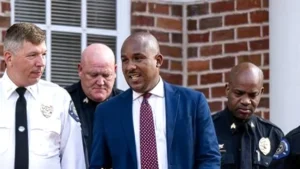
GOP governor and prominent Dems congratulate senator-elect on flipping Mississippi seat blue

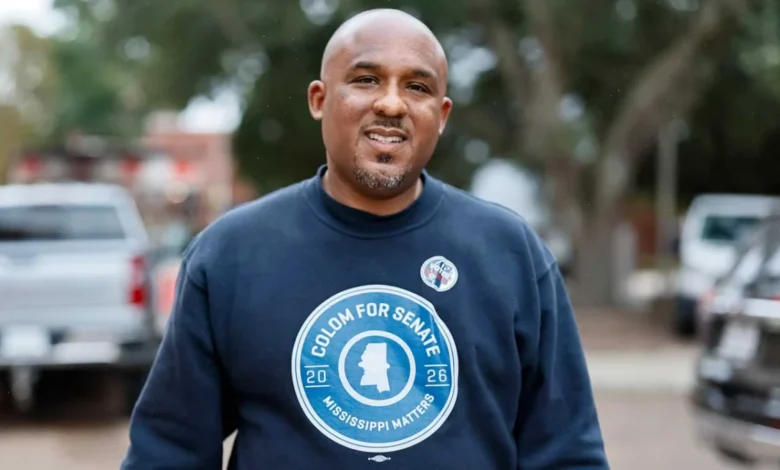
In what political analysts are already calling one of the most stunning electoral upsets of the modern American political era, Democrat Scott Colom has officially captured a U.S. Senate seat in deeply conservative Mississippi. More than a week after the initial close of the polls, The Associated Press formally called the race in favor of Colom, the sitting district attorney for Mississippi Circuit Court District 16. Colom successfully unseated the Donald Trump-backed Republican incumbent, Senator Cindy Hyde-Smith, shattering a political monopoly that has defined the Magnolia State’s federal representation for more than four decades.
The victory carries profound historical weight. Colom is not only the first Democrat to win a U.S. Senate election in Mississippi since the late Senator John Stennis secured his final term in 1982, but he has also etched his name into the history books as the first Black senator elected in the state since the Reconstruction era. Furthermore, he becomes the first Black person to be popularly elected to the Senate from Mississippi, as the state’s only two previous Black senators—Hiram Rhodes Revels and Blanche Bruce—were selected by the state legislature during the 19th century, well before the ratification of the 17th Amendment established the direct popular election of senators.
The aftermath of the race has triggered a wave of high-profile reactions from across the political spectrum. Figures ranging from Mississippi’s sitting Republican governor to prominent national Democratic leaders have weighed in on the historic outcome, signaling both astonishment and a willingness to find bipartisan footing in the wake of a deeply fought campaign.
A Hard-Fought Campaign and Extended Tallying Process
The road to Colom’s victory was defined by intense campaigning, strategic targeting, and an agonizingly slow vote tabulation process that stretched more than a week past Election Day. Election officials across Mississippi’s 82 counties worked meticulously through provisional ballots, mail-in returns, and rigorous re-checks as margins between Colom and Hyde-Smith remained razor-thin.
Throughout the campaign, political pundits repeatedly cast Mississippi as a bridge too far for the Democratic Party, citing its deep-seated conservative voting patterns, strong allegiance to Donald Trump, and decades of Republican dominance in statewide offices. However, Colom leveraged his background as a local prosecutor, focusing his messaging heavily on economic opportunity, educational reform, and government accountability. His campaign also benefited from coordinated national interest and robust ground operations, drawing investments and organizational support from outside progressive networks seeking to expand the electoral map in unconventional territories
.
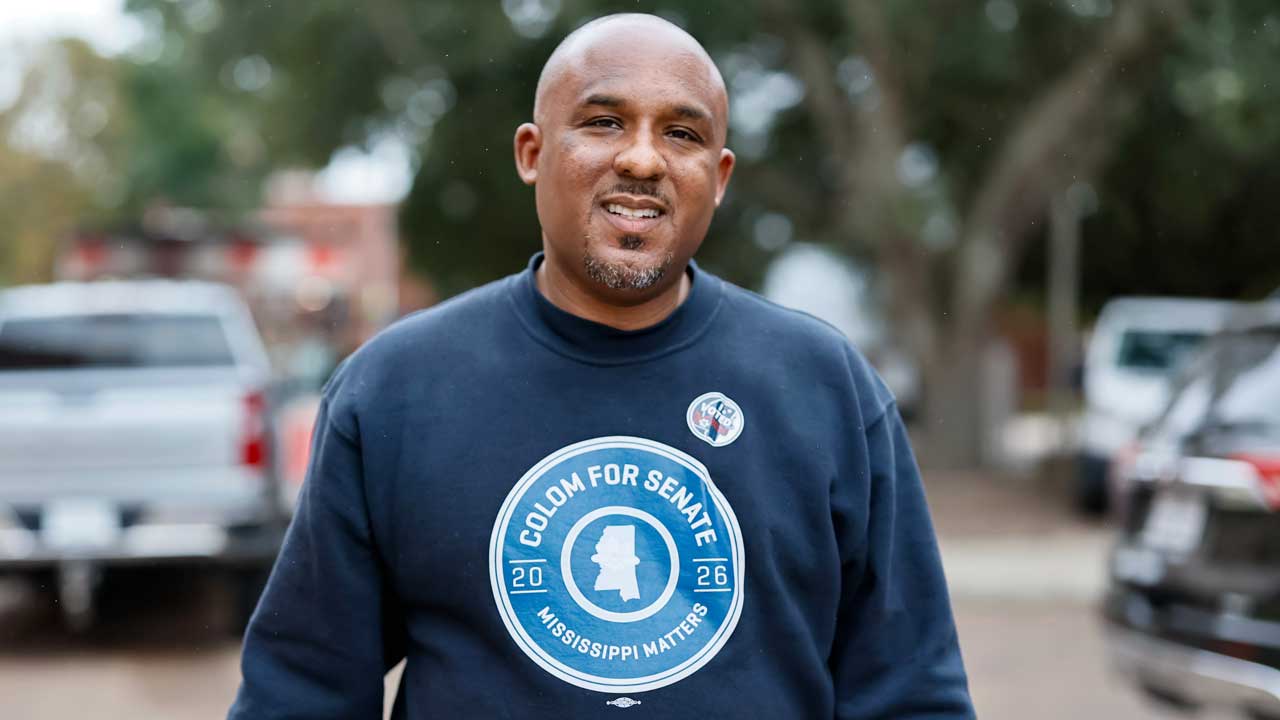
As the final tallies solidified, it became clear that Colom had managed to build a diverse and energized coalition. By combining high turnout among traditional Democratic strongholds with crucial crossover votes from moderate Republicans and independent suburbanites, Colom achieved what few thought mathematically possible in a modern statewide Mississippi election.
National and Local Reactions Roll In
The confirmation of Colom’s victory drew immediate national attention, with political leaders from all corners expressing awe at the seismic shift in the Senate landscape.
Former President Bill Clinton, a fellow Southern Democrat who has long monitored the shifting political tides of the region, took to social media to celebrate the milestone. "We may have had to count One Mississippi, Two Mississippi, but Blue Mississippi sure has a nice ring to it!" Clinton wrote in a post on X. "Scott, you put your heart and soul into this race because you believe in the promise of your state’s people. And they believed in you right back. I’m honored to have stood alongside you. Congratulations!"
Former Vice President Kamala Harris also offered glowing praise, emphasizing the racial and historical barriers shattered by the outcome. "The power is with the people, and the people of Mississippi are with Scott," Harris stated. "Scott Colom makes history today as the first Black senator elected in Mississippi since Reconstruction. I saw firsthand when campaigning with him in his hometown that he is a brilliant leader and dedicated public servant who will work tirelessly to serve every Mississippian with pride."
Vermont Independent Senator Bernie Sanders similarly highlighted the populist themes of Colom’s campaign platform. "Congratulations to Scott Colom on winning his election and making history as Mississippi’s first Black senator since Reconstruction," Sanders noted. "Scott ran on a bold agenda — taking on Big Tech, the billionaire class and corruption in Washington — and WON. Scott: Welcome to the Senate."
Locally, the tone was marked by pragmatism and a mutual desire for governance. Mississippi Republican Governor Tate Reeves extended formal congratulations to his new congressional counterpart, signaling an openness to constructive dialogue.
"Congratulations to Senator-Elect @scott_colom," Gov. Reeves wrote in a social media statement. "I hope to collaborate as we continue our very important work to support Mississippi families, grow jobs and wages for our people, and improve educational outcomes for our kids!"

Demonstrating a collaborative spirit, Colom swiftly responded to the governor’s overture. Replying directly to Reeves’ post, Colom wrote, "Thank you for the congratulations @tatereeves. I also look forward to working with you on the issues that matter to our state. Together, there’s nothing our beautiful state can’t accomplish," appending the unifying hashtag, "#MississippiMatters."
Historical Context and Political Implications
To fully understand the gravity of Scott Colom’s victory, one must examine the deep historical roots of Mississippi’s political evolution. For generations following the Civil War and the subsequent Reconstruction era, the state’s politics were heavily shaped by racial disenfranchisement and Jim Crow laws, which effectively locked Black citizens out of the electoral process.
The passage of the Voting Rights Act of 1965 fundamentally transformed the franchise, paving the way for increased Black political representation at the local and state levels. However, breaking the color barrier at the federal level—specifically in a statewide U.S. Senate contest—remained an elusive milestone in the Magnolia State until now. The last Democrat to hold a Senate seat from Mississippi, John Stennis, retired in early 1989 after a legendary tenure, and the seat has since been safely in Republican hands, held by influential figures such as Trent Lott, Thad Cochran, Roger Wicker, and Cindy Hyde-Smith.
The implications of Colom’s win extend far beyond state lines. For the Democratic Party, the upset serves as a powerful proof-of-concept that deep-red Southern states are not entirely monolithic and that targeted, localized candidate selection can overcome entrenched partisan advantages. It also injects fresh momentum into national legislative debates, potentially altering the balance of power in tightly contested congressional sessions where every single vote carries monumental weight.
For Mississippi, the election marks a potential turning point in political discourse. By routing a high-profile, Trump-backed incumbent, voters have signaled a willingness to prioritize individual candidate records and cross-party cooperation over rigid partisan alignment. As Senator-elect Colom prepares to transition from district attorney to the halls of Capitol Hill, all eyes will be on how he navigates the complex expectations of his historic constituency and whether his stated commitment to bipartisan collaboration can yield tangible results for the people of Mississippi.
Related posts: