Senate Republicans Suffer Stunning Defeat in Deep-Red Mississippi as Democrat Scott Colom Ousts Incumbent Cindy Hyde-Smith

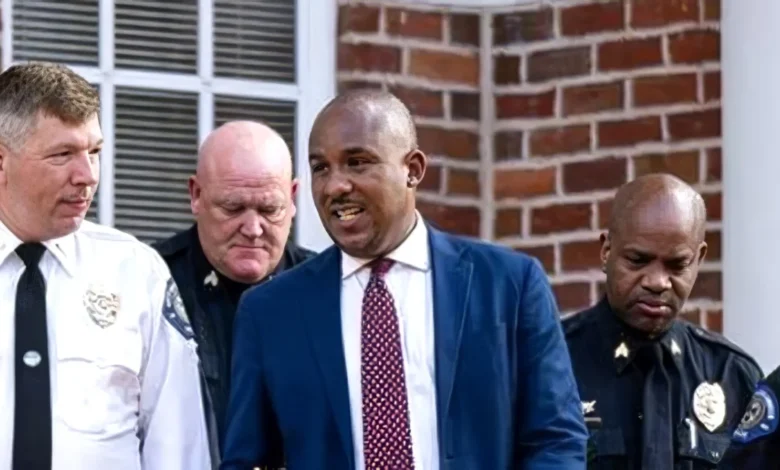
In a political development that has sent shockwaves through Washington and upended traditional electoral maps, Senate Republicans have suffered a stunning and historic setback in the reliably red state of Mississippi. More than a week after the general election concluded, the Associated Press officially called the razor-thin contest in favor of Democratic challenger Scott Colom, who serves as a state district attorney. Colom’s victory over incumbent Republican Senator Cindy Hyde-Smith marks one of the most improbable upsets of the election cycle, expanding the Democratic majority in the United States Senate to 55 seats compared to the Republicans’ 44.
The defeat in Mississippi underscores a broader, punishing cycle for the GOP in the upper chamber, where even traditionally impenetrable strongholds proved vulnerable to well-funded Democratic challengers and shifting demographic and political dynamics. For months, political analysts had categorized the race as a safe Republican hold, given Mississippi’s deep conservative roots and history of electing conservative federal lawmakers. However, a combination of tactical resource deployment, intense grassroots mobilization, and an energized local electorate turned the Deep South state into the ultimate battleground of the cycle.
A High-Stakes Contest in the Deep South
The path to Colom’s victory was forged over many months of intense campaigning, astronomical fundraising, and high-profile national involvement. Up until the final weeks of October, polling indicated a deadlocked race, forcing both political parties to divert critical financial and strategic assets to a state that leadership on both sides initially ignored.
The battle for Mississippi’s Senate seat carried profound national implications. Sensing a potential vulnerability, national Democratic networks—including alignment with donors linked to the Soros network—poured substantial financial backing into Colom’s campaign. This infusion of capital allowed the Democratic challenger to build a robust ground game, saturate local media markets with advertising, and effectively counter the traditional conservative messaging of the incumbent senator.

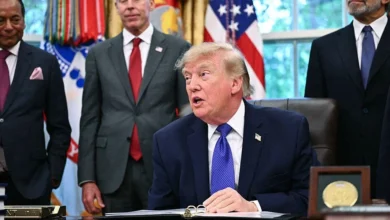
Recognizing the gravity of the threat, the Republican establishment mobilized a robust defense of the seat. President Donald Trump made a late-stage, high-profile intervention, throwing his full weight behind Hyde-Smith in an effort to rally the base and secure a crucial firewall for the GOP. Simultaneously, the Senate Leadership Fund—a powerful political action committee closely aligned with Senate Majority Leader John Thune—deployed a late-October, seven-figure ad buy aimed at halting Colom’s surging momentum.
Despite these formidable interventions, the conservative firewall cracked. Observers note that Colom’s background as a local prosecutor, combined with his targeted messaging on economic issues, public safety, and healthcare, allowed him to appeal to a broad coalition of voters that extended beyond the traditional Democratic base.
A History of Contentious Dynamics
The rivalry between Hyde-Smith and Colom is not a recent development, adding an extra layer of political theater to their general election showdown. Years prior to their clash for the U.S. Senate, Hyde-Smith—acting in her capacity as a sitting United States senator—actively blocked Colom’s nomination for a federal district court seat during the Biden administration. At the time, conservative lawmakers and judicial watchdogs raised objections to Colom’s record, successfully halting his progression to the federal bench.
Rather than retreating from public service, Colom pivoted his political ambitions toward statewide office, leveraging his profile as a district attorney to mount a historic statewide bid. The irony of the matchup was lost on no one: the very prosecutor whose federal judgeship was blocked by the incumbent senator ultimately unseated her in a statewide general election, capping off a remarkable political redemption arc.
The Broader Electoral Landscape and Senate Balance
Colom’s victory in Mississippi is the latest in a series of electoral shocks that have reshaped the balance of power in Washington. With this pickup, the Democratic caucus solidifies a commanding 55-44 majority in the U.S. Senate. This expanded margin provides Senate Majority Leader Chuck Schumer—who recently celebrated sweeping legislative and electoral victories during the midterm cycle—with enhanced leverage to advance judicial nominations, administrative appointments, and key legislative priorities without needing unanimous consensus within his caucus.

For Senate Republicans, the loss in Mississippi represents a post-mortem necessity. Following the conclusion of the midterms, Republican leadership under John Thune faces critical questions regarding resource allocation, candidate recruitment, and message resonance in an era where nationalized political trends increasingly penetrate local and state-level contests. The failure of a multi-million-dollar defensive rescue mission in a state as structurally conservative as Mississippi demonstrates that no incumbent is entirely immune to strategic, well-funded opposition.
Reactions and Official Responses
In the wake of the race call, political leaders from both sides of the aisle offered contrasting assessments of the outcome. Democratic strategists hailed the Mississippi result as proof that the party’s electoral coalition can expand into unconventional territory through disciplined campaigning and strategic investments. Congressional leadership lauded Colom’s resilience, framing his victory as a testament to the power of grassroots organizing and economic populism in the American South.
Conversely, Republican campaign committees and conservative allies expressed disappointment while emphasizing the need for introspection moving forward. Spokespersons for the Senate Leadership Fund noted that while every possible resource was dedicated to defending the seat, the political headwinds and unique dynamics of the cycle proved insurmountable in this specific instance. Grassroots conservative organizations have similarly pointed to the need for modernized voter turnout operations to protect traditional strongholds from future multi-front challenges.
Implications for Future Legislative Cycles
The fallout from the Mississippi Senate race will likely echo through upcoming electoral cycles. National political committees on both sides are expected to reassess their baseline assumptions about which states are safely out of reach. For Democrats, the upset provides a playbook for competing in unexpected geographies, utilizing targeted messaging and substantial financial resources to exploit local vulnerabilities. For Republicans, the defeat serves as an urgent wake-up call regarding the shifting political geography of the American South and the necessity of early, proactive defense strategies in traditionally safe districts.
As the dust settles on a tumultuous election cycle, Scott Colom prepares to transition from a local prosecutor to a member of the United States Senate, representing a state that has long served as a bastion of conservative politics. His arrival in Washington will not only alter the mathematical balance of power in the upper chamber but also serve as a permanent reminder of the unpredictable and dynamic nature of modern American democracy.