
Global Warming Locust Plagues
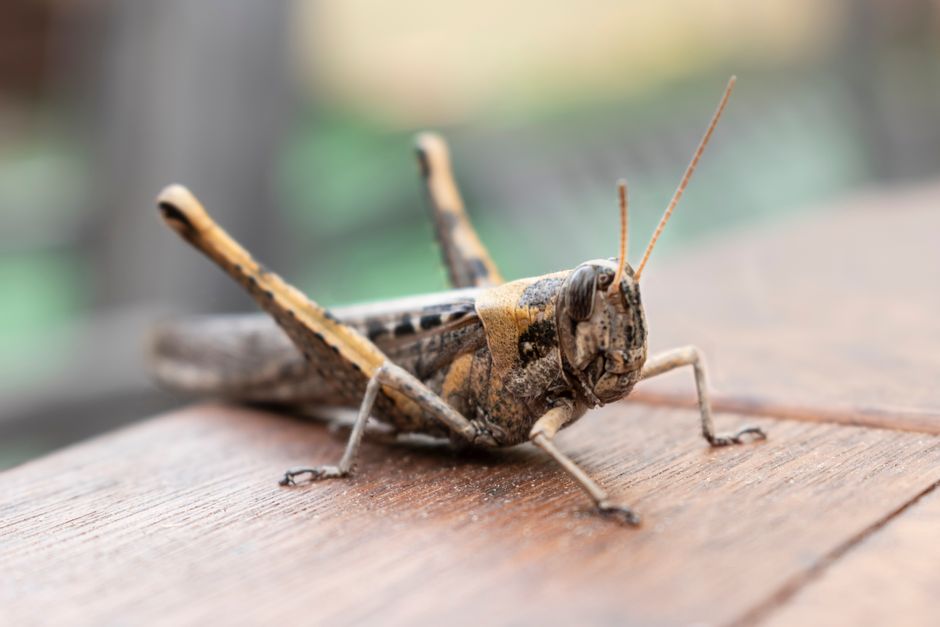
Global Warming’s Locust Swarm: An Accelerating Crisis
The nexus of global warming and devastating locust plagues represents a critical environmental and humanitarian challenge. Rising global temperatures, driven by anthropogenic greenhouse gas emissions, are demonstrably altering weather patterns and ecological dynamics in ways that create ideal breeding grounds and migratory pathways for locusts, particularly species like the desert locust (Schistocerca gregaria) and the migratory locust (Locusta migratoria). These insects, known for their gregarious phase which transforms solitary individuals into massive, destructive swarms, are experiencing an increased frequency and intensity of outbreaks directly attributable to climate change. This phenomenon poses a significant threat to global food security, biodiversity, and economic stability, necessitating immediate and comprehensive mitigation and adaptation strategies. The intricate relationship between a warming planet and insect pest outbreaks is not a future hypothetical; it is a present and escalating reality demanding urgent attention.
The fundamental mechanism by which global warming fuels locust plagues lies in its impact on temperature and precipitation. Locusts, being ectothermic organisms, are highly sensitive to ambient temperatures. Warmer temperatures accelerate their life cycles, leading to faster maturation and reproduction rates. This means more generations of locusts can hatch and develop within a shorter period, dramatically increasing population sizes. Furthermore, specific temperature thresholds are crucial for triggering the phase change from solitary to gregarious behavior. When conditions become favorable, often following periods of drought followed by rainfall, locust nymphs aggregate, initiating the formation of destructive swarms. Climate change is destabilizing these traditional patterns, leading to more frequent and prolonged periods of unusually favorable conditions. For instance, shifts in rainfall patterns, a hallmark of climate change, create a boom-and-bust cycle that locusts exploit. Prolonged droughts can reduce predatory populations and plant cover, but subsequent unseasonal rains, often triggered by events like El Niño – which itself is being influenced by global warming – can create vast expanses of lush vegetation, providing abundant food for emerging locust populations. These "green deserts" become nurseries for nascent swarms.
The desert locust, perhaps the most notorious of these pests, is particularly adept at exploiting these climate-driven shifts. Its lifecycle is intricately linked to rainfall patterns in arid and semi-arid regions of Africa, the Middle East, and Southwest Asia. Historically, outbreaks have been cyclical, occurring every few years. However, recent decades have witnessed a concerning trend of more frequent and persistent plagues. The years 2003-2005 saw one of the most severe desert locust outbreaks in decades, devastating crops across North Africa and the Sahel. This outbreak was linked to anomalous weather patterns, including unusually heavy rainfall in areas typically experiencing drought, providing ideal breeding conditions. Similarly, the major plague of 2019-2020, which impacted East Africa, the Arabian Peninsula, and Iran, was also attributed to a combination of erratic rainfall and warmer temperatures. These events, far from being isolated incidents, are increasingly recognized as manifestations of a climate-amplified pest cycle. The interconnectedness of these regions means that an outbreak in one area can quickly spread, creating a domino effect with devastating consequences across vast geographical areas.
The economic and social ramifications of these plagues are profound. Locust swarms can consume their own weight in vegetation daily, leading to the complete destruction of crops and pastureland. This has direct implications for agricultural economies, particularly in developing nations where subsistence farming is prevalent. The loss of harvests can lead to widespread food shortages, famine, and economic hardship for millions. Beyond direct crop damage, locusts can also decimate stored grain, further exacerbating food insecurity. The cost of controlling these swarms is also immense, requiring significant investment in pesticide application, surveillance, and early warning systems. These resources are often diverted from other essential development programs, creating a vicious cycle of poverty and vulnerability. Furthermore, the displacement of populations fleeing devastated agricultural areas adds to the humanitarian crisis, placing further strain on resources and infrastructure. The psychological toll on affected communities, facing the annihilation of their livelihoods year after year, is also a significant, often overlooked, consequence.
The scientific consensus is growing that climate change is not merely a contributing factor but a primary driver behind the increasing frequency and severity of locust outbreaks. Research employing climate modeling and historical data analysis has revealed strong correlations between rising global temperatures, altered precipitation patterns, and locust population dynamics. Studies have shown that even modest increases in temperature can significantly shorten locust development times. Furthermore, changes in wind patterns, also influenced by climate change, can facilitate the long-distance migration of swarms, allowing them to spread more rapidly and cover larger territories. The IPCC (Intergovernmental Panel on Climate Change) has consistently highlighted the vulnerability of agricultural systems to climate change, and locusts are a potent example of this vulnerability in action. The disruption of natural ecosystems due to climate change also plays a role by potentially reducing the populations of natural predators that would otherwise help to keep locust numbers in check.
Mitigating the impact of climate change-driven locust plagues requires a multi-pronged approach, encompassing both global climate action and localized pest management strategies. At the global level, the most effective long-term solution is aggressive greenhouse gas emission reduction to stabilize global temperatures and limit further climate disruption. This involves transitioning to renewable energy sources, improving energy efficiency, and implementing sustainable land-use practices. Without addressing the root cause of climate change, efforts to control locusts will remain largely reactive and ultimately insufficient. In parallel, localized strategies are crucial for immediate response and long-term resilience. These include strengthening early warning systems, which rely on sophisticated monitoring of weather patterns, vegetation conditions, and early signs of locust aggregation. Investing in research and development of more targeted and environmentally friendly pest control methods is also paramount, reducing reliance on broad-spectrum pesticides that can harm beneficial insects and ecosystems.
Furthermore, promoting climate-resilient agricultural practices in locust-prone regions can help to buffer communities against the impact of these outbreaks. This includes diversifying crops, adopting drought-resistant varieties, and improving irrigation techniques. Enhancing community preparedness and response mechanisms, including training local farmers in pest identification and early reporting, is also essential. International cooperation and financial assistance are vital, particularly for developing countries, to support these mitigation and adaptation efforts. Sharing knowledge, technologies, and resources across borders can significantly improve the effectiveness of regional and global locust management strategies. The interconnectedness of the global climate system and the migratory nature of locusts necessitate a coordinated, international response that transcends political boundaries. Ignoring this interconnectedness is a recipe for continued devastation.
The long-term implications of unchecked global warming on locust populations are dire. Continued warming trends predict an expansion of suitable breeding grounds for locusts into new regions, potentially introducing these devastating pests to areas that have historically been spared. This geographical expansion increases the risk of novel and unprecedented agricultural losses, further straining global food supplies. The increased frequency and intensity of swarms could overwhelm existing control measures, leading to widespread famine and humanitarian crises. Moreover, the ecological impact of persistent, large-scale locust infestations can be significant, leading to desertification, soil degradation, and loss of biodiversity. The intricate balance of ecosystems, already stressed by climate change, could be irrevocably disrupted.
The fight against climate change-driven locust plagues is thus intrinsically linked to the broader fight against global warming. It is a stark reminder of the cascading consequences of our environmental actions. The economic burden of these plagues is substantial, encompassing not only the direct costs of crop destruction and control measures but also the long-term costs associated with food insecurity, displacement, and economic instability. Investing in climate action and resilient agriculture is not just an environmental imperative; it is an economic and social necessity. The future of global food security and the stability of vulnerable regions hinge on our ability to effectively address the complex interplay between a warming planet and the ancient, destructive power of locust swarms. The data clearly indicates that inaction will lead to far greater costs, both human and economic, in the years to come. This is a challenge that requires immediate, decisive, and globally coordinated action.
The role of international organizations and governmental bodies in coordinating locust surveillance and response efforts cannot be overstated. Agencies like the Food and Agriculture Organization of the United Nations (FAO) play a crucial role in disseminating early warning information, coordinating international aid, and supporting national control programs. However, their effectiveness is often hampered by insufficient funding and political will. A more robust and sustained commitment from governments worldwide is necessary to bolster these institutions and ensure their capacity to respond to escalating threats. This includes prioritizing research into the precise mechanisms by which climate change influences locust behavior, enabling more accurate predictive modeling and targeted interventions. Furthermore, fostering a greater understanding of the socio-economic vulnerabilities of communities in locust-prone areas is essential for developing effective, context-specific adaptation strategies.
Ultimately, addressing the global warming-fueled locust plague demands a paradigm shift in how we approach environmental challenges. It requires recognizing the interconnectedness of our planet’s systems and acting proactively rather than reactively. The destructive potential of these insect swarms serves as a potent, tangible manifestation of the far-reaching consequences of human-induced climate change. Ignoring this reality is a luxury we can no longer afford. The economic stability, food security, and overall well-being of billions depend on our collective ability to confront this accelerating crisis with the urgency and determination it demands. The future trajectory of these plagues is not predetermined; it is a choice we make today through our actions, or our inaction, regarding climate change mitigation and adaptation.
