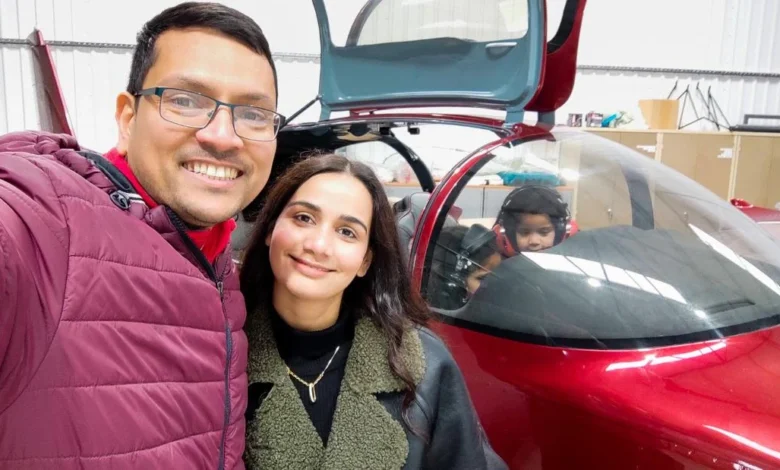
The journey of Ashok Aliseril Thamarakshan, a mechanical engineer residing in Essex, England, represents a unique intersection of aeronautical ambition and domestic ingenuity. What began as a casual interest in aviation blossomed into a rigorous, 18-month project that saw the construction of a four-seater Sling TSi aircraft within the confines of a suburban backyard. This endeavor, which culminated in the aircraft’s maiden flight in January 2022, serves as a compelling case study in the accessibility of modern general aviation and the potential for amateur-built aircraft to serve as viable family transport.
The Genesis of an Aeronautical Ambition
Thamarakshan’s interest in aviation was not lifelong but rather a product of circumstance. Over a decade ago, after moving into proximity with a UK airfield, he became intrigued by the mechanics of flight. This curiosity was formalized when his wife, Abhilasha, gifted him a 30-minute flight experience. The subsequent flight to the Isle of Wight served as the catalyst for his pursuit of a private pilot’s license (PPL), which he attained in 2019.
As his flying hours increased, so did the limitations of the rental market. Standard two-seater aircraft, which dominate the rental fleets available to private pilots, proved inadequate for his growing family, which includes two daughters. Confronted with the high cost of purchasing pre-owned, aging aircraft—many of which were manufactured in the 1960s or 1970s—Thamarakshan grew concerned about maintenance reliability and the overall comfort of such older models. His professional background as a mechanical engineer led him to a conclusion: if he could not find a suitable, modern, and affordable aircraft, he would construct one himself.
Project Planning and Regulatory Oversight
The transition from pilot to builder required a strategic approach to both engineering and regulation. In the United Kingdom, the construction of amateur-built aircraft is governed by the Civil Aviation Authority (CAA), with the Light Aircraft Association (LAA) acting as the primary oversight body for these projects.
In January 2020, just before the global onset of the Covid-19 pandemic, Thamarakshan traveled to the Sling Aircraft factory in Johannesburg, South Africa. After test-flying the Sling TSi—a high-performance, four-seater kit aircraft—he placed an order for the construction kit. The timing was fortuitous yet challenging; the kit arrived in the UK precisely as the nation entered its first national lockdown.
The regulatory process for such projects is exhaustive. An "experimental" or "amateur-built" aircraft cannot simply be constructed and flown; it must undergo a series of inspections by the LAA to ensure compliance with airworthiness standards. For the duration of the 18-month build, Thamarakshan’s work was subject to approximately 12 distinct inspections. Each phase—from the tail and wing assembly to the intricate installation of the avionics and the Rotax engine—required formal sign-off before the project could proceed.
The Logistics of a Backyard Build
Building an aircraft in a residential setting presents significant logistical hurdles, particularly regarding space and specialized tools. Thamarakshan erected a purpose-built shed in his garden, which served as his primary hangar for the duration of the assembly phase.

The project relied heavily on the detailed, modular instructions provided by Sling Aircraft, which Thamarakshan described as being comparable to high-end, complex furniture assembly. While his engineering background provided a foundational understanding of structural integrity and systems, he noted that "home improvement experience" was equally vital for the physical assembly. His family became integral to the process: his wife assisted with labor-intensive tasks requiring additional hands, while his eldest daughter, Tara, contributed by assisting with component preparation.
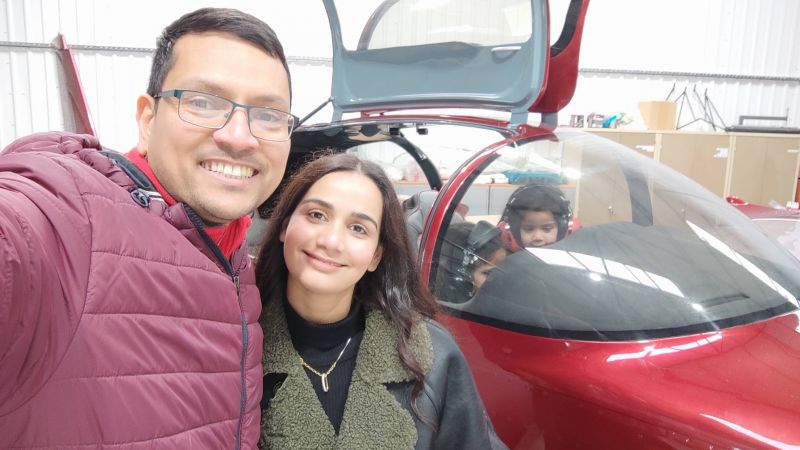
By late 2020, the major structural components were complete. To finalize the assembly and engine mounting, the aircraft was moved to a professional hangar facility near Cambridge. The aircraft, officially registered as G-Diya (named after his youngest daughter), represents one of the first home-built Sling TSi units completed in the United Kingdom.
The First Flight and Psychosocial Milestones
The transition from "project" to "aircraft" is a significant psychological threshold in the amateur aviation community. On January 2022, the aircraft was cleared for its maiden flight. Thamarakshan opted for a professional test pilot to perform the initial flight, a standard safety precaution in the home-built aviation sector.
The successful 20-minute test flight was followed by a series of rigorous performance evaluations. During these trials, a test pilot pushed the aircraft to its operational limits, testing its handling characteristics under high-stress maneuvers to ensure structural integrity. Upon landing, the confirmation that the aircraft performed as designed provided the final validation for the 18 months of intensive labor.

Economic Implications and Shared Ownership
A central concern for many aspiring pilots is the prohibitive cost of aviation. The total investment for G-Diya reached approximately £180,000 (roughly $203,000 at the time), covering the £80,000 kit, engine, propeller, and advanced avionics suite.
To mitigate the financial burden and ensure the project remained sustainable, Thamarakshan formed a co-ownership syndicate with three other pilots. This arrangement serves multiple purposes:
- Cost Amortization: By splitting fixed costs (hangar fees, insurance, maintenance) and variable costs (fuel), the financial commitment per person is reduced to a level comparable to the cost of a high-end SUV.
- Operational Efficiency: The Sling TSi is notably fuel-efficient, consuming roughly 20 liters of unleaded fuel per hour. This makes regional travel economically competitive with terrestrial transport.
- Community and Safety: Syndicate ownership fosters a culture of shared learning. Pilots within the group share experiences, cross-train on the aircraft’s specific systems, and provide a network of support that enhances overall flight safety.
Broader Impact and Future Outlook
Since receiving its permit to fly in May 2022, G-Diya has logged over 300 flight hours. The aircraft has enabled the Thamarakshan family to undertake international travel, including trips to France and Norway, which they document via their social media presence, "Fly Home or Away."
The success of this project highlights a growing trend in private aviation: the rise of "kit-built" aircraft as a legitimate alternative to factory-built planes. With the advancement of manufacturing technologies and the availability of sophisticated avionics, amateur-built aircraft are increasingly matching the performance and safety profiles of certified production aircraft.

However, the implications of such projects extend beyond personal freedom. They serve as a vital conduit for STEM education and mechanical literacy. Thamarakshan has expressed a hope that more young people and enthusiasts will consider similar builds. By reducing the barrier to entry through shared ownership models and rigorous self-construction, the aviation sector may find new ways to engage a broader demographic of pilots.
In conclusion, the construction of G-Diya stands as a testament to what is possible when technical skill, regulatory adherence, and communal cooperation converge. As the aviation industry continues to evolve, the story of this Essex-based engineer provides a practical blueprint for how private, general aviation can remain both accessible and safe in an increasingly complex regulatory and economic landscape. The project remains a reminder that the path to the sky is not merely about owning an aircraft, but about the profound, disciplined process of creating one.