Danny Trejo Says He Tried to Exit Daily Wire’s Pro-ICE Film ‘Pawn Shop’ But Was Told They’d ‘Sue the Hell Out of Me’

The Conflict Over Pawn Shop
The film in question, Pawn Shop, is a high-stakes thriller that has drawn significant criticism for its narrative focus. The plot centers on a Minneapolis-based ICE officer who, after the death of his partner during a riot, finds himself barricaded in a local pawn shop. The protagonist must navigate a siege orchestrated by a hostile mob, joined by a veteran Hispanic character and his grandson. The project’s premise—which explores themes of law enforcement, immigration, and civil unrest—has invited intense scrutiny, particularly regarding the depiction of ICE (Immigration and Customs Enforcement) and the political implications of a script written or produced under the banner of The Daily Wire.
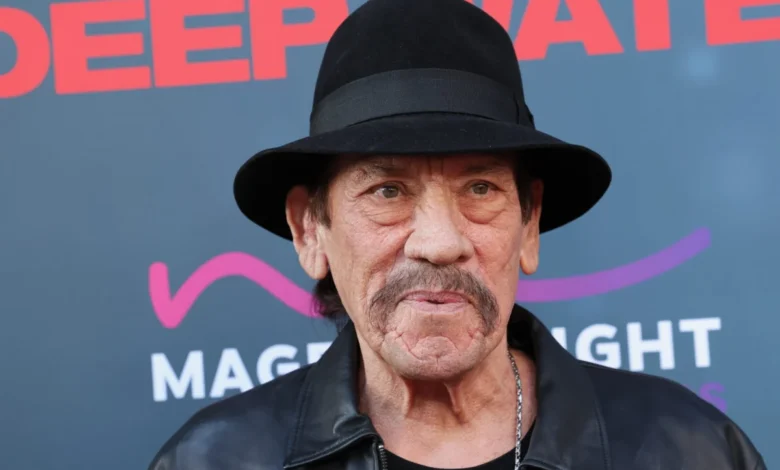
When the news of Trejo’s casting surfaced, a wave of public outcry followed. Fans of the actor, many of whom associate him with roles that highlight the immigrant experience and the struggles of the Latino community, expressed confusion and disappointment. Trejo’s initial response, provided to media outlets in October, was an attempt to distance himself from the political leanings of the production company. He stated, "I am a proud Mexican who has always been and will always be a supporter of my community. I am also obviously pro-immigrant. I am not pro-ICE. I am an actor. My job is to tell a story."
A Chronology of the Dispute
The timeline of the controversy reveals a sequence of events that highlights the friction between the actor’s professional obligations and his personal reputation.
- Initial Casting: Trejo accepts the role in Pawn Shop, reportedly without full knowledge of the production company’s specific political affiliation or the ideological slant of the script.
- Production Realization: According to statements made by Trejo’s son, Gilbert Trejo, the cast only became aware of Ben Shapiro’s involvement approximately two weeks into filming. Gilbert noted that his father had no prior familiarity with Shapiro.
- Public Backlash: As production continued, the news circulated that The Daily Wire was the primary financier and distributor. Trejo began receiving significant criticism on social media platforms.
- Attempted Exit: Trejo attempted to terminate his contract to avoid association with the project, only to be met with a firm legal warning from the production team.
- October Statement: Trejo issued a public clarification, emphasizing his identity as a performer rather than a political advocate.
- November Disclosure: In a video interview, Trejo publicly confirmed that he was essentially forced to remain with the project under the threat of being "sued the hell out of" by the production company.
Contractual Realities in Hollywood
The legal threats referenced by Trejo serve as a window into the "pay or play" and "breach of contract" clauses that govern the entertainment industry. In standard independent film contracts, producers often include strict non-disparagement clauses and performance obligations that prevent actors from withdrawing once principal photography has commenced.
For an actor of Trejo’s stature, exiting a production involves not only the potential for financial litigation but also the risk of being blacklisted by insurance companies and financiers who view such departures as a liability. Legal experts note that in cases involving high-profile political media companies, these contracts are often drafted with ironclad language to protect the company’s brand and project viability. By forcing an actor to remain, the production company effectively maintains its narrative control, even when the talent publicly expresses ideological discomfort.
The Broader Impact: Conservative Media and Hollywood
The controversy surrounding Pawn Shop is not an isolated incident. It reflects a shifting landscape in the film industry, where media organizations with explicit ideological goals are increasingly funding and producing their own content. The Daily Wire’s entry into narrative filmmaking is part of a broader trend of "counter-culture" production companies seeking to challenge the perceived liberal bias of traditional Hollywood studios.
This transition has created a complex environment for actors, who must now navigate the political branding of their employers. The situation involving Rob Lowe further underscores this point. Lowe, who recently took on a role in the Daily Wire-distributed film Confession, faced similar questions about his professional choices. During an appearance on the Conversations With Coleman podcast, Lowe admitted that his own representatives advised against the move. His defense, however, was grounded in a centrist, non-ideological approach to his career. "I’m old enough, established enough, people know me well enough, to know that I’m not an ideologue at all," Lowe stated.
The contrast between Trejo and Lowe’s experiences highlights a disparity in how actors manage political association. While some, like Lowe, leverage their decades of experience to frame their work as "non-ideological," others, like Trejo, find themselves caught in the middle of intense public scrutiny, often feeling that their creative agency is compromised by legal threats and contractual binds.
Analyzing the Implications
The implications of this incident are twofold. First, it brings to the forefront the importance of transparency in casting. When actors sign on to independent projects, the "brand" of the production company is often treated as secondary to the script and the character. However, as independent media companies grow more vocal about their political objectives, the "talent-brand" alignment is becoming a significant factor in contract negotiations.
Second, it raises questions about the power dynamic between production entities and talent. If an actor discovers that a project’s mission statement is diametrically opposed to their personal values, the current legal framework leaves them with few options other than to complete the work or face ruinous litigation. This "forced labor" dynamic—while legally sound within the context of a breach of contract—creates a PR minefield for producers and a personal crisis for performers.
Official Responses and Future Outlook
As of late 2026, The Daily Wire has not issued a detailed, formal statement addressing Trejo’s specific claims regarding the threat of a lawsuit. The industry remains split on the matter; some industry observers argue that a contract is a binding document that should be honored regardless of political climate, while others sympathize with the actor’s position, suggesting that producers should allow for "moral exit clauses" in an increasingly polarized world.
For the audience, the impact of these controversies remains to be seen. Historically, the political affiliations of producers have rarely deterred the public from consuming popular entertainment. However, as the lines between media, politics, and film continue to blur, the public’s awareness of who is funding the stories they watch is at an all-time high. Whether this will lead to a change in standard industry contracts or a shift in how production companies recruit talent remains a critical subject for the future of the entertainment business.
As for Danny Trejo, the actor continues to work, though his experience with Pawn Shop serves as a cautionary tale regarding the intricacies of modern Hollywood production. The incident highlights that in an age of intense political division, no film is merely a "story"—it is, for many, a political statement, and those involved in its creation are often forced to wear that statement, whether they agree with it or not.
Related posts: