When Natural Disasters Collide With New Medicaid Rules: How Vulnerable Americans Are Caught in the Crosshairs


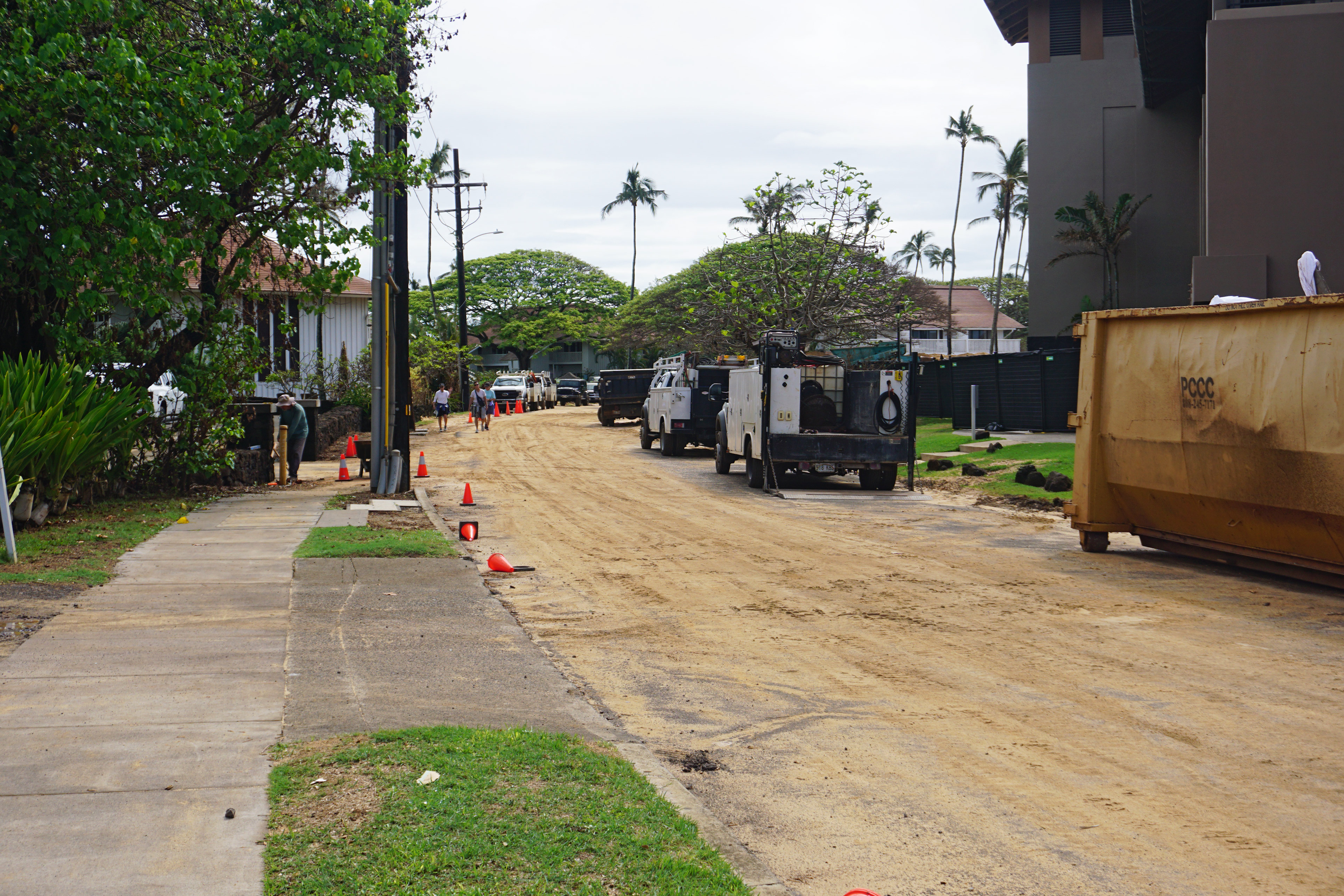
Poʻipū, Hawaiʻi — A month after Hurricane Lowell battered the island of Kauaʻi, the stark physical markers of a natural disaster remained stubbornly embedded in the landscape. Downed timber, buzzing construction crews, and blue tarps stretched over compromised roofs dominated neighborhood blocks. At the sprawling Sheraton Kauaʻi Resort, where storm surges and high winds forced the layoff of more than 100 hospitality workers, fine white sand blanketed manicured grounds. Just steps from the churning Pacific Ocean, the resort’s drained swimming pool sat fractured, its exposed concrete deck crumbling directly onto the beach.
The physical devastation on the ground was immediately mirrored in economic shockwaves. Unemployment claims on Kauaʻi, hovering at a modest 69 claims just prior to the September hurricane, skyrocketed to approximately 1,800 nearly two weeks afterward. This surge was driven by widespread layoffs across the island’s tourism-dependent economy, which suffered a precipitous drop in incoming travelers. Compounding the crisis, data from the Hawaiʻi Department of Human Services revealed that Medicaid applications submitted by island residents spiked by roughly 50% in the month following the storm.
For many Americans facing sudden economic displacement, Medicaid serves as the ultimate health care safety net. However, the timing of Hurricane Lowell’s landfall intersected dangerously with sweeping federal policy changes. Under the One Big Beautiful Bill Act—signed into law by President Donald Trump—new work requirements were enacted, placing millions of Medicaid enrollees nationwide under heightened scrutiny. The legislation mandates that nondisabled adults enrolled in Medicaid across 43 states and Washington, D.C., must maintain at least 80 hours a month of employment, volunteering, or educational enrollment to retain their coverage, with eligibility enforcement rolling out in January.
The Complex Labyrinth of Disaster Exemptions and Federal Bureaucracy
In theory, federal regulations provide a safety valve for communities upended by natural calamities. Residents living in federally declared disaster areas can theoretically access short-term exemptions from the rigorous Medicaid work requirements. Yet, unlocking these carve-outs is fraught with procedural delays, administrative ambiguities, and heavy dependence on executive action.
Under federal guidelines, hardship exemptions hinge directly on the president issuing an official disaster or emergency declaration that unlocks federal assistance. But these declarations are rarely instantaneous. In many cases, it takes weeks, months, or—in some historical instances—entire quarters for an official federal designation to clear the pipeline. Furthermore, the Trump administration has left state health agencies grappling in the dark, failing to provide clear guidance on the precise temporal limits of natural disaster exemptions. Specifically, federal authorities have not clarified how long a state can legally extend a natural disaster exemption to workers who remain unemployed months after the initial storm has passed.
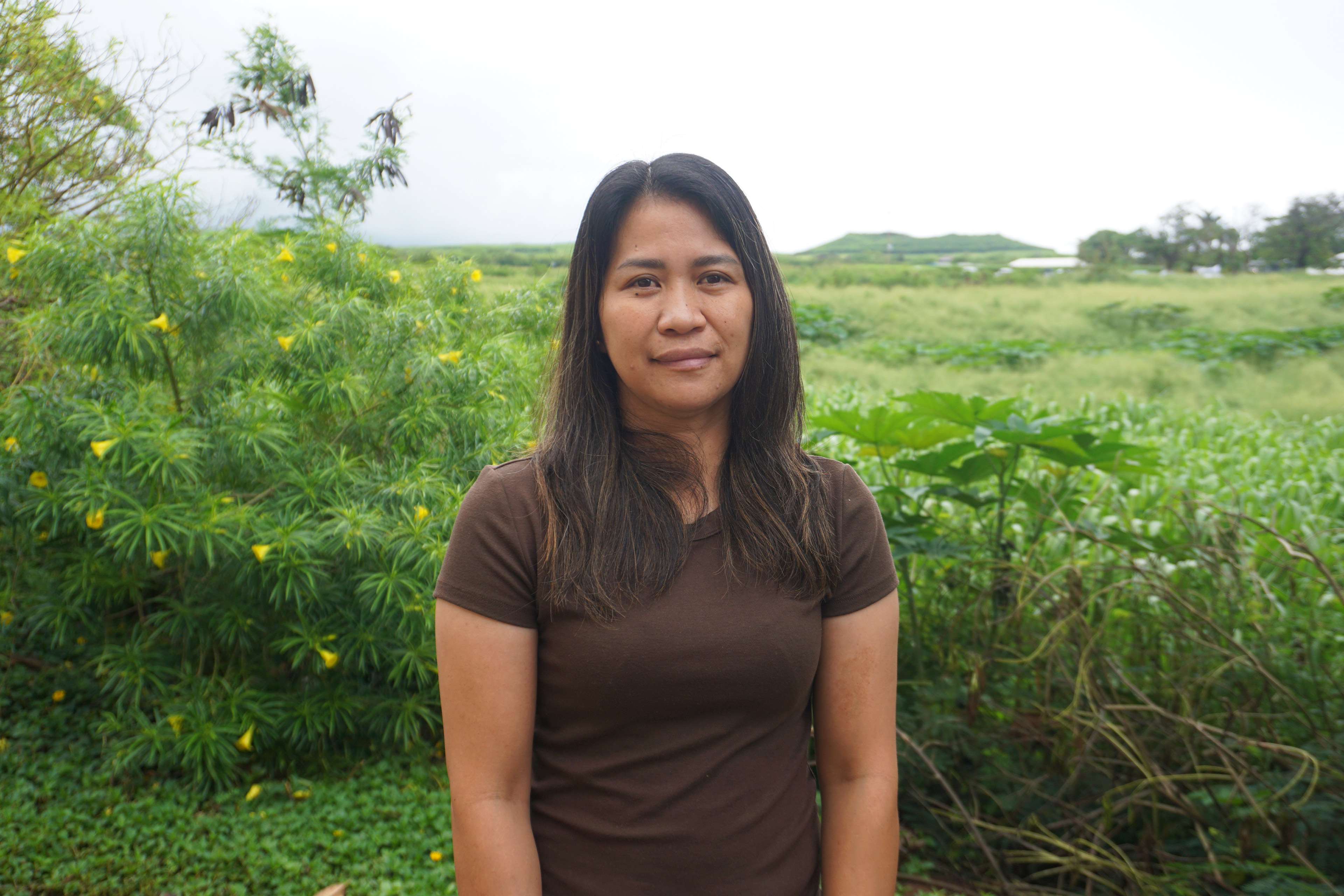
This administrative fog has profound human consequences. Rochelle Ganotisi, a mother of five living on Kauaʻi, knows this uncertainty intimately. Ganotisi and her boyfriend were among the cohort laid off from the Sheraton Kauaʻi Resort in the wake of Hurricane Lowell. Today, the family is scraping by on modest unemployment benefit payments and sporadic part-time gigs. Fortunately, the labor union representing the resort’s hospitality staff successfully negotiated three months of transitional health insurance coverage for displaced members. But that clock is ticking down rapidly. If Ganotisi is not rehired into her housekeeping position by the time the union-provided coverage expires, she intends to apply for Medicaid—placing her squarely in the sights of the newly minted federal work rules.
Recognizing the impending administrative trainwreck, Hawaiʻi Gov. Josh Green, a Democrat and practicing physician, has sounded repeated alarms regarding the necessity of expedited federal disaster declarations. The Centers for Medicare & Medicaid Services (CMS) ultimately granted states an optional six-month grace period, allowing them to delay enforcing the punitive Medicaid work requirements until next July. However, the federal framework still mandates that states initiate and execute complex eligibility checks by Jan. 1.
“It would be devastating if suddenly 40,000 or 50,000 people didn’t have their Medicaid benefits,” Gov. Green said. “It could affect our rural hospitals, our nurse practitioners, our doctors, so timeliness is key.”
In response to the federal squeeze, Hawaiʻi state officials have confirmed they will shield enrollees who fail to meet the 80-hour work threshold, keeping them actively enrolled on the Medicaid rolls through at least July.
A Patchwork National Landscape and the Nebraska Precedent
Nationwide, states are scrambling to adapt to the new regulatory reality. According to tracking data compiled by KFF, a health information nonprofit organization that includes KFF Health News, at least 34 states alongside Washington, D.C., plan to adopt the optional hardship exemptions to soften the blow of the work mandates.
Conversely, four states—Indiana, Iowa, Missouri, and Ohio—have opted out of adopting these specific disaster exemptions. Notably, all four of those states were hit with federal disaster declarations for severe storms and flooding earlier in the summer, leaving their low-income populations potentially vulnerable should subsequent economic shocks occur.
CMS spokesperson Timothy Foster defended the federal stance in a written statement to KFF Health News, emphasizing that states can formally petition federal authorities for extended hardship exemption durations if they can definitively prove that structural barriers to documenting work requirements persist within designated disaster zones.
For a preview of how these tangled policies play out in real time, analysts have pointed to Nebraska, which implemented its Medicaid work requirements early, in May. The rollout laid bare the administrative friction inherent in pairing rigid benefit rules with erratic disaster relief timelines.
Nebraskans caught in natural disasters found that federal relief arrived at a glacial pace. It took three months for the Trump administration to issue a federal disaster declaration for destructive wildfires that swept the state in March and April. For a separate wave of severe storms, tornadoes, and flooding that struck in May, a federal disaster declaration was withheld until August.
The bureaucratic lag had immediate casualties. Six Nebraska residents who lost their jobs or suffered income disruption due to the disasters were abruptly stripped of their Medicaid coverage because they failed to meet the strict work requirement milestones before the hardship exemptions could be officially processed. By October, the Nebraska Department of Health and Human Services announced it was actively reprocessing the eligibility files for those individuals, restoring their coverage now that the late-arriving hardship exceptions finally applied.
Sarah Maresh, director of the Health Care Access program at the nonprofit advocacy group Nebraska Appleseed, argued that the accelerated and disjointed rollout of the Medicaid work rules has generated widespread panic and confusion among vulnerable populations.
“This is part of the confusion that comes with the Medicaid work requirements, because it applies differently depending on your situation,” Maresh noted. “I think it’ll be very challenging for new applicants.”
Rising Denials, Political Friction, and Legal Battles
The friction over disaster declarations extends far beyond the realm of health care policy. During his second term, President Trump has denied nearly a quarter of all state requests for disaster and emergency declarations as of mid-November—representing a rejection rate higher than that recorded by any presidential administration in over two decades.
Furthermore, a series of analyses published in 2026 by The Associated Press and Politico’s E&E News revealed a striking geographic and political disparity in these decisions. States governed by Democrats have faced significantly higher denial rates and substantially longer processing wait times than states led by Republican governors.
White House spokesperson Lauren Bis strongly rejected any accusations of partisanship or political bias in the administration’s management of federal disaster assistance. Bis asserted that the rigorous evaluation of state requests ensures the responsible stewardship of federal taxpayer dollars, maintaining the statutory principle that federal aid is designed to “supplement — not substitute” state-level obligations during local emergencies.
Despite the administration’s defense, the sheer volume of climate-driven disasters has strained state resources to a breaking point. Hawaiʻi alone secured its sixth disaster or emergency declaration of the year when President Trump approved the major disaster declaration for Kauaʻi following Hurricane Lowell—making the islands the most disaster-declared state in the nation for 2026. Prior to that, a 6.0-magnitude earthquake that severely damaged over 300 homes on Hawaiʻi Island required a three-month waiting period before receiving federal approval.
Other Democratic-led states have endured even longer bureaucratic purgatories. New Mexico spent nine grueling months waiting for the White House to approve a presidential disaster declaration for severe storms and flash flooding that hit the state in September 2025. Meanwhile, Illinois—operating under a Democratic trifecta—saw its repeated requests for federal disaster aid rejected by the Trump administration, despite state documentation showing that local damage thresholds had formally cleared the criteria required by the Federal Emergency Management Agency (FEMA).
The narrow compliance windows and administrative logjams have already triggered major legal pushback. Several Democratic state attorneys general filed lawsuits against CMS, targeting the restrictive time frames allotted for securing natural disaster exemptions. The legal complaints argue that the federal agency’s rigid guidelines place an unconstitutional and impossible administrative burden on state Medicaid offices tasked with determining eligibility amidst regional chaos. In its court filings, CMS countered that these strict boundaries are necessary to ensure that hardship exemptions are narrowly tailored to instances where a disaster directly impairs an enrollee’s capacity to meet work benchmarks.
The Broader Economic Ripple Effects
Public health experts warn that stripping health coverage from individuals during a post-disaster recovery phase creates a vicious economic cycle. Local economies and small businesses routinely require years to stabilize after a major weather event. According to data from the U.S. Small Business Administration, approximately 90% of small businesses fail within two years of sustaining a direct hit from a natural disaster.
Compounding this commercial fragility are severe regional housing shortages. Displaced workers frequently find themselves forced to relocate far away from their employment hubs just as they are attempting to rebuild their homes. In Maui, three years after the catastrophic 2023 wildfires claimed more than 100 lives, the path toward full economic and infrastructural recovery remains painfully slow, with a vast majority of commercial storefronts in the historic district of Lahaina remaining boarded up and shuttered.
Tom Cotter, CEO of the Health Response Alliance, a nonprofit organization dedicated to shoring up health care access during public emergencies, explained that when individuals lose their health insurance, they are inevitably forced to seek medical care through hospital emergency rooms and charitable clinics—virtually the only institutional settings legally required to treat patients regardless of their financial status or ability to pay.
“All of these are really stretched thin during an emergency because their patient load goes way up,” Cotter observed. “That makes it even more expensive for the healthcare system that is being otherwise also burdened for the disaster.”
Cotter added that layering strict work mandates on top of disaster recovery efforts fundamentally counteracts economic rehabilitation. “It is going to slow the economic recovery of any particular community,” he said. “It’s going to require people to be thinking about how they’re paying for healthcare when they have a lot of other things to worry about.”
Surviving in the Margins
For individuals who fall entirely outside the administrative safety nets of both disaster relief and Medicaid, the daily struggle is elemental.
Oscar Cardova worked as a staff member at The Terrace Hanalei, a popular restaurant situated on Kauaʻi’s scenic North Shore that suffered catastrophic structural damage during Hurricane Lowell. When the establishment closed its doors indefinitely, Cardova lost his employer-sponsored health insurance plan. Although Cardova legally resides in the United States on a work permit visa originating from Peru, his immigration status disqualified him from enrolling in Medicaid.
Today, Cardova and his wife, Yesenia, live out of their van. Yesenia suffers from severe astigmatism. Without health insurance or disposable income, acquiring a necessary pair of prescription eyeglasses will cost the couple roughly $500 out of pocket—an insurmountable sum under their current circumstances.
The couple initially planned to live and work in the United States for two more years to build financial stability before returning permanently to Peru. Instead, a month after the hurricane upended their lives, they find themselves stalled in a state of indefinite limbo, weighing whether to relocate to Honolulu in a desperate bid to find casual labor.
“Right now, we’re just surviving,” Cardova said quietly. “We’re waiting to see what happens before making other decisions, because we can’t keep living like this.”