
France Farmer Protests Macron
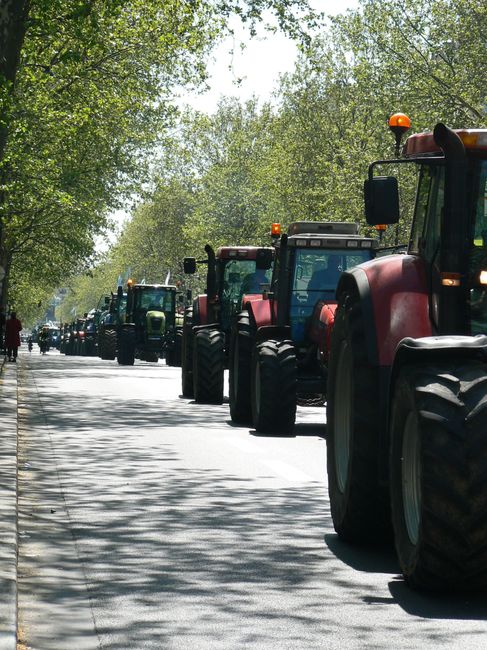
France’s Farmers Blockade: A Deep Dive into the Protests Against Macron’s Policies
The persistent and increasingly disruptive farmer protests gripping France, orchestrated by agricultural unions and their members, represent a multifaceted crisis directly challenging President Emmanuel Macron’s administration and its agricultural policies. These demonstrations, characterized by the blockading of major highways, the dumping of produce in urban centers, and the occupation of key infrastructure, stem from a deep-seated frustration with a confluence of economic, environmental, and bureaucratic pressures that farmers argue are rendering their profession unsustainable. At the heart of the discontent lie concerns over low incomes, the perceived unfair burden of environmental regulations, and a sense of being overlooked and undervalued by a government perceived as prioritizing urban interests and distant international agreements over the realities of French agriculture. The protests are not a monolithic bloc but rather a complex ecosystem of grievances, with specific demands varying across different agricultural sectors, yet united by a shared determination to force a significant policy shift.
The economic viability of French farms is a central tenet of the farmer protests. Many agricultural producers, particularly those in the livestock and cereal sectors, report struggling with persistently low and often declining profit margins. This squeeze is attributed to a variety of factors, including intense competition from international producers, the dominance of large supermarket chains dictating purchasing prices, and the escalating costs of essential inputs such as fuel, fertilizer, and animal feed. Farmers feel they are caught in a pincer movement, unable to raise prices to reflect their production costs due to market pressures and the power of retailers, while simultaneously facing increasing expenses. The argument is made that current farm gate prices are simply not reflective of the true cost of production, leading to a situation where many farms are operating at a loss or with an unsustainable level of debt. This economic precarity is amplified by the perception that government subsidies and support mechanisms are insufficient, poorly targeted, or overly bureaucratic to access. The protracted nature of these protests underscores the depth of this economic distress, indicating that this is not a fleeting grievance but a systemic issue that has reached a breaking point for many in the agricultural community.
Environmental regulations, while often framed by the government as necessary steps towards sustainability and climate action, are a significant point of contention for French farmers. The implementation of policies such as the EU’s Common Agricultural Policy (CAP) reforms, national pesticide reduction targets, and increased demands for biodiversity conservation are perceived by many farmers as overly stringent, costly to implement, and disconnected from the practical realities of farming. Critics argue that these regulations place French farmers at a competitive disadvantage compared to producers in other countries with less rigorous environmental standards. The "ecological model" promoted by the Macron government, while aspirational, is seen by many on the ground as imposing an undue financial and operational burden without adequate compensatory support or a clear transition strategy. Farmers are questioning the feasibility of achieving ambitious environmental goals while simultaneously remaining economically viable. The complexity and frequent changes in these regulations also contribute to a sense of uncertainty and instability, making long-term planning difficult and further exacerbating existing anxieties about the future of their livelihoods.
The perceived bureaucratic burden and a feeling of being disconnected from decision-making processes in Paris and Brussels fuel a significant portion of the farmer protests. Farmers report being overwhelmed by administrative paperwork, complex application processes for subsidies, and a constant barrage of new rules and directives that they feel are drafted by individuals with little understanding of the day-to-day challenges of agricultural production. This sense of being dictated to, rather than being consulted, fosters resentment and a feeling of marginalization. The Macron administration’s approach to agricultural policy is often characterized by its technocratic style, which, while aiming for efficiency, can alienate those directly impacted. The farmers’ unions have been vocal in their demands for greater involvement in policy formulation, advocating for a more collaborative and participatory approach. The repeated invocation of "common sense" by the protestors highlights their belief that current policies are detached from the practical realities they face on their farms.
Specific demands articulated by the protesting farmers are varied but coalesce around key areas of concern. The call for higher farm gate prices that adequately reflect production costs is paramount. Farmers are demanding stronger protections against unfair purchasing practices by supermarkets and food processors, including calls for greater transparency in pricing negotiations and the implementation of mechanisms to ensure a fairer distribution of value along the food supply chain. The reduction and simplification of environmental regulations are also a major theme, with farmers seeking more flexible and pragmatic approaches that consider the economic impact of compliance. They are also calling for greater government support, both financial and technical, to facilitate the transition to more sustainable farming practices without jeopardizing their viability. The issue of fuel costs, particularly for diesel, remains a significant pain point, with many farmers demanding a reduction in fuel taxes or a dedicated agricultural fuel allowance. Furthermore, there is a strong desire to protect French agricultural identity and sovereignty, with concerns raised about the potential impact of free trade agreements on domestic production and quality standards. The "Made in France" label is often invoked as a symbol of national pride and a benchmark of quality that they believe should be prioritized.
The role of President Macron and his government in this unfolding crisis is under intense scrutiny. Macron’s administration has, at times, presented itself as a champion of French agriculture, emphasizing its importance to national identity and the economy. However, the protestors argue that these pronouncements are not matched by sufficient action or a genuine understanding of their struggles. The government’s initial responses to the protests have been criticized as being too slow, insufficient, and lacking in concrete commitments. While concessions have been made, such as the announcement of emergency financial aid and a commitment to reviewing certain regulations, these have often been perceived as reactive rather than proactive, failing to address the root causes of the discontent. Macron’s own public image has also been affected, with some portraying him as an aloof president detached from the concerns of rural communities, more focused on global economic integration and urban development. The persistent nature of the protests suggests that the government’s current approach is not adequately appeasing the agricultural sector, indicating a need for a more fundamental reevaluation of its agricultural policies and its engagement with the farming community.
The impact of these protests extends beyond the immediate disruption to transportation and supply chains. They highlight a growing divide between urban and rural France, with farmers feeling increasingly isolated and misunderstood by a significant portion of the population and political elite. The protests have also brought to the forefront the complex challenges facing contemporary agriculture, including the need to balance food production with environmental sustainability, economic viability, and social equity. The long-term implications for French agriculture, the future of food security, and the political landscape of France remain uncertain. The resolution of this crisis will likely require a sustained and genuine dialogue between the government and the agricultural sector, leading to tangible policy changes that address the economic, environmental, and bureaucratic grievances that have fueled these powerful demonstrations. The protests represent a critical juncture, demanding a recalibration of priorities and a deeper commitment to the future of French farming.
