Justice Department Reverses Course: TikTok Now Permissible on Federal Devices Following U.S. Investor Buyout and Enhanced Security Measures

The United States Justice Department’s Office of Legal Counsel (OLC) has issued a significant opinion this week, determining that a federal law prohibiting the use of TikTok on government-issued devices no longer applies to the social video application in its current U.S. iteration. This pivotal legal interpretation marks a substantial shift in the federal government’s stance towards the popular platform, coming six months after TikTok’s U.S.-based operations were restructured into a new joint venture predominantly owned by American investors. The decision, outlined in a 12-page opinion addressed to the deputy counsel to the president, underscores the OLC’s view that the legislative intent behind the ban targeted specific "problematic ownership features" tied to TikTok’s previous Beijing-based parent company, ByteDance, which no longer characterize the platform’s U.S. operations.
Background of National Security Concerns and Legislative Action
The journey to this week’s OLC opinion is rooted in years of escalating national security concerns surrounding TikTok. Owned by ByteDance, a company headquartered in China, TikTok became a flashpoint in the broader geopolitical rivalry between the U.S. and China. Lawmakers and intelligence officials in the U.S. expressed profound worries that the Chinese government could compel ByteDance to hand over sensitive data belonging to American users, or to manipulate the app’s powerful recommendation algorithm to influence public opinion or spread propaganda. These concerns were exacerbated by China’s National Intelligence Law of 2017, which mandates that Chinese organizations and citizens "support, assist, and cooperate with the state intelligence work."
The fears were not merely theoretical. Experts pointed to the vast trove of data TikTok collects, including user location, browsing history, biometric data, and direct messages, as potentially exploitable assets. The idea that a foreign adversary could access or influence such a widely used platform – with an estimated 170 million users in the U.S. alone at its peak – was deemed an unacceptable national security risk.
This growing apprehension culminated in legislative action. In late 2022, a bipartisan consensus in Congress led to the passage of legislation that specifically mandated executive branch agencies to remove TikTok from federal devices. This law, often referred to as the "NO TIKTOK on Government Devices Act," was broad in its scope, covering "any successor application or service developed or provided by ByteDance Limited or an entity owned by ByteDance Limited." The intent was clear: to sever any potential link between federal government operations and a platform perceived as a conduit for foreign intelligence.
A Shifting Landscape: The Divestiture Mandate and Trump’s Intervention
The 2022 federal device ban was merely the precursor to an even more sweeping legislative effort. By 2024, congressional resolve had hardened, leading to the passage of legislation that effectively imposed a nationwide ban on TikTok in the United States unless ByteDance divested its U.S. operations. This landmark bill set a deadline of January 2025 for ByteDance to sell off its stake in TikTok’s U.S. entity, or face a complete prohibition of the app within the country. The law was designed with a specific ownership threshold, capping ByteDance’s allowable stake at 20% to ensure American control.
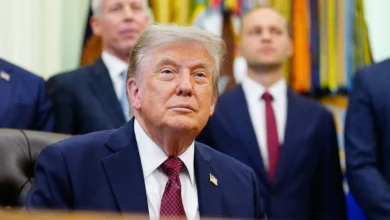
The timing of this legislation was critical, taking effect just a day before President Trump’s inauguration. Historically, Trump had expressed concerns about TikTok’s ties to China during his first term, even issuing executive orders in 2020 that sought to ban the app or force a sale, though these efforts were largely stalled by legal challenges. However, his stance appeared to evolve. Upon re-entering office, President Trump directed the Justice Department not to enforce the newly enacted nationwide ban. He publicly stated that he was actively working on an alternative solution involving a significant shift in TikTok’s ownership structure, signaling a preference for a divestiture deal over an outright ban, which he argued could harm American businesses and creators using the platform.
The Emergence of TikTok U.S. Data Security (TikTok USDS)
The negotiations initiated under President Trump’s directive bore fruit in late 2025, culminating in a finalized deal in January 2026. This agreement established a new joint venture, provisionally named TikTok U.S. Data Security (TikTok USDS), in which a consortium of mostly U.S.-based investors acquired a majority stake. Crucially, ByteDance retained a minority stake of 19.9% in the new entity, carefully adhering to the 20% cap stipulated by the 2024 divestiture law.
Among the prominent new investors is Oracle, a multinational computer technology corporation chaired by Larry Ellison. Oracle’s involvement is particularly noteworthy given its previous role as a trusted technology partner for TikTok’s U.S. operations under the "Project Texas" initiative, a comprehensive plan to isolate U.S. user data from ByteDance. It is also worth noting the familial connection: Larry Ellison’s son, David Ellison, serves as CEO of Paramount, a Skydance corporation, which is the parent company of CBS News.
The new TikTok USDS venture promised "intense cybersecurity controls" designed to fully insulate American user data and operations from any potential foreign influence. Key components of this security architecture include:
- U.S. Data Localization: All data generated by American users is now stored on servers located within the United States, managed by Oracle.
- Source Code Review: Oracle committed to an ongoing process of reviewing and validating TikTok’s source code to identify and mitigate any potential backdoors or vulnerabilities that could be exploited by foreign entities.
- Algorithm Retraining: The platform’s recommendation algorithm, a core component of its addictive appeal, is to be retrained using exclusively data from American users, further reducing the possibility of foreign manipulation or influence over content curation for U.S. audiences.
- Independent Oversight: The deal also reportedly includes provisions for an independent oversight board, composed of U.S. security experts, to monitor compliance with the new data security protocols.
These measures were presented as a robust framework to address the national security concerns that had plagued TikTok for years, effectively creating a "walled garden" for U.S. operations.
The OLC’s Legal Interpretation and Its Rationale
The Justice Department’s Office of Legal Counsel (OLC) is a crucial body within the executive branch, tasked with providing authoritative legal advice to the President and executive agencies. Its opinions carry significant weight, often shaping the interpretation and enforcement of federal laws. In its 12-page opinion, the OLC meticulously laid out its reasoning for determining that the 2022 federal device ban no longer applies to the current U.S. version of TikTok.
The core of the OLC’s argument hinges on a precise interpretation of the 2022 legislation. The law targeted TikTok due to its direct ownership by ByteDance, a Chinese entity, and the associated national security risks. With the formation of TikTok USDS and the majority ownership by U.S. investors, the OLC concluded that the "version of TikTok currently available in the U.S." no longer possesses the "same problematic ownership features" that the original law sought to address. The opinion likely delved into the specifics of the new ownership structure, the legal independence of TikTok USDS from ByteDance’s operational control, and the contractual agreements that enshrine the cybersecurity safeguards implemented with Oracle.
The OLC’s determination effectively reclassifies TikTok USDS as distinct enough from its ByteDance-owned predecessor to fall outside the purview of the 2022 ban. This interpretation emphasizes that the law was not a blanket prohibition on the application itself, but rather a targeted response to a specific set of ownership and control issues that the new deal purports to resolve.
Implications for Federal Agencies and Ongoing Discretion
Despite the OLC’s opinion, the decision to allow TikTok on government devices is not an automatic, sweeping directive. The Justice Department clarified that individual federal agencies retain the authority to make their own determinations regarding the app’s use. Agencies can still "independently decide to ban the downloading of TikTok to government devices for workforce management reasons, such as promoting employee productivity." This caveat is important, acknowledging that even if national security concerns are mitigated, agencies may have internal policies regarding non-essential applications to maintain operational focus and secure their internal networks.
The OLC opinion also noted that the White House had already instructed Executive Branch employees that they "may download TikTok onto their official devices, subject to the agency’s discretion and consistent with all applicable workplace policies." This suggests a coordinated approach within the executive branch, aligning with the OLC’s legal guidance while preserving agency autonomy. The White House, when asked for comment, referred inquiries to the Justice Department, indicating its concurrence with the OLC’s legal position. CBS News has reached out to TikTok for comment, and the company is expected to welcome the decision, viewing it as validation of their efforts to address U.S. national security concerns.
Lingering Scrutiny and Legal Challenges
While the OLC opinion provides a significant legal green light for TikTok on federal devices, the new ownership deal and the platform’s future are not entirely free of challenges. The arrangement has already drawn scrutiny from several lawmakers, particularly those who have been vocal critics of ByteDance’s influence. Members of committees focused on U.S.-China relations, such as the House Select Committee on the Chinese Communist Party, have pressed for detailed evidence that the deal genuinely addresses all national security concerns. Their questions often revolve around the effectiveness of Oracle’s oversight, the potential for ByteDance’s retained 19.9% stake to still exert influence, and whether technical measures can truly prevent data exfiltration or algorithm manipulation. These lawmakers are likely to continue their oversight, demanding transparency and accountability from TikTok USDS.
Furthermore, the deal faces ongoing legal challenges. Two investors in competing tech firms, Alphabet and Meta, filed a lawsuit against the federal government, contending that the TikTok USDS deal does not adequately comply with the spirit or letter of the 2024 divestiture law. Their argument centers on the premise that ByteDance’s continued minority stake, however small, still represents a problematic level of ownership that could be exploited, thus failing to meet the intent of a full divestment. The federal government has moved to dismiss this case, arguing that the deal does indeed satisfy the legal requirements. The lawsuit remains pending, casting a shadow of uncertainty over the long-term legal stability of the new arrangement.
Broader Implications and Future Outlook
The OLC’s decision sets a potentially significant precedent for how the U.S. government approaches national security concerns related to foreign-owned technology platforms. It suggests a pathway where comprehensive divestiture and robust U.S.-centric data security measures can mitigate risks sufficiently to allow continued operation, even for platforms initially deemed highly problematic. This approach contrasts with an outright ban, which could be seen as an economically disruptive and potentially anti-competitive measure.
For TikTok, its creators, and the vast ecosystem of small businesses that rely on the platform, the OLC opinion represents a moment of relief and validation. It allows for the continued operation and growth of a platform that has become deeply embedded in American culture and commerce. However, the saga is far from over. The ongoing congressional scrutiny, the pending lawsuit, and the continuous evolution of geopolitical tensions will ensure that TikTok USDS remains under a watchful eye. The effectiveness of its "intense cybersecurity controls" and the integrity of its independent oversight will be continually tested and evaluated, shaping not only TikTok’s future but also the broader landscape of digital sovereignty and national security in an interconnected world. The intricate dance between technological innovation, economic interests, and national security imperatives will undoubtedly continue to play out in the years to come.