CNN Political Briefing Navigating the Complexities of American Governance and Midterm Realities

The modern American political landscape is undergoing a profound and rapid transformation, characterized by deep partisan divides, legislative paralysis, shifting electoral maps, and intense internal party realignments. As the United States moves closer to the 2026 midterm elections, political analysts, lawmakers, and strategists are closely monitoring the shifting tides in Washington D.C. and state capitals across the country. At the center of this dialogue is the CNN Political Briefing podcast, hosted by CNN Political Director David Chalian. Through candid interviews with key power players, investigative journalists, and institutional leaders, the podcast provides an indispensable window into the mechanics of contemporary policymaking, electoral strategies, and the evolving dynamics within both the Republican and Democratic parties.
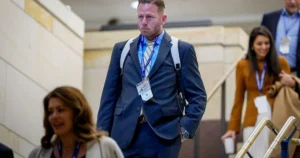
The legislative branch, in particular, has become a focal point of institutional friction. Recent episodes of the briefing have highlighted severe cracks in congressional leadership, most notably regarding House Speaker Mike Johnson. Critics from within his own party have openly questioned his ability to unify a fractured caucus. For instance, California Republican Representative Kevin Kiley recently voiced sharp criticisms of House leadership, arguing that the current trajectory reflects a failure to lead effectively. Compounding these federal tensions, Kiley faces personal and professional hurdles on the home front due to newly redrawn congressional district lines in California. Promoted under the urging of Democratic Governor Gavin Newsom, these boundary shifts threaten to reshape the state’s congressional delegation and potentially alter the political future of several incumbents. Kiley’s discussions with Chalian illuminate a broader "vibe shift" within the Republican conference as it grapples with governance responsibilities, prepares for the high-stakes 2026 midterms, and contemplates a political horizon that extends beyond the era of Donald Trump.
The Executive Branch and the MAGA Coalition
Beyond Capitol Hill, the executive branch and the core coalition supporting President Donald Trump are experiencing their own internal reckonings. The unbreakable bond between the president and his MAGA (Make America Great Again) base has faced rare, albeit significant, fissures. A notable flashpoint occurred when President Trump reversed course on the release of the Epstein files—a move designed to appease certain factions of his party but which exposed underlying vulnerabilities in party cohesion.
Furthermore, the administration has faced mounting criticism from its own supporters regarding policy prioritization. While economic anxiety, particularly concerning consumer prices and overall cost-of-living affordability, remains a top concern for everyday Americans, critics argue that the administration’s messaging has frequently prioritized foreign affairs over domestic economic realities. Political commentators, such as POLITICO’s Jonathan Martin, have analyzed these developments to determine whether they signal the early stages of a lame-duck period for the president. As political observers look toward the future, the central question remains: who or what forces will emerge to shape the conservative movement once the current leadership cycle concludes?
Chronology of Legislative Standoffs and Government Shutdowns
The legislative calendar has been heavily dictated by fiscal brinkmanship, culminating in one of the longest government shutdowns in U.S. history. The crisis brought structural governance issues to the forefront, pitting congressional Democrats against a Republican majority in a high-stakes blame game.
The timeline of the standoff revealed deep ideological trenches:

- September 2025: As Washington braced for fiscal deadlines, Democratic Congressional Campaign Committee Chair Representative Suzan DelBene outlined her party’s strategy to recapture the House in 2026, emphasizing economic messaging and unity.
- Early October 2025: The government shutdown officially became a reality. Representative Mike Lawler, a vulnerable Republican representing a battleground district in New York previously won by Kamala Harris, argued that Democrats had miscalculated significantly, committing a critical error in their shutdown strategy.
- Mid-October 2025: Entering the third week of the shutdown, progressive Democrat Representative Ro Khanna of California appeared on the briefing to delineate what his party considered negotiable versus non-negotiable, offering insight into the eventual resolution path.
- November 2025: Following the end of the shutdown—which concluded after an extended period of institutional paralysis—veteran Democratic strategist and former Virginia Governor Terry McAuliffe evaluated the fallout. McAuliffe asserted that the resolution showcased deep internal party debates over legislative strategy, even as Democrats celebrated unexpected electoral victories elsewhere in the country.
Electoral Landscapes: Local Races as National Barometers
While federal battles dominate headlines, off-year and municipal elections serve as vital bellwethers for the national mood. The 2025 election cycle featured high-profile contests in New York City, New Jersey, and Virginia, drawing intense focus from national correspondents like CNN’s Jeff Zeleny and Eva McKend.
The New York City mayoral race, in particular, shattered conventional political expectations. The contest featured a crowded field, including disgraced former Governor Andrew Cuomo, Republican standard-bearer Curtis Sliwa, and progressive insurgent Zohran Mamdani. Sliwa, facing immense pressure from establishment figures to drop out of a race where Democratic voters outnumber Republicans six to one, defended his conservative platform and shared insights drawn from a lifetime in New York politics.
Meanwhile, Zohran Mamdani’s improbable rise from a little-known state assemblyman to a major electoral victor rewrote the political playbook in Gotham. Spectrum News NY1 Political Anchor Errol Louis analyzed how Mamdani’s campaign successfully capitalized on progressive enthusiasm, capturing the national imagination and demonstrating the shifting ideological preferences within urban American centers. These local outcomes offer crucial data points for national parties as they refine their electoral strategies for the upcoming midterms.
The Intersection of Politics and American Justice
The intersection of partisan politics and the federal judicial system has also reached unprecedented levels of scrutiny. The prosecution of former FBI Director James Comey stands as an extraordinary chapter in modern American legal and political history. Legal analyst and former federal and state prosecutor Elie Honig joined the political briefing to place Comey’s case within a broader historical framework, drawing from his book, When You Come at the King: Inside DOJ’s Pursuit of the President, From Nixon to Trump. This analysis underscores how institutional norms within the Department of Justice continue to be tested by intense political pressures from both sides of the aisle.
Broader Impact and Strategic Implications
The convergence of these events—spanning congressional dissent, executive friction, fiscal showdowns, and transformative municipal elections—paints a picture of a dynamic and volatile American democracy.
- Midterm Projections: The 2026 midterm elections will serve as a referendum on congressional leadership and executive performance. Both parties are actively recalibrating their platforms to address voter concerns regarding economic affordability and institutional stability.
- Intra-Party Dynamics: The emergence of figures like Zohran Mamdani on the left and internal critics like Rep. Kevin Kiley on the right demonstrates that both major political parties are experiencing generational and ideological friction. Traditional party lines are increasingly blurred by populist movements and localized concerns.
- Institutional Resilience: Chronic fiscal standoffs and legal controversies highlight the ongoing stress tests facing American democratic institutions. As analysts and policymakers parse these developments, platforms like the CNN Political Briefing remain essential for decoding the complex forces shaping the nation’s political trajectory.