Wall Street Diverges as $111 Billion Paramount and Warner Bros. Discovery Merger Nears Final Closure Amid Legal Settlements

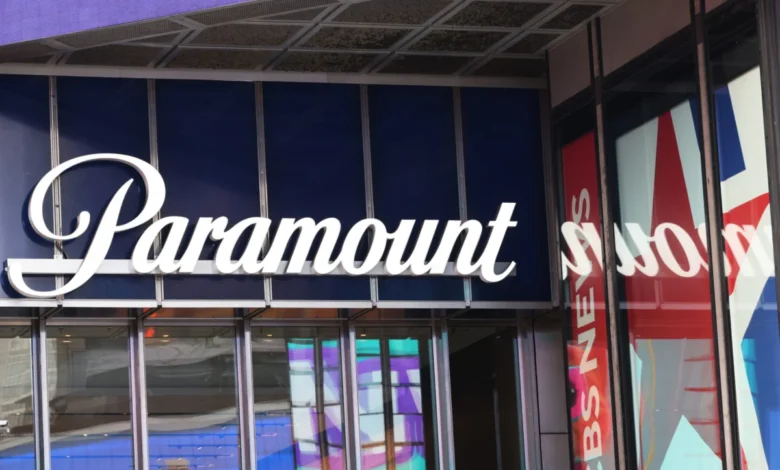
The sprawling, high-stakes media landscape is on the brink of a historic reshaped reality as the monumental $111 billion merger between Paramount and Warner Bros. Discovery (WBD) moves closer to final completion. The pathway to this mega-consolidation became significantly clearer following a flurry of legal resolutions announced on Monday morning. However, the immediate market reaction laid bare the persistent anxieties, lingering financial penalties, and deep regulatory divisions that have shadowed the transaction throughout its arduous journey.
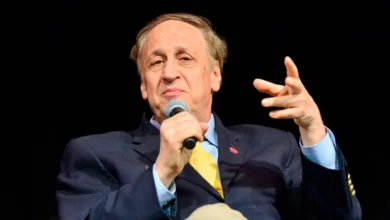
As trading floors processed the morning headlines regarding settlements with a coalition of state attorneys general and the Writers Guild of America (WGA), investor sentiment fractured sharply between the two entities involved. Warner Bros. Discovery shares experienced a surging rally, climbing 11% as markets priced in the near-certainty of the imminent acquisition. Conversely, Paramount shares suffered a volatile session, initially spiking 10% before plunging during the final two hours of trading to settle at $9.91—marking their lowest closing price in a month. This late-day slump was triggered by warnings from Paramount Chief Executive Officer David Ellison that the final bureaucratic and legal steps required to officially close the transaction would take approximately another two weeks.
The Financial Pressure of the Ticking Fee
The market’s nervousness surrounding Paramount’s stock price was deeply intertwined with the mechanics of the merger agreement’s financial penalties. Under the terms negotiated by the corporate boards, Paramount has been bound to a lucrative "ticking fee" payable to WBD shareholders. This provision mandates a penalty of approximately $7 million for every single day past October 1 that the transaction remains unclosed.
With an initial trial date for the legal challenges previously scheduled for March 2027, financial analysts had projected that these ticking fees could accumulate to an astounding $650 million per quarter. For a corporation valued at roughly $11 billion, absorbing hundreds of millions in delay penalties represented a non-inconsequential financial drain that hung over Paramount’s balance sheets like a dark cloud. Although the newly forged settlements effectively remove the threat of a prolonged courtroom battle that could have stretched deep into 2027, the realization that billions in enterprise value are still hanging in limbo for another fortnight proved too much for short-term traders, resulting in the late-day sell-off.
A Timeline of Regulatory Resistance and Legal Hurdles
The culmination of the Paramount-WBD merger follows a tense sequence of regulatory scrutiny and unexpected legal hurdles. The transaction initially cleared federal antitrust regulators earlier this year, creating widespread assumption that the merger would proceed without substantial resistance. However, the landscape shifted dramatically in July when a coalition of 12 state attorneys general, alongside the Writers Guild of America, filed parallel lawsuits aimed at halting or heavily restricting the mega-deal.
To the surprise of many industry observers, the state-level legal challenges gained unexpected traction through a series of early court rulings. These judicial decisions provided opponents of the consolidation with genuine hope that the transaction could be permanently curtailed or subjected to aggressive structural remedies. The legal friction forced both media giants into prolonged negotiations, culminating in Monday’s pivotal settlement agreements just as market participants attempted to balance the legal breakthroughs against the backdrop of Yom Kippur, which muted the typical volume of Wall Street and Hollywood reactions.
Behavioral Remedies Versus Structural Compromises
Despite the protracted legal resistance, corporate governance and antitrust experts analyzing the settlement terms expressed general astonishment at how favorable the agreements ultimately proved to be for Paramount. Rather than being forced to divest core assets, spin off major television networks, or agree to structural compromises that would fundamentally alter the combined company’s operational footprint, Paramount successfully navigated the negotiations by agreeing primarily to "behavioral remedies."
The concessions made to state regulators and labor groups focus largely on operational commitments rather than asset sales. These include specific guarantees regarding U.S. production levels and assurances protecting the editorial independence of CNN, which falls under the expansive WBD umbrella. The only notable structural concession involves the potential forced sale of an inconsequential stake in Miramax, a minor asset in the grand scale of the $111 billion transaction.
Wall Street analysts were quick to dissect the lopsided nature of the settlement. TD Cowen analyst Doug Creutz characterized the concessions as remarkably light, playfully invoking Peter Thiel’s famed 2014 essay headline, "Competition is for Losers," to underscore the realities of modern media consolidation. Similarly, Rich Greenfield of Lightshed Partners took to social media platform X to describe the outcome as a "huge win" and a "slam dunk win" for David Ellison and Paramount, emphasizing that the company successfully avoided ceding any structural remedies that would have a meaningful impact on the merged entity’s profitability or operational strategy.
Divergent Perspectives on Industry Consolidation
While financial analysts and market stakeholders largely focused on the creation of shareholder value and the avoidance of costly legal delays, critics of the merger voiced profound alarm over the long-term implications of the consolidation. The settlement has reignited fierce debates regarding the concentration of media ownership, corporate influence, and the future of labor within the entertainment sector.
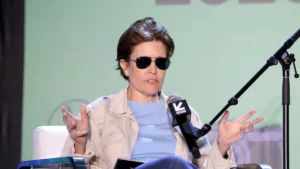
Among the most vocal critics was Alvaro Bedoya, who served as a commissioner at the Federal Trade Commission (FTC) from 2022 to 2025. In a scathing public statement shared on social media, Bedoya condemned the settlement terms, arguing that corporate power and aggressive legal maneuvering had systematically dismantled meaningful regulatory oversight.
"Billionaires have yet again bribed, censored, and bullied their way to the top," Bedoya wrote, outlining a bleak forecast for the industry. He warned that the integration of two major media conglomerates—resulting in a combined corporate entity closely aligned with political power and co-owned in part by international sovereign wealth funds, including Saudi Arabia’s—would severely impact media pluralism. Furthermore, Bedoya predicted that widespread corporate restructuring would inevitably lead to significant workforce reductions, impacting employees ranging from production hubs in Los Angeles to operational centers in Atlanta, while threatening independent contractors, driving up consumer subscription and ticket costs, and diminishing platforms for dissenting voices.
Broader Implications for the Media Ecosystem
As Paramount and Warner Bros. Discovery enter the final two-week window required to officially close the $111 billion transaction, the broader entertainment ecosystem is bracing for a profound transformation. The consolidation brings together two storied Hollywood libraries, expansive streaming platforms, legacy television networks, and premier newsgathering institutions under a single corporate umbrella.
The successful conclusion of this merger—achieved by navigating state-level antitrust challenges through behavioral concessions rather than structural divestitures—sets a significant precedent for future corporate consolidation in the telecommunications and entertainment sectors. It signals that despite aggressive pushback from state attorneys general and labor unions, well-capitalized corporate entities can successfully secure mega-deals by offering operational pledges rather than breaking up core business units.
Nevertheless, as the dust settles on the legal battles and the ticking fees approach their final tally, the long-term fallout of the merger will be measured not just by stock market fluctuations and shareholder payouts, but by how the newly formed media titan manages its vast workforce, addresses growing regulatory scrutiny over media concentration, and maintains public trust in the integrity of its journalism and creative output.
Related posts: