The Trump Administration Repeals Biden Era Power Plant Carbon Rules and Shifts Energy Policy Toward Coal Reliance

The Environmental Protection Agency (EPA) has officially initiated the formal repeal of federal carbon emission standards for the electricity sector, a move that marks a definitive pivot away from the climate-focused regulations established under the Biden administration. By dismantling the 2024 rule—which had offered utilities a path toward either coal plant retirement or the implementation of carbon capture technologies—the current administration has signaled a strategy of "energy unleashing." This policy shift prioritizes immediate grid reliability and cost-efficiency, effectively removing the regulatory pressure that sought to accelerate the decarbonization of the American power grid.
This decision arrives at a volatile moment in the U.S. energy landscape. While federal mandates have historically struggled to gain long-term legal traction, the intersection of surging electricity demand from artificial intelligence data centers and the aging infrastructure of the national power fleet has created a complex environment for utility providers. As the EPA moves to clear the regulatory path for coal-fired power, stakeholders are grappling with the long-term health, economic, and environmental consequences of prolonging the life of the nation’s most carbon-intensive energy source.
A Two-Decade Chronology of Regulatory Whiplash
The struggle to regulate coal emissions in the United States has been characterized by consistent legal and political oscillation, creating an environment of uncertainty for utility companies and investors alike.
In the late 2000s and early 2010s, the Obama administration sought to use the Clean Air Act to compel a transition away from coal. The centerpiece of this effort, the Clean Power Plan, aimed to set state-specific emissions targets, effectively forcing a shift toward cleaner energy. However, the plan faced immediate and fierce opposition from a coalition of states and industry groups. In 2016, the Supreme Court took the unprecedented step of staying the rule before it could take effect. Following the 2016 election, the Trump administration officially repealed the Clean Power Plan, arguing that it exceeded the EPA’s statutory authority.
The Biden administration attempted to navigate these legal precedents by designing the 2024 rule as a "performance standard" rather than a system-wide mandate. By giving utilities a choice—retire plants by a set date or install carbon capture and storage (CCS) technology—the administration sought to bypass the Supreme Court’s earlier objections regarding "beyond the fence line" regulations. Now, with the second Trump administration, this rule is being dismantled in its entirety, utilizing the same legal logic applied to the rollback of vehicle emissions standards earlier this year: a challenge to the scientific consensus on the urgency of climate change and a prioritization of consumer electricity costs.
The Economic and Environmental Stakes
Coal remains the most carbon-intensive fossil fuel, emitting roughly double the carbon dioxide of natural gas per megawatt-hour of electricity generated. Since the onset of the industrial era, coal has been responsible for nearly half of all global cumulative carbon emissions. Consequently, environmental policy experts have long viewed the phaseout of coal as the most significant lever available to mitigate the pace of global warming.
The implications of the repeal are not merely environmental; they are deeply tied to public health. The EPA’s own projections under the previous administration estimated that the 2024 rule would have prevented significant health damages, valued at approximately $370 billion. This included the mitigation of hundreds of thousands of asthma cases, a reduction in emergency room visits, and the prevention of more than 1,200 premature deaths annually by 2035. These health outcomes are primarily linked to the reduction of mercury, sulfur dioxide, and fine particulate matter (PM2.5) released by coal combustion. By allowing these plants to operate without stringent federal emission controls, the current policy shift risks reversing gains in air quality that have been achieved over the past decade.
The "Data Center Effect" and Grid Demand
The primary catalyst for the current resurgence of coal interest is the unprecedented demand for electricity driven by the expansion of artificial intelligence and high-performance computing data centers. These facilities operate around the clock, requiring a consistent, "baseload" power supply that renewable energy sources—without massive battery storage integration—have struggled to provide at scale.
This surge in demand has emboldened utilities to reconsider the retirement timelines of their legacy coal assets. For instance, Southern Company, a major provider in the Southeast, recently delayed the retirement of a key Mississippi coal plant from 2028 into the 2030s, citing the need to support regional data center growth. This trend is creating a "coal lifeline" that was not anticipated by energy analysts as recently as three years ago.
However, the efficacy of this strategy is debated. Kenneth Gillingham, a professor of environmental economics at Yale University and a former economic adviser, notes that while current market conditions favor keeping coal online, the fundamental economic trend remains unfavorable. "We have more electricity demand than we did before, which is, on the margins, going to make it easier for a coal plant to stay on," Gillingham observed. "But the trend is pretty clear, and you can only fight markets so much."
Official Responses and Industry Perspectives
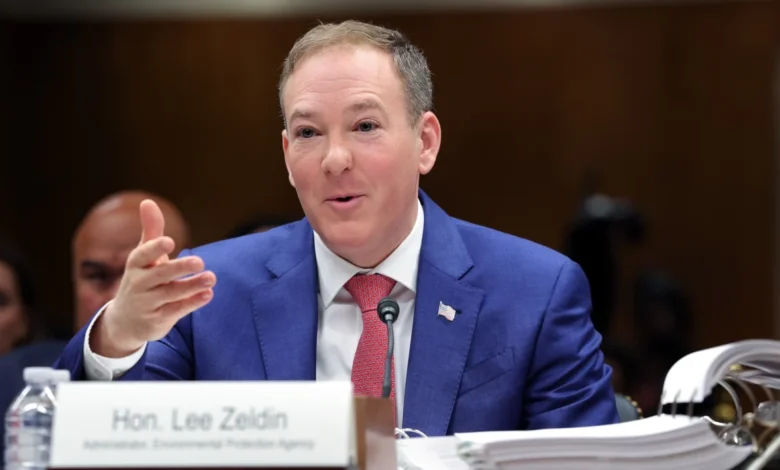
EPA Administrator Lee Zeldin has framed the move as a victory for American sovereignty and economic prosperity. During an international energy summit in Texas, Zeldin stated, "The Obama and Biden administrations implemented a war on coal to destroy reliable and affordable energy. We are working to go even further so that American energy can be fully unleashed. Realizing the full potential of American energy means more jobs, lower prices, and a more prosperous America."
In contrast, environmental advocates and public health organizations have criticized the repeal as a reckless endangerment of public safety. Many groups argue that the push for coal-based energy is a short-sighted response to an AI-driven demand spike that could be met more efficiently through a combination of natural gas, nuclear power, and grid-scale energy storage. Furthermore, the failure of past high-profile carbon capture projects—such as the Kemper project in Mississippi—has led critics to argue that relying on technology to "clean up" coal is a fiscal gamble that rarely pays off for ratepayers.
Broader Implications for the Power Sector
The move to repeal federal carbon standards creates a fractured regulatory landscape where state-level policies will now define the pace of the energy transition. States like California and New York continue to pursue aggressive decarbonization, while others are leveraging the federal rollback to extend the operational life of coal-fired assets.
This fragmentation poses a significant challenge for grid operators, who must balance varying regional mandates while ensuring that the interconnection of the national grid remains stable. As coal plants continue to age, the cost of maintenance and compliance with non-carbon environmental regulations (such as wastewater and coal ash standards) will continue to rise.
Ultimately, the repeal of the Biden-era rule acts as a short-term reprieve for the coal industry rather than a long-term structural solution. The nation’s coal fleet is aging, and the capital expenditure required to keep these plants operational is becoming increasingly difficult to justify to shareholders, regardless of federal policy. The next administration to face this challenge will likely find that while they can influence the speed of the transition, the market forces—namely the falling costs of wind, solar, and natural gas—are creating an environment where coal’s decline is increasingly an economic inevitability rather than a political choice.
As the legal and political battles continue, the U.S. power sector remains in a state of flux, suspended between a desire for traditional energy security and the long-term demands of a warming planet. The coming years will serve as a definitive test of whether federal policy can truly override the momentum of a changing global energy market.
Related posts: