China represents one of the most complex and geographically diverse culinary landscapes in the world, a reality that makes the concept of a single "best of" list an exercise in futility. With eight major regional culinary traditions—collectively known as the Eight Culinary Traditions of China—and countless local sub-genres, the nation’s food scene is a tapestry of history, trade, and adaptation. Navigating this vast array of flavors requires an understanding of how geography, climate, and imperial history have converged to create dishes that are not merely sustenance, but cultural artifacts.

The Imperial Legacy: Peking Duck and the Evolution of Roast Poultry
Peking Duck stands as perhaps the most globally recognized symbol of Chinese haute cuisine. Its lineage is intrinsically tied to the migration of imperial power. Historical records indicate that the roots of the dish date back over 1,500 years to Nanjing, which served as the capital for several ancient dynasties. When the Ming Dynasty relocated the capital to Beijing in the 15th century, the imperial court brought its chefs and culinary traditions with them.
The dish as it is known today—characterized by the delicate, crispy skin and thin pancakes—evolved within the confines of the Forbidden City. By the 19th century, the Quanjude restaurant in Beijing began to perfect the open-oven roasting technique, which uses fruitwood such as jujube or pear to impart a subtle, smoky aroma. From a nutritional and economic standpoint, the dish represents the "nose-to-tail" philosophy, where every component, from the skin and meat to the rendered fat and bones, is utilized. While Beijing is the modern center of the dish, the city of Nanjing continues to assert its claim as the original "duck capital," showcasing a broader variety of preparations, including salted duck and vermicelli soup made with duck blood and offal.

Sichuan and Hunan: The Science of Spiciness
The widespread popularity of Sichuan and Hunan cuisines is a relatively modern phenomenon in global terms, accelerated by the rise of international trade and the Chinese diaspora. Sichuan cuisine, or Chuan cuisine, is defined by the use of "mala" (numbing and spicy) flavors, a sensory experience driven by the combination of Sichuan peppercorns and dried chili peppers.
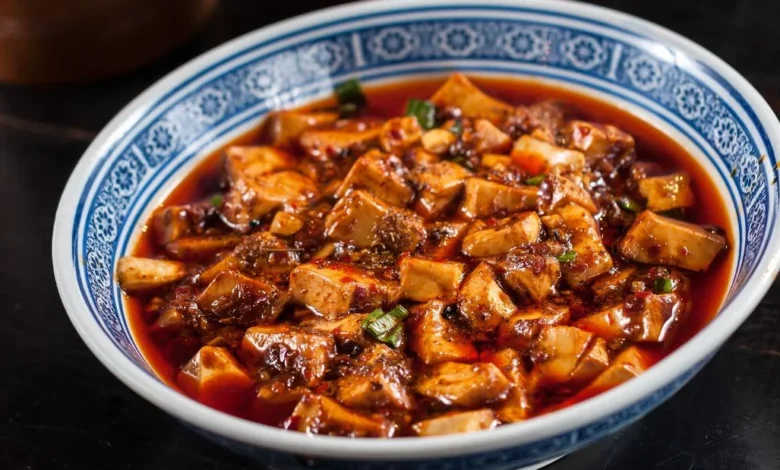
Mapo Tofu serves as a primary example of this balance. Historical anecdotes attribute its creation to a pockmarked-faced woman (the literal translation of "mapo") in the 19th century. The dish is a masterclass in texture and heat, utilizing Hanyuan peppercorns and Pidu-district broad bean paste. Similarly, Kung Pao chicken illustrates the fusion of regional styles; it is widely believed that the dish was adapted by a 19th-century governor, Ding Baozeng, who fused the sweet-and-sour profile of his native Shandong with the fiery profile of his Sichuan posting.

In contrast, Hunan (Xiang) cuisine is characterized by a "dry heat" or "salty spice." The signature dish, duo jiao yu tou (steamed fish head with salted chili), highlights the region’s reliance on fermentation. The duo jiao is a staple of the Hunanese pantry, where chili peppers are preserved in jars with salt, ginger, garlic, and baijiu for at least a week. This process creates a depth of flavor that is distinct from the numbing spice of Sichuan.
Cantonese Refinement: Precision and Dim Sum
Cantonese cuisine, centered in the Pearl River Delta, emphasizes the "original flavor" of ingredients, prioritizing freshness over heavy seasoning. This is best exemplified by the art of steaming. A perfectly steamed fish is a test of a chef’s technical prowess, as the cooking time is determined by the size of the fish and the specific heat output of the stove. A deviation of even sixty seconds can result in the loss of the delicate texture of the flesh.

Parallel to this precision is the institution of Dim Sum. Unlike other regional cuisines, Dim Sum is defined as a style of service—small plates served alongside tea—rather than a specific set of ingredients. It emerged as a cultural staple in the tea houses of Guangzhou, catering to travelers along the Silk Road. Today, it remains a pillar of Cantonese social structure, emphasizing the communal nature of dining. Within this category, xiaolongbao (soup dumplings) have garnered international acclaim. Though technically associated with the Jiangnan region, their popularity in Dim Sum settings has made them a global icon. The engineering behind these dumplings—encapsulating broth within a dough wrapper—requires a level of dexterity that remains a benchmark for culinary skill.
The Role of Noodles and Street Food as Economic Indicators
The ubiquity of street foods like jian bing (savory crepes) and dan dan mian (spicy noodles) offers a window into the rapid urbanization of China over the last four decades. Jian bing, often referred to as the Chinese version of a breakfast taco, originated in Tianjin. Its components—mung bean flour, eggs, scallions, and guozi (fried crisps)—are inexpensive, highly caloric, and designed for portability.

The history of "cross-the-bridge" rice noodles in Yunnan province provides a poignant example of culinary innovation born from necessity. Legend credits a woman who, seeking to provide a warm meal for her husband studying on an island, created a dish where raw ingredients could be cooked in a bowl of boiling broth, kept hot by a layer of chicken oil. This technique remains a fundamental method for maintaining food temperature in street-side environments across the country.
Economic and Cultural Implications
The global export of these dishes has had a significant impact on China’s soft power. As the Chinese economy integrated with the global market, the demand for authentic, regional Chinese food skyrocketed. This has led to an increased appreciation for the nuances of regional ingredients, such as mei cai (pickled mustard greens) in Hakka braised pork or the specific yam variety binlang yu used in Fujianese desserts.

However, the rapid spread of these dishes has also led to a "standardization" that sometimes masks the regional diversity they represent. For instance, the global version of "sweet and sour pork" often bears little resemblance to the intricate lychee pork of Fujian, which uses precise knife cuts to mimic the fruit’s texture. The preservation of these techniques is a priority for culinary historians who fear that industrialization and mass production may dilute the regional identities that make Chinese cuisine so varied.
Future Trends in Chinese Gastronomy
Looking ahead, the culinary landscape is shifting toward a greater emphasis on food security and sustainability. The use of fermented products, such as those found in Hunanese cooking or the preserved meats of the south, has historically been a way to extend shelf life in a climate-challenged environment. Modern chefs are increasingly looking to these traditional preservation methods as a way to minimize food waste.

Furthermore, the integration of traditional Chinese medicine concepts—such as the balance of "cooling" and "warming" ingredients found in Cantonese herbal soups—is finding a new audience among health-conscious consumers worldwide. As global food systems face pressure from climate change and supply chain disruptions, the "peasant-rooted" wisdom of utilizing every part of the bird, as seen in Nanjing’s duck-blood soup, or the use of hardy grains like millet in northern congee, offers a model for sustainable eating that is both ancient and forward-looking.
In conclusion, the study of Chinese cuisine is, in essence, the study of Chinese history. Whether it is the royal origins of the Peking Duck, the nomadic traditions of the Hakka, or the inventive street food of the Pearl River Delta, each dish provides a narrative of a nation that has constantly adapted, evolved, and refined its identity through the medium of food. For the traveler or the enthusiast, these dishes are not just menu items; they are entries into a comprehensive and enduring cultural legacy.