Ned Crawley brings high-concept terror to the 33rd Oldenburg International Film Festival with the world premiere of Drop Dead.

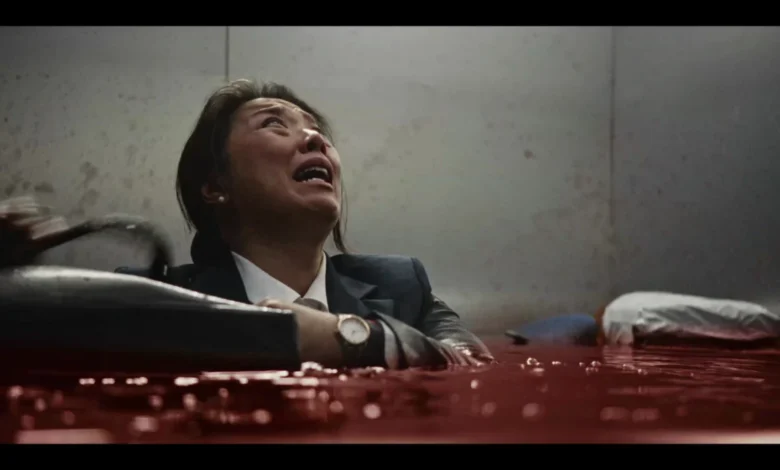
The Oldenburg International Film Festival, often referred to as the "German Sundance" for its staunch commitment to independent cinema and unconventional storytelling, has bolstered its 2026 program with a late-stage addition that promises to heighten the festival’s reputation for genre-defying narratives. Ned Crawley’s latest feature, Drop Dead, is set to make its world premiere at the festival, which is scheduled to run from September 16 through September 20, 2026. This addition arrives as a significant focal point for industry attendees and genre enthusiasts, marking a stylistic pivot for a director who has recently seen his work transition from expansive, star-studded projects to intimate, high-tension psychological horror.
A Departure from the Epic
Drop Dead represents a deliberate aesthetic and logistical departure from Crawley’s previous work. While his 2025 supernatural Western Killing Faith utilized a sprawling, atmospheric landscape and a high-profile ensemble cast—including Guy Pearce, DeWanda Wise, and Bill Pullman—to achieve international streaming success, Drop Dead operates under a vastly different philosophy.
Crawley describes the film as an exercise in creative confinement. By restricting the narrative to a 15-foot steel freight elevator, the director has traded sweeping vistas for claustrophobic intensity. The film follows a group of eight strangers who find themselves trapped in a descending elevator, only to realize that their shared predicament is not a matter of mechanical failure, but rather a manifestation of a deeper, potentially biblical or supernatural nightmare. By centering the story on a cast of relatively unknown performers—including Melissa Neal, Daniel Adeosun, Victor Rivera, Christina Tam, Alexandra Kate, Roger Ajogbe, John O’Mahony, and Elijah Craft—Crawley aims to shift the audience’s focus away from star power and toward the raw, visceral mechanics of survival.
The Rise of a Genre Filmmaker: A Chronology
Ned Crawley’s trajectory in independent film has been characterized by a steady maturation of voice and an increasing ability to capture cross-platform success. His directorial journey began in 2016 with Middle Man, a crime comedy that showcased a penchant for dark humor and character-driven tension, starring Jim O’Heir, Andrew J. West, and Josh McDermitt. While Middle Man established Crawley as a capable storyteller in the indie circuit, it was his 2025 follow-up that propelled him into the global spotlight.
Killing Faith, a supernatural Western, served as a breakout project for the director. Following its premiere at Beyond Fest, the film gained significant traction not only through its distribution performance but also through high-profile endorsements. Notably, horror icon Stephen King took to social media platform X shortly after the premiere to praise the film, labeling it "a quasi-supernatural Western that has echoes of Cormac McCarthy." King’s endorsement acted as a powerful marketing catalyst, helping the film secure a top-two position on HBO Max’s worldwide movie charts. The film reached the number one spot in multiple international markets, most notably Argentina and Brazil, cementing Crawley’s reputation as a director capable of blending genre sensibilities with broad, mainstream appeal.
The Anatomy of the Oldenburg Selection
The inclusion of Drop Dead in the Oldenburg International Film Festival is a strategic alignment between a filmmaker known for bold, experimental choices and a festival known for championing them. Since its inception, Oldenburg has served as a bridge between American independent cinema and the European arthouse scene. For a film like Drop Dead, which relies heavily on the "locked-room" trope, the festival offers an environment where the quality of performance and the tightness of the script are prioritized over traditional box-office expectations.
Industry analysts suggest that this late addition reflects the festival’s ongoing strategy to secure premiere titles that challenge the boundaries of traditional horror. By focusing on the interplay between the eight strangers, Drop Dead joins a lineage of films that explore social hierarchies and human morality under extreme duress—a thematic staple that often resonates strongly with the discerning audiences at Oldenburg.

Production Constraints as Creative Drivers
The decision to eschew "A-list actors" in favor of a lesser-known ensemble is a significant creative risk, yet one that aligns with the current trend of "high-concept, low-budget" successes. In recent years, films that utilize confined settings have proven to be both financially efficient and creatively potent. By stripping away the visual distractions of expansive locations, Crawley forces the narrative to rely entirely on the psychological deterioration of the characters.
"I wanted to create something equally compelling within the confines of a locked, claustrophobic 15-foot steel box," Crawley noted in discussions regarding the film’s production. This focus on performance-led storytelling is intended to amplify the supernatural stakes, ensuring that the audience feels as trapped and desperate as the characters on screen. The production challenge, therefore, becomes one of pacing and spatial management—an area where Crawley is looking to prove his dexterity as a director.
Industry Implications and Market Potential
The success of Killing Faith has provided Crawley with a significant degree of creative capital. His ability to navigate both the critical acclaim of festival circuits and the commercial realities of streaming giants like HBO Max makes Drop Dead a high-interest project for acquisition agents and distributors attending the 33rd Oldenburg International Film Festival.
If Drop Dead performs well in Germany, it will likely follow a similar distribution path as its predecessor. The current market climate favors high-concept horror, particularly those that can be produced at a lower cost-to-profit ratio. By leveraging the momentum from his previous successes, Crawley is effectively building a brand that balances the "prestige" of festival premieres with the "accessibility" of streaming platforms.
Looking Ahead to the 33rd Festival
The 33rd Oldenburg International Film Festival is set to host a diverse array of global cinema, but the premiere of Drop Dead adds a layer of anticipation for horror fans. As the festival approaches its mid-September start date, the industry will be watching to see if Crawley’s gamble on a claustrophobic, ensemble-heavy narrative will resonate with the same intensity as his previous supernatural Western.
The logistical setup of the film—eight characters, one location, and a supernatural mystery—positions it as an ideal candidate for intense, late-night festival screenings. Whether the film ultimately achieves the same international chart-topping success as Killing Faith remains to be seen, but the narrative pivot itself signals a filmmaker who is comfortable operating outside of his comfort zone. As the festival draws near, the arrival of Drop Dead serves as a reminder that the most compelling horror often resides not in the vastness of the world, but in the smallest of spaces where the truth is forced to the surface.
The 2026 Oldenburg program, now finalized with this addition, continues its tradition of offering a platform for directors to premiere works that challenge the status quo. For Ned Crawley, the festival offers the perfect venue to demonstrate that he is more than just a director of large-scale supernatural epics; he is a craftsman of tension, capable of turning a 15-foot steel elevator into the most frightening place on earth. With the world premiere fast approaching, the intersection of Crawley’s rising reputation and the festival’s indie ethos suggests that Drop Dead will be one of the most closely watched screenings of the five-day event.