The Shadow of a Star: How a Deadly Accident and a Quiet Settlement Transformed the Landscape of Dominican Baseball

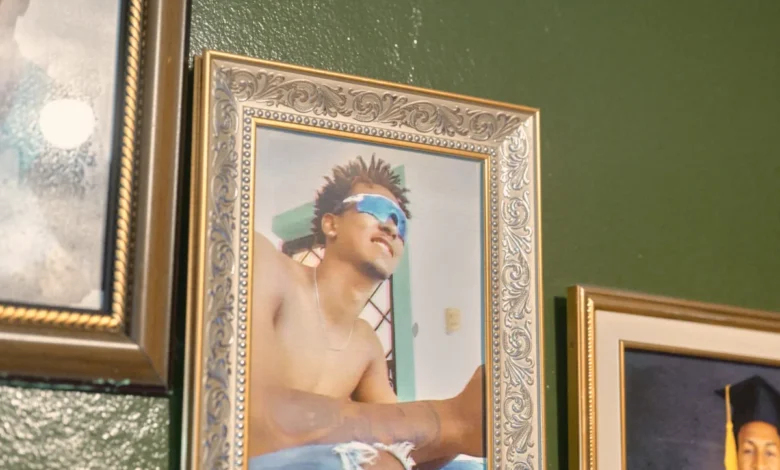
Around 4 a.m. on September 21, 2020, the silence of a desolate highway along the southern coast of the Dominican Republic was broken by the grim discovery of a tragedy. Luis David Saba arrived at the scene to find a makeshift memorial of branches laid over the mangled remains of his 20-year-old brother, Yohan Saba Mercado. The site, located near the town of Nizao, bore the scars of a high-speed collision: blood on the asphalt, shattered debris, and the twisted wreckage of a motorcycle that had been rear-ended by a Jeep Grand Cherokee. The passengers of that motorcycle—Yohan, 20-year-old Deby Beato Charles, and 19-year-old Daniela Perez Garcia—had been killed instantly. By the time the sun rose, the vehicle involved, driven by 21-year-old Oneil Cruz, had been removed, and the families were left to navigate a legal and moral labyrinth that would eventually see a promising Major League Baseball career saved while three lives were permanently erased from their homes.

The incident occurred at a time when COVID-19 curfews had largely emptied the streets of the Dominican Republic, yet the four-lane highway where the collision took place remained a dangerous corridor for high-speed traffic. Witnesses and local residents noted that the area was poorly lit, a factor that frequently contributed to the high frequency of accidents in the region. For the families of the victims, the subsequent days were marked by a frantic search for accountability. While police initially detained Cruz, the narrative surrounding his involvement shifted with remarkable speed. Despite early reports from authorities suggesting that Cruz had consumed alcohol prior to the collision—a detail later omitted from formal court filings—the momentum for a criminal prosecution evaporated within weeks.
The Rise of a Negotiated Silence
The transition from a potential criminal case to an out-of-court resolution was orchestrated by a network of intermediaries, most notably Santo Caraballo. At the time of the crash, Caraballo was an emerging figure in the Dominican baseball ecosystem, a businessman with political ties who functioned as a "prestamista," or predatory moneylender. His involvement in the Cruz case served as a foundational moment for his influence in the sport.

According to interviews with family members and documentation obtained during an investigation, the strategy was simple: ensure the families of the victims withdrew all criminal and civil claims. The Dominican judicial system allows for significant victim input in the prosecution process; by securing signed "acts of withdrawal," the defense could effectively strip the state of the leverage needed to proceed with a criminal trial. The price of this closure was approximately $66,000, distributed among the three families—a figure that, while exceeding local annual income averages, failed to address the long-term emotional and structural damage caused by the loss of the three young people.
Chronology of the Legal Disappearance
The timeline of the case highlights the speed at which systemic influence can alter the course of justice.

- September 21, 2020: The collision occurs, claiming the lives of Yohan Saba Mercado, Deby Beato Charles, and Daniela Perez Garcia. Cruz is detained by police.
- September 23, 2020: During the initial court hearing, Cruz’s legal team requests a delay to seek "humane" solutions for the victims’ families, signaling the start of the settlement process.
- Late September 2020: Families are approached by intermediaries, including Caraballo and associates of the Cruz family, to sign documents withdrawing legal claims.
- October 2020: Cruz is released on a 2 million peso bond.
- August 2021: A judge formally dismisses the case due to the lack of active pursuit by the victims’ families, effectively ending the state’s involvement.
- October 2021: Oneil Cruz makes his Major League Baseball debut for the Pittsburgh Pirates.
The legal documents filed in court by Cruz’s representatives claimed that the victims’ families had withdrawn their complaints without any "pecuniary interest" or pressure, describing the accident as a result of "circumstances of life." However, separate, private contracts—not filed with the court—detailed payments made to the families, explicitly labeled as funeral expenses or settlements for damages. This duality allowed the court to process a "clean" dismissal while the families navigated the reality of having their forgiveness purchased.
The Human Cost: Families Left Behind
For the families of the victims, the aftermath was defined by a profound sense of powerlessness. Mercedes Garcia, the mother of Daniela Perez Garcia, remains a vocal critic of the process. She contends that her son, who was acting as an intermediary, misled her into signing documents that exonerated Cruz. "Rich people, especially baseball players, like to pay for dead people with money," Garcia stated. "I am poor, but I have honor."

Similarly, the family of Deby Beato Charles, led by his brother Ruben, faced intense pressure to accept the settlement. They were told by intermediaries that, regardless of the merits of the case, the outcome was predetermined by the status of the accused. The funds provided to the families were, for many, impossible to utilize; the money represented a transaction that many survivors felt was a betrayal of their deceased loved ones. In the case of Yohan Saba Mercado’s mother, Genny Mercado, the money was used to fulfill a promise Yohan had made—to repair the family’s roof—yet the emotional toll of the negotiation continues to resonate within the home.
Institutional Silence and the Baseball Machine
The Pittsburgh Pirates organization, when approached for comment, stated that the team "addressed this matter more than six years ago based on the information available and the outcome of the legal proceedings." This stance reflects a broader industry pattern where the potential of a "top-tier prospect" is shielded from the volatility of legal entanglements. Cruz, for his part, has offered little public comment on the incident. In a rare statement given during 2021 spring training, he remarked that he felt "peace" once the matter was "solved," a sentiment that stands in stark contrast to the unresolved grief of the families in Nizao.

The lack of a thorough investigation by local authorities is a critical component of the case’s resolution. The failure to conduct standard sobriety tests, coupled with the absence of detailed forensic analysis of the accident site, left the prosecutor’s office with a case that was fundamentally flawed. When questioned, local officials declined to comment on the "procedural errors" that prevented a full inquiry into whether reckless driving or intoxication played a role in the deaths.
Broader Implications for the Sport
The Cruz case serves as a case study for the vulnerabilities inherent in the Dominican baseball pipeline. As the industry generates hundreds of millions of dollars in signing bonuses, a shadow economy of trainers, agents, and "fixers" has emerged to manage the lives of young players. This infrastructure is often designed to protect the "asset"—the player—at any cost, including the neutralization of local legal accountability.

The rise of individuals like Santo Caraballo, who transitioned from an obscure businessman to a powerful operator through his management of the Cruz case, suggests that the "fix" has become a feature, not a bug, of the industry. The impact of such practices extends beyond the immediate tragedy; it undermines public trust in the judicial system and creates a environment where the lives of local residents are secondary to the career trajectories of professional athletes.
Today, Oneil Cruz is a fixture for the Pittsburgh Pirates, a player celebrated for his power and speed, earning millions in a sport that continues to look away from the road in Nizao. For the families of Yohan, Deby, and Daniela, the "solution" provided by the courts has done nothing to quell the resentment of the past six years. They remain in the same homes, living with the same photographs, and mourning the same losses, while the man who killed their children continues to reach the heights of the professional game. The case stands as a grim reminder that in the high-stakes world of professional sports, justice is often just another line item in a budget, and the price of a life can be negotiated behind closed doors.