Rescuing Cayic: How a Puppet-Rearing Program and Conservation Science are Saving the Critically Endangered California Condor

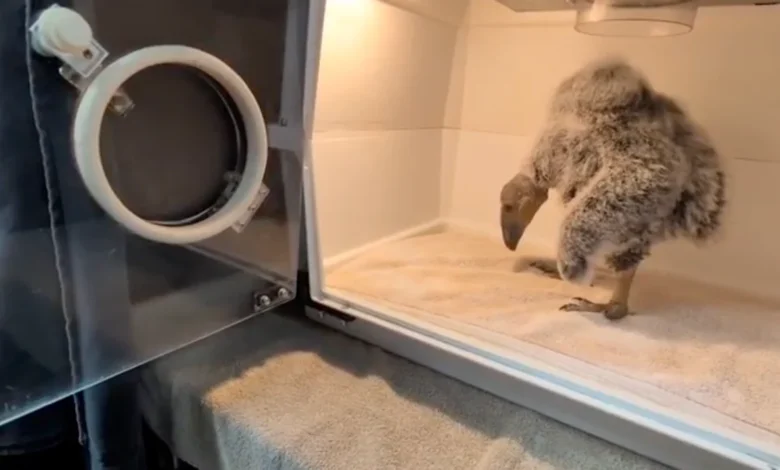
The intricate web of wildlife conservation recently faced a poignant test in Central California, where the precarious survival of a single critically endangered California condor chick illuminated both the triumphs and the ongoing perils of species recovery efforts. Named Cayic—a Mutsun word meaning "strong"—the roughly one-month-old chick was rescued from Pinnacles National Park after his mother was forced into single parenthood under duress. Today, Cayic is thriving in a specialized puppet-rearing program at the San Diego Zoo Safari Park, serving as both an individual success story and a potent reminder of the fragility holding North America’s largest flying birds back from the brink of extinction.
The Crisis at Pinnacles National Park
The emergency unfolded in the rugged terrain of Pinnacles National Park, a designated release site and sanctuary for the California condor (Gymnogyps californianus). Wild condor pairs typically operate as a synchronized, highly dedicated parenting team, sharing incubation duties and taking turns foraging for food to nourish their rapidly growing offspring. However, this natural equilibrium was shattered when the chick’s father stopped returning to the nest. Tragically, the male condor was later discovered suffering from suspected lead poisoning, a condition that proved fatal despite veterinary intervention.
Left entirely on her own, the mother faced an impossible biological deficit. Condor chicks require steady, nutrient-rich provisions to develop their massive frames and specialized flight anatomy. Strained by the demands of solo foraging, the mother began returning to the nest less and less frequently. Field biologists monitoring the remote enclosure noticed a stark shift in her behavior. She was spending extended periods away from the nesting site, effectively abandoning her parental responsibilities out of the necessity of self-preservation. Without swift and decisive human intervention, biologists concluded the chick stood virtually no chance of surviving the elements or starvation.
Stepping In: Rescue and Transfer
Recognizing the imminent danger, wildlife biologists from Pinnacles National Park executed a rescue operation when the chick was approximately four weeks old. Removing a chick from the wild is never a decision taken lightly by conservationists, who must weigh the trauma of displacement against the certainty of mortality. Once secured, the young bird was immediately transferred over 300 miles south to the San Diego Zoo Safari Park’s specialized California condor breeding facility.
Upon arrival, the chick was integrated into an advanced rehabilitation protocol known as puppet-rearing. This methodology is designed to solve a complex behavioral paradox: how to provide intensive, high-calorie hand-rearing to a wild bird without inadvertently habituating it to human presence. Habituation—the process by which animals lose their natural fear of humans—is a death sentence for re-released wildlife, making them vulnerable to poaching, domestic accidents, or dangerous encounters with civilization.
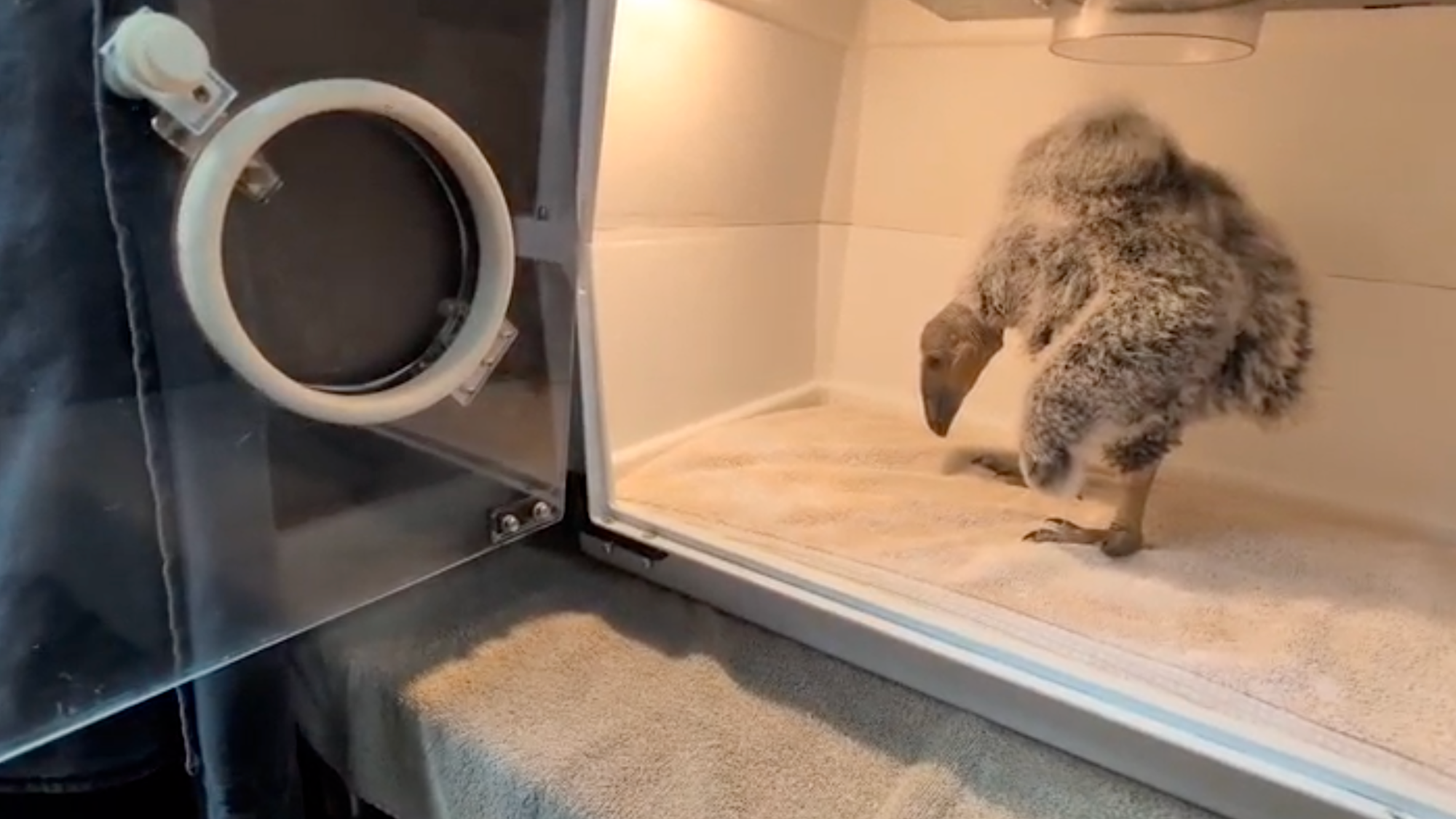
To prevent this, wildlife care specialists utilize meticulously crafted hand puppets that faithfully replicate the appearance, coloration, and plumage texture of adult California condors. These puppets completely conceal the caretakers’ hands and arms. Using the puppet’s beak, specialists deliver food directly to the chick, carefully mimicking the exact feeding posture, visual cues, and tactile stimulation that an adult condor would provide in a natural nest cavity.
According to representatives from the San Diego Zoo Wildlife Alliance, the approach has yielded remarkable results. Cayic has responded exceptionally well to the proxy feeding, displaying normal developmental milestones, steady weight gain, and appropriate avian behavioral patterns. Conservationists anticipate that his time in the nursery is merely a temporary chapter; plans are already underway to return him to the wild skies of California by the upcoming fall. Meanwhile, his mother remains in the wild population at Pinnacles National Park, where wildlife experts remain hopeful she may find a new mate and successfully reproduce in future breeding seasons.
A Historical Trajectory: From the Brink of Oblivion
Cayic’s personal ordeal is framed against one of the most dramatic and intensive conservation turnarounds in modern zoological history. Often referred to as "thunderbirds" in Native American folklore, California condors are majestic raptors sporting a wingspan that approaches an astonishing ten feet. Yet, this formidable physical stature offered no defense against the pressures of human industrial expansion, habitat degradation, and chemical contamination.
By the early 1980s, decades of habitat loss, eggshell thinning driven by DDT, illegal shooting, and secondary poisoning had reduced the wild population to an apocalyptic low of just 22 individuals worldwide. Realizing that the species was sliding into irreversible extinction, the U.S. Fish and Wildlife Service, in partnership with conservation organizations like the San Diego Zoo Wildlife Alliance and the Los Angeles Zoo, took the unprecedented step of capturing every single surviving wild California condor in 1986.
This desperate measure launched an intensive captive-breeding program. Critics at the time questioned whether the species could ever be coaxed back from the edge of the abyss, but the captive population slowly multiplied under strict scientific management. By 1992, the breeding programs had produced enough healthy offspring to begin the arduous process of reintroducing condors back into their historic native ranges in California, Arizona, and later, Utah and Baja California, Mexico.
Ongoing Threats: The Shadow of Lead Poisoning and Microtrash
While the modern population figures represent a staggering triumph of ecological restoration, the species’ long-term survival remains precarious. As of official population status tracking compiled at the end of 2025, the total global population of California condors stands at 607 individuals. Of that total, 392 birds roam free in the wild, while the remaining 215 are maintained in captive-breeding facilities to safeguard the genetic lineage.

Despite these gains, wild condors face persistent, modern anthropogenic threats that continue to stall full recovery. Chief among these is lead poisoning, which mirrors the tragic fate of Cayic’s father. As scavenging birds that feed primarily on the carcasses of large mammals, condors frequently ingest spent lead ammunition fragments left behind by hunters when feeding on game remains. Even microscopic traces of lead are neurotoxic to avian physiology, causing paralysis, organ failure, and death. While legislative efforts—such as California’s statewide ban on lead ammunition for hunting—have made strides in mitigating this threat, lead poisoning remains the single largest cause of mortality for adult wild condors.
Compounding the crisis is the ingestion of microtrash. Adult condors often forage for calcium-rich bone fragments and stones to aid in digestion, but they frequently mistake human debris—such as bottle caps, glass shards, pieces of plastic, and metal foil—for food items. When fed to nestlings, this debris can cause fatal intestinal blockages, requiring surgical interventions or resulting in developmental failure.
Implications for the Future of Avian Conservation
The rescue and rehabilitation of Cayic underscore the intensive, round-the-clock stewardship required to maintain a species that essentially exists on life support. Without continuous field monitoring by park biologists, captive-breeding interventions by specialized zoos, and rigorous veterinary toxicology research, the California condor would likely have vanished entirely from the skies it has patrolled for millennia.
As conservationists prepare Cayic for his eventual release back into Pinnacles National Park, his journey serves as a microcosm of the broader environmental struggle. His survival depends not only on the ingenious use of feathered puppets and high-tech veterinary medicine, but ultimately on human willingness to address root environmental hazards like lead ammunition and habitat pollution. For now, the Mutsun-named "strong" chick represents the resilience of his species—a literal embodiment of hope soaring on a ten-foot wingspan, fighting against the odds to reclaim its rightful place in the American wilderness.