Google Overhauls European Flight and Hotel Search Results to Comply with EU Antitrust Rules

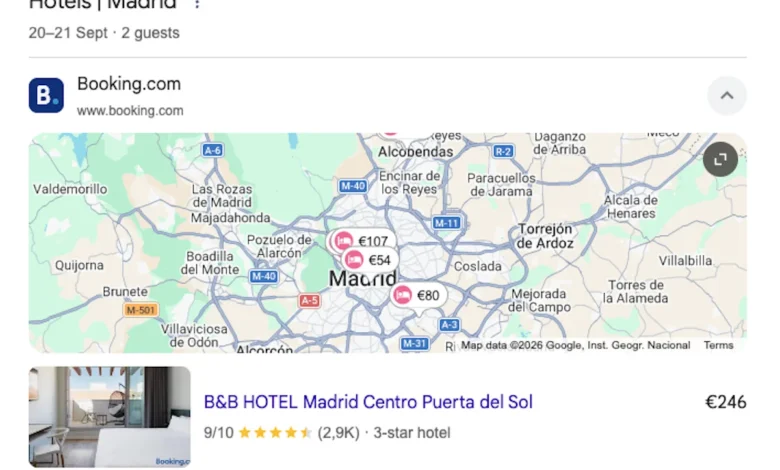
Google has officially rolled out a significant overhaul of its hotel, flight, and local business search results across the European Union. This major user interface update represents the latest chapter in a protracted regulatory battle between the American technology conglomerate and European antitrust authorities. The changes are designed to give consumers greater visibility and choice among alternative travel service providers, fundamentally altering how travel queries are displayed on the world’s most dominant search engine.
Under the newly deployed layout, European users searching for travel-related services—such as flights, accommodations, or dining options—will encounter two distinct, dedicated display areas on the search engine results page. The first is an aggregator unit, which consolidates options from third-party intermediaries such as online travel agencies (OTAs), metasearch engines, and ticketing platforms. The second is a supplier unit, which highlights direct listings from individual service providers, including hotel chains, independent properties, and commercial airlines.
This structural redesign is already live for users within the EU. For instance, a search for accommodations in Madrid conducted from within Spain demonstrates the new interface: the aggregator unit displays a vertical stack of competing third-party platforms like Booking.com and Agoda, with the top-ranked provider’s results expanded by default to facilitate immediate comparison. Meanwhile, the supplier unit provides direct avenues for consumers to book straight through the hotel’s proprietary website.
The Genesis of the EU Antitrust Pressure
The root of Google’s current design changes stretches back more than a decade, rooted in the European Commission’s aggressive enforcement of competition law within the digital single market. Under the leadership of EU antitrust chiefs, the European Commission has scrutinized how major technology gatekeepers leverage their core platforms to preference their own proprietary services or distort fair market competition.
For years, hotel associations, airlines, and rival travel tech companies argued that Google’s traditional travel search units—frequently branded as Google Flights and Google Hotels—wielded an unfair advantage. By placing its own rich media comparison widgets at the absolute top of the search engine results page (SERP), Google allegedly drove organic traffic away from independent aggregators and direct suppliers, effectively acting as both a referee and a dominant player in the digital travel marketplace.
The turning point for these algorithmic and interface policies came with the formal adoption and implementation of the Digital Markets Act (DMA). The DMA designates specific large tech platforms as "gatekeepers," subjecting them to strict behavioral obligations. These rules prohibit gatekeepers from ranking their own services more favorably than those of competitors on search engine pages, and mandate that platforms provide fair, reasonable, and non-discriminatory access to business users and third-party services.
Chronology of Regulatory Action and Compliance
To fully understand the weight of Google’s latest interface revision, it is necessary to examine the timeline of enforcement actions and compliance deadlines that forced the tech giant’s hand.
In November 2020, the European Commission issued a preliminary statement of objections regarding Google’s treatment of competing vertical search services, setting the stage for formal structural remedies. Throughout 2021 and 2022, negotiations between Google compliance teams and EU competition regulators focused on finding an acceptable compromise that would satisfy transparency mandates without completely destroying the user experience that Google has refined over two decades.
By March 2024, the compliance deadline for the Digital Markets Act officially arrived. Google introduced initial drafts of its compliance UI across various vertical searches. However, European regulators, alongside industry coalitions representing European hotels, restaurants, and online travel agencies, quickly pointed out that these initial implementations fell short of the law’s true intent. Critics argued that Google’s early compliance designs still buried third-party aggregators beneath proprietary Google widgets, maintaining an uncompetitive status quo.
Responding to ongoing pressure, feedback from regulatory audits, and the threat of severe financial penalties—which under the DMA can reach up to 10 percent of a company’s total worldwide annual turnover for a first infringement, and up to 20 percent for repeated non-compliance—Google went back to the drawing board. The latest update, launched this week across the EU, represents the most comprehensive structural separation of aggregator and supplier listings seen to date on the platform.
Anatomy of the New Search Results Page
The newly restructured search environment is engineered to provide absolute clarity to European consumers regarding the source of travel data.
The aggregator unit is specifically tailored to showcase online travel agencies and metasearch platforms. When a user inputs a query for flights or hotels, this section displays a structured stack of third-party platforms. Crucially, the interface utilizes a default-expanded mechanism for the highest-ranking third-party provider, allowing users to view pricing, availability, and routing options instantly without requiring an extra click. Below this top-tier stack, rival aggregators are listed cleanly, giving alternative booking channels prominent real estate that was previously difficult to secure organically.
Conversely, the supplier unit operates independently on the results page, focusing exclusively on direct-to-consumer options. If a traveler searches for a specific hotel brand or airline route, this unit surfaces official booking channels. This dual-unit approach ensures that consumers retain the ability to choose whether they prefer the consumer protection and loyalty perks of booking directly with a supplier or the cross-comparison convenience offered by an aggregator.
Industry Reactions and Stakeholder Perspectives
Reactions from the broader travel, hospitality, and technology sectors have been mixed, reflecting the high stakes involved in digital traffic acquisition.
Representatives for major online travel agencies have expressed cautious optimism regarding the changes. For years, companies like Booking Holdings and Expedia Group argued that Google’s dominance made user acquisition costs unsustainable, forcing OTAs to spend heavily on paid search advertising just to remain visible beneath Google’s proprietary travel widgets. The creation of a dedicated, clearly demarcated aggregator unit could potentially democratize traffic distribution, allowing organic visibility based on relevance and user preference rather than ad-spend muscle.
On the other side of the ledger, hotel associations and direct-supplier advocacy groups have welcomed the prominence of the supplier unit. Independent hoteliers have historically struggled against the commission fees charged by dominant OTAs; ensuring that direct booking links have a dedicated, uncompromised space on the search page is viewed as a vital win for the hospitality sector’s profit margins.
However, consumer advocacy groups and strict regulatory watchdogs remain vigilant. Many digital rights and competition experts emphasize that the proof of compliance will lie in empirical data: specifically, whether traffic share to independent aggregators and direct suppliers actually increases over the coming quarters, or if consumers continue to default to Google’s top-of-page interactive tools out of sheer habit. Furthermore, competitors have raised questions about how Google determines the ranking order within the aggregator unit, demanding algorithmic transparency to ensure that Google’s own internal preferences do not subtly creep back into the sorting mechanism.
Broader Economic Impact and Global Implications
The implications of Google’s European interface overhaul extend far beyond the borders of the EU, potentially serving as a regulatory blueprint for other major global jurisdictions.
As antitrust regulators in the United States, United Kingdom, Australia, Latin America, and Asia monitor the implementation and enforcement of the Digital Markets Act, the EU is increasingly viewed as a regulatory laboratory for Big Tech governance. If the dual-unit search model proves successful in fostering a healthier, more competitive digital travel ecosystem in Europe, lawmakers in Washington and other capitals may push for similar legislative interventions domestically.
For Google, the changes require a delicate balancing act. The company must continuously modify its core product philosophy—which has always prioritized speed, direct answers, and unified user interfaces—to accommodate rigid legal mandates that demand the fragmentation of search results to accommodate commercial rivals. While these modifications reduce the monopolistic control Google traditionally exerted over the travel search journey, the company remains the indispensable gateway through which the vast majority of European travel planning begins.
As the dust settles on this latest rollout, the European Commission will undoubtedly continue its technical audits of Google’s search algorithms and user interface behaviors. Travel suppliers, online travel agencies, and consumers alike will be watching closely to see whether this administrative victory translates into a truly equitable digital marketplace where innovation, price, and service quality dictate visibility rather than platform dominance.