Massachusetts Launches Pioneering Vehicle-to-Grid Pilot Program to Strengthen Electric Grid and Lower Consumer Costs

The state of Massachusetts has officially become the testing ground for a transformative shift in energy management with the launch of a new vehicle-to-grid (V2G) pilot program. This initiative, spearheaded by a powerhouse coalition including Eversource, National Grid, EnergyHub, Sunrun, and The Mobility House, aims to turn electric vehicles (EVs) from simple transportation assets into dynamic components of the electrical infrastructure. By allowing EV batteries to discharge stored energy back into the power grid during times of high demand, the program promises to enhance grid reliability, lower electricity costs for all consumers, and provide a new revenue stream for vehicle owners.
As the United States grapples with an aging electrical grid and the rapid transition toward renewable energy, the Massachusetts pilot represents a critical step in proving that decentralized energy storage can solve modern utility challenges. For years, the primary concern regarding the mass adoption of electric vehicles was the potential strain they would place on the grid. This program flips that narrative, positioning the millions of batteries sitting in driveways as a "superpower" that can stabilize the system rather than disrupt it.
The Mechanics of Vehicle-to-Grid Technology
At its core, V2G technology utilizes bidirectional charging to facilitate a two-way flow of electricity. While standard EV charging involves drawing power from the grid to the vehicle’s battery, bidirectional systems allow the vehicle to act as a mobile power plant. During a "demand response" event—typically triggered by extreme weather such as heat waves or winter storms—the utility can tap into the collective energy stored in participating EVs to meet the sudden spike in electricity usage.
In the Massachusetts framework, this technology is being integrated into the existing "ConnectedSolutions" program. Originally designed for residential battery storage and smart thermostats, ConnectedSolutions allows homeowners to manage their energy footprint while receiving compensation from utilities. By adding EVs to this ecosystem, the program significantly scales the available capacity. A typical EV battery holds approximately 60 to 100 kilowatt-hours (kWh) of energy, which is roughly six times the capacity of a standard stationary home backup battery like the Tesla Powerwall. When hundreds or thousands of these vehicles are aggregated, they form what is known as a Virtual Power Plant (VPP).
Participants in the pilot are compensated based on the amount of energy they provide back to the grid. This creates a symbiotic relationship: the utility avoids the need to fire up expensive and polluting "peaker" plants—gas-fired power stations used only during maximum demand—and the EV owner receives a financial incentive that offsets the cost of vehicle ownership.
A Strategic Response to Growing Grid Pressures
The timing of the Massachusetts pilot is no coincidence. Utilities across the country are facing a "perfect storm" of escalating challenges. Electricity demand is projected to surge over the next decade, driven by the proliferation of power-hungry data centers, the electrification of home heating through heat pumps, and the federal push for 50% of all new vehicle sales to be electric by 2030.
Simultaneously, the transition to clean energy has introduced intermittency into the power supply. Unlike coal or gas plants, which can provide a steady "baseload" of power, wind and solar energy production fluctuates based on weather conditions. To maintain a stable grid, utilities must find ways to store excess renewable energy generated during the day for use at night or during calm periods. While large-scale utility batteries are being deployed, the cost of building new infrastructure is immense.
V2G offers a more cost-effective alternative. By utilizing the storage capacity already present in the growing fleet of EVs, utilities can bypass some of the massive capital expenditures required for new transmission lines and dedicated battery facilities. This "flexible energy storage" is, as industry experts note, the cheapest form of grid stabilization available because the hardware—the vehicle itself—is already being purchased by the consumer for transportation.
Chronology and Evolution of the V2G Movement
The path to the Massachusetts pilot has been paved by nearly a decade of incremental technological advancements and regulatory shifts.
- 2013–2017: Early Research. Initial V2G trials were largely confined to university campuses and small-scale laboratory settings. Early pioneers like the University of Delaware worked with NRG Energy to demonstrate that EVs could provide "frequency regulation" to the grid.
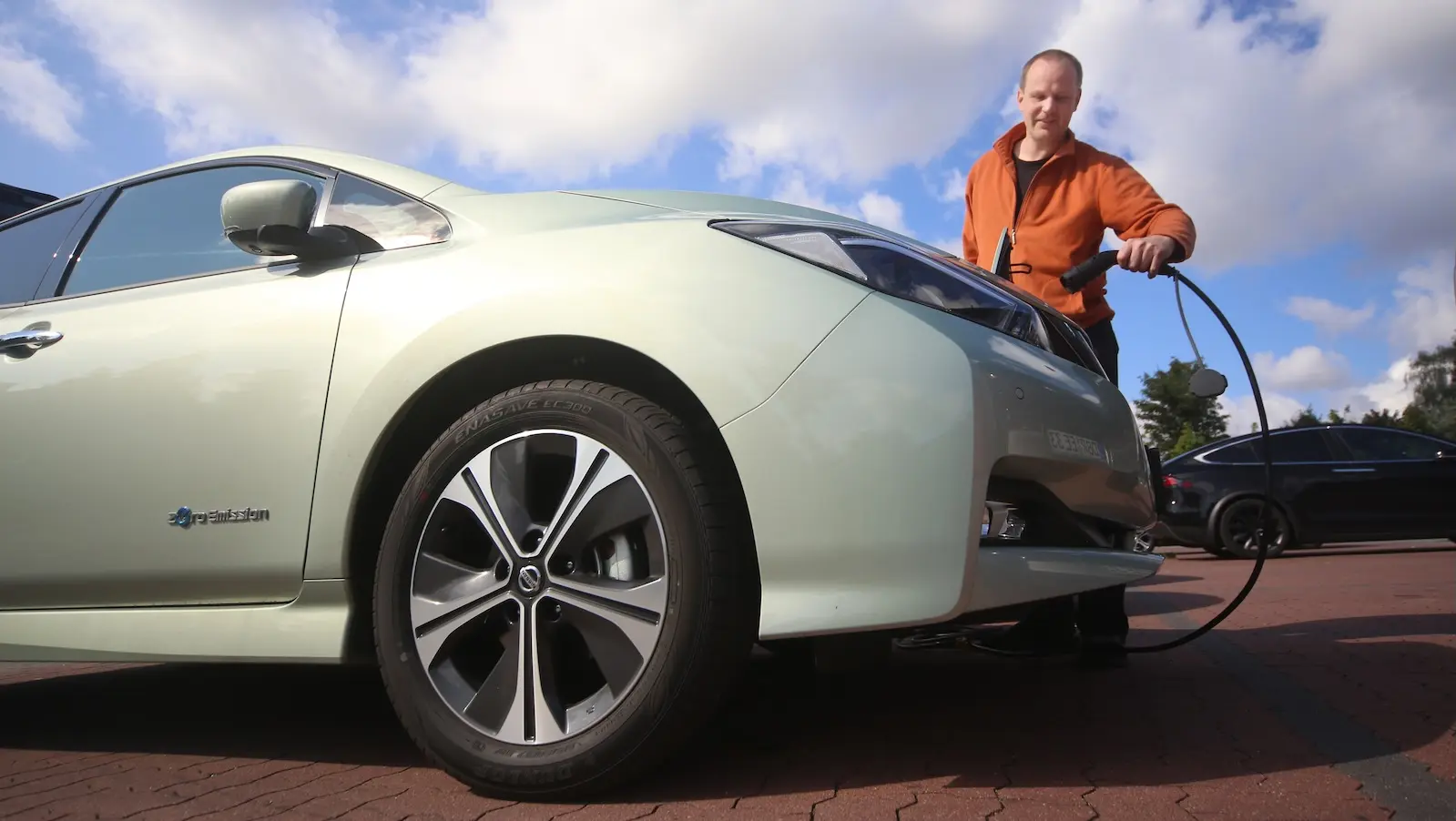
- 2018–2021: Commercial Hardware Development. Global automakers began exploring bidirectional capabilities. The Nissan LEAF became the first mass-produced EV to support V2G via the CHAdeMO charging standard. During this period, companies like The Mobility House began implementing V2G for commercial fleets in Europe.
- 2022: Legislative Momentum. In the United States, the Inflation Reduction Act (IRA) provided significant tax credits for EV charging infrastructure, including bidirectional chargers. States like California and Massachusetts began passing legislation requiring utilities to study and implement "load management" strategies.
- 2023: Standardization. The industry began coalescing around the ISO 15118-20 standard, which provides a universal communication protocol for bidirectional charging, allowing different vehicle makes to talk to different charging stations and utility platforms.
- 2024: The Massachusetts Launch. The current pilot represents the move from theoretical testing to consumer-facing utility programs, marking the beginning of the "scaling phase" for V2G in the North American market.
Supporting Data: The Power of Aggregation
To understand the impact of the Massachusetts initiative, one must look at the data surrounding battery capacity. According to industry reports, the average American home uses about 30 kWh of electricity per day. A single Ford F-150 Lightning, equipped with an extended-range battery of 131 kWh, could theoretically power an average home for three to four days.
On a grid-wide scale, the numbers are even more staggering. If Massachusetts reaches its goal of having 900,000 EVs on the road by 2030, and only 10% of those vehicles participate in V2G, the state would have access to roughly 5.4 gigawatt-hours of storage. This is equivalent to several large nuclear power plants’ worth of energy available for short-term discharge.
Furthermore, data from EnergyHub suggests that participants in demand response programs can earn anywhere from $250 to $1,000 annually, depending on the frequency of events and the size of their battery. For a consumer, this significantly alters the total cost of ownership (TCO) for an electric vehicle, making it more competitive with internal combustion engine (ICE) vehicles even before factoring in fuel savings.
Official Responses and Industry Perspectives
The coalition behind the pilot emphasizes that collaboration is the key to success. Seth Frader-Thompson, president of EnergyHub, noted that as hardware costs decrease and installation becomes simpler, V2G will become "dramatically more accessible." The goal is to make the process invisible to the consumer; users can set their preferences via a mobile app, ensuring their car is always charged and ready for their morning commute, even if it provided power to the grid the night before.
Chip Silverman, director of grid services at Sunrun, highlighted the "magic" of aggregation. "If you have a higher number of batteries out there in a virtual power plant, you can actually use less energy from each individual battery," Silverman explained. This reduces the "cycling" of the battery, addressing concerns from some EV owners that frequent discharging might degrade the battery’s lifespan. Modern lithium-ion batteries are designed for thousands of cycles, and the shallow discharges used for grid support are generally considered to have a negligible impact on long-term health.
From the utility perspective, Eversource and National Grid see this as a necessary evolution. By managing when and how EVs charge and discharge—a process known as "active managed charging"—utilities can smooth out the "duck curve," a phenomenon where solar production drops off in the evening just as demand spikes.
Broader Implications and the Future of the Energy Landscape
The success of the Massachusetts pilot could serve as a blueprint for the rest of the country. If V2G becomes a standard feature of utility service, it could lead to a significant reduction in retail electricity prices. When utilities save money on infrastructure and peak power purchasing, those savings are, in theory, passed down to the ratepayer through more stable utility rates.
However, challenges remain. Not all current EV models support bidirectional charging, and the specialized chargers required for V2G are currently more expensive than standard Level 2 chargers. There is also the hurdle of consumer education; many drivers are still acclimating to the basics of EV ownership and may be hesitant to let a utility "control" their vehicle’s battery.
Despite these obstacles, the trajectory is clear. The Massachusetts pilot proves that the technology is no longer a futuristic concept but a viable tool for climate resilience. As the planet warms and the demand for air conditioning increases, the ability to tap into a decentralized network of mobile batteries may be the difference between a stable power supply and catastrophic blackouts.
In the long term, V2G represents the democratization of the energy sector. It shifts the power dynamic from a centralized, top-down model to one where every citizen with an EV in their garage is an active participant in the nation’s energy security. Far from being a burden on the system, the electric vehicles of tomorrow will be the very thing that keeps the lights on.