President Trump Moves to Lift Decades-Old Ban on Direct U.S. Flights to Lebanon Following New Regional Security Framework

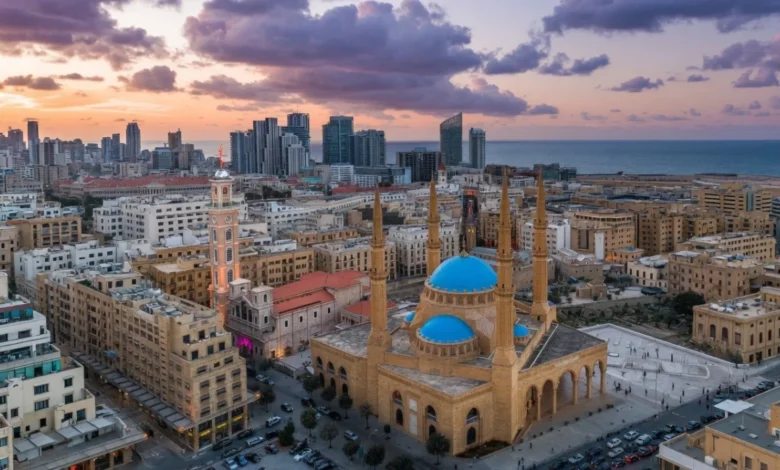
In a significant shift in U.S. aviation and foreign policy, President Trump has announced that United States airlines will be permitted to resume non-stop flights to Lebanon, ending a prohibition that has been in place for nearly four decades. The announcement, made via social media in July 2026, was met with an immediate affirmation from Transportation Secretary Sean Duffy, who signaled that the Department of Transportation (DOT) is prepared to facilitate the regulatory transition. The move comes as part of a broader diplomatic effort to stabilize the Levant and follows a reported U.S.-brokered trade deal and security framework intended to address the long-standing political and economic crises within Lebanon.
While the executive announcement marks a pivotal moment in bilateral relations, the path to actualizing direct air service remains fraught with complex legal requirements, significant safety concerns, and a challenging commercial landscape. Industry analysts suggest that while the lifting of the ban is a necessary first step, U.S. carriers have yet to express formal interest in serving the Beirut market, citing both security risks and the current economic state of the Lebanese Republic.
Historical Context: The 1985 TWA Hijacking and the Genesis of the Ban
The prohibition of direct flights between the United States and Lebanon is rooted in one of the most significant security crises in aviation history. The ban was originally instituted in 1985 following the hijacking of TWA Flight 847. On June 14, 1985, the flight—en route from Athens to Rome—was commandeered by militants and diverted to Beirut. The ensuing two-week hostage ordeal, which resulted in the murder of U.S. Navy diver Robert Stethem, led the Reagan administration to conclude that the security environment at Beirut International Airport was fundamentally incompatible with U.S. civil aviation standards.
Since that time, U.S. citizens have been able to travel to Lebanon only via third-country connecting points, such as Istanbul, Dubai, or Paris. For forty years, the Department of State and the Department of Transportation have maintained that the presence of armed non-state actors and the lack of a centralized, reliable security apparatus at the airport justified the continued suspension of direct service. The President’s recent declaration represents the first major attempt to normalize these air links since the mid-1980s.
Legal and Regulatory Framework: Understanding 49 U.S.C. §40106(b)
The process of reinstating air service is not merely a matter of administrative preference but is governed by specific federal statutes. Under 49 U.S.C. §40106(b), the President of the United States holds the specific authority to suspend the operating authority of both U.S. and foreign airlines to a specific country. This power is invoked when the President determines that a foreign nation is failing to comply with international anti-hijacking conventions or is providing sanctuary to organizations that utilize aircraft hijacking as an instrument of policy.
Crucially, the authority to lift this suspension resides primarily with the White House rather than the Department of Transportation. While Secretary Sean Duffy’s enthusiastic response suggests a readiness to act, the legal "action item" requires a formal presidential determination. This determination must officially amend or revoke the 1985 suspension, certifying that the conditions that led to the ban have been sufficiently mitigated. Only after such a presidential directive is issued can the DOT and the Federal Aviation Administration (FAA) begin the technical work of authorizing specific routes and conducting safety audits.
Safety Risks and the EASA Aviation Bulletin
Despite the political desire to normalize relations, the safety of the Lebanese airspace remains a primary concern for international regulators. The European Union Aviation Safety Agency (EASA) recently issued a safety bulletin covering the Beirut Flight Information Region (FIR). The July 2026 bulletin indicates that Lebanon has not yet demonstrated an effective, proactive system for airspace deconfliction—the process of ensuring that civilian aircraft are not put at risk by military activity or rocket fire.
EASA currently characterizes the risk to civil aircraft in Lebanese airspace as "high" at all altitudes. The agency has recommended that airlines avoid the airspace entirely, a warning that is currently set to remain in effect through late August 2026. This warning is compounded by reports of frequent GPS interference and "spoofing" in the Eastern Mediterranean, which can disrupt aircraft navigation systems.
For U.S. carriers, these warnings carry significant weight. Even if the federal ban is lifted, airlines must navigate the requirements of their insurance providers, who may be hesitant to cover hulls and passengers flying into a region designated as high-risk. Furthermore, pilot and flight attendant unions in the United States typically maintain the right to object to flying into zones where active safety bulletins from major regulators like EASA are in place.
Lebanon’s Economic Landscape and the Collapse of 2019
The commercial viability of a Newark-to-Beirut or Detroit-to-Beirut route is further complicated by Lebanon’s dire economic situation. Since 2019, the country has faced what the World Bank has described as one of the world’s worst financial collapses in modern history. The Lebanese pound has lost more than 98% of its value, and the domestic banking system is effectively insolvent, with most citizens unable to access their life savings.
While the President’s pronouncement is reportedly tied to a U.S.-brokered framework for Lebanese disarmament and economic revitalization, the current reality on the ground offers little in the way of corporate travel demand. In 2025, Beirut’s Rafic Hariri International Airport saw a total of 7 million passengers, but only 1,890 of those were transit passengers. This indicates that Beirut is not functioning as a regional hub but rather as a destination for the Lebanese diaspora and limited humanitarian or diplomatic traffic.
Demographic Data and Potential Airline Routes
The primary driver for any potential direct service would be "VFR" (Visiting Friends and Relatives) traffic. According to the latest U.S. Census data, there are approximately 685,672 individuals of Lebanese descent living in the United States. This population is highly concentrated in specific geographic clusters, most notably in the Detroit and Dearborn areas of Michigan, as well as in the New York-New Jersey metropolitan area and parts of California.
If a U.S. carrier were to attempt a direct route, industry experts point toward Delta Air Lines or United Airlines as the most likely candidates.
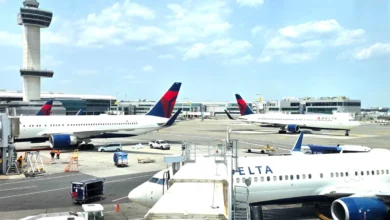
- Delta Air Lines: With its major hub in Detroit (DTW), Delta is uniquely positioned to capture the Michigan-based Lebanese diaspora. A three-times-weekly service using a Boeing 787-8 or an Airbus A330neo could theoretically serve this market.
- United Airlines: Operating out of Newark Liberty International Airport (EWR), United has shown a historical willingness to experiment with "oddball" or niche long-haul routes. Newark serves as a convenient gateway for the large Lebanese population in the Northeast.
However, even with high load factors (the percentage of seats filled), VFR routes are notoriously difficult to make profitable. These passengers typically book in the economy cabin, travel with significant amounts of checked luggage, and are highly price-sensitive. Without a "premium" cabin filled with high-paying business travelers—of which there are currently very few heading to Lebanon—U.S. airlines may find it more profitable to deploy their long-haul aircraft on established routes to Europe or Asia.
Official Responses and Political Implications
The reaction from the Lebanese government has been one of cautious optimism. Lebanese officials have long argued that the lack of direct U.S. flights is a symbolic and economic barrier that prevents the country from fully re-integrating into the global economy. For the Lebanese administration, the resumption of flights would signal a "stamp of approval" from Washington regarding the security of their national airport.
Domestically, the response has been split along predictable lines. Supporters of the administration view the move as a bold stroke of "aviation diplomacy" that uses commercial access as a carrot to encourage Lebanese political reforms and the disarmament of Hezbollah. Critics, however, argue that lifting the ban prematurely could put American crews and passengers at risk, given that Hezbollah remains a potent political and military force in the country with significant influence over the territory surrounding the airport.
Broader Impact and Future Outlook
The lifting of the 1985 ban would be a historic milestone, but it is unlikely to result in an immediate flurry of flight activity. The aviation industry operates on long lead times, requiring months of safety audits, staffing arrangements, and marketing campaigns before a new international route can be launched.
Furthermore, the U.S. government does not currently rate Lebanese aviation safety under the FAA’s International Aviation Safety Assessment (IASA) program. For a country to have direct flights to the U.S., it generally must be rated "Category 1," meaning it complies with International Civil Aviation Organization (ICAO) standards. Currently, Lebanon is unrated, meaning a comprehensive audit of the Lebanese Civil Aviation Authority would likely be required before any Lebanese-flagged carrier, such as Middle East Airlines (MEA), could fly to the United States.
In the immediate term, the market will continue to be served by dominant regional players. Turkish Airlines, which offers seamless connections through Istanbul, and Emirates, via Dubai, currently hold the lion’s share of the U.S.-to-Lebanon market. These carriers benefit from lower operating costs and existing infrastructure that U.S. airlines would have to build from scratch in Beirut.
Ultimately, while President Trump’s declaration removes the legal barrier to entry, the commercial and security barriers remain formidable. The success of this policy will depend not just on a social media post or a DOT directive, but on the tangible improvement of security conditions on the ground in Beirut and the ability of the Lebanese government to prove that its airspace is safe for the world’s most scrutinized airlines. Until then, the promise of non-stop flights to the "Paris of the Middle East" remains a diplomatic goal rather than an operational reality.