Nevada Gubernatorial Race Heats Up as Lombardo Campaign Alleges $18 Billion Cost for Ford’s Policy Agenda, Drawing Sharp Disputations


The political landscape in Nevada is intensely charged as Governor Joe Lombardo’s campaign has released a scathing report estimating that the policy agenda of his Democratic rival, Attorney General Aaron Ford, would burden Nevada residents with a staggering $18.1 billion in government and private-sector costs over a four-year term. This monumental figure includes nearly $8 billion in projected direct state spending, according to the Lombardo campaign’s calculations, a sum that Ford’s campaign vehemently disputes as "fraudulent" and based on fabricated premises.
The Lombardo Campaign’s Fiscal Allegations
Released exclusively to Fox News Digital, the Lombardo campaign’s detailed report assigns estimated costs to no fewer than 76 distinct proposals put forth by Attorney General Ford. The analysis purports to combine projected Nevada state spending with additional costs that would, in their view, be borne by businesses and the federal government, ultimately trickling down to taxpayers and the broader public. The report’s central contention is that such an expenditure scale is unsustainable for Nevada without significant financial repercussions for its citizens.
According to the Lombardo campaign, the projected $7.93 billion in direct state spending over a single four-year gubernatorial term would be unprecedented and, given Nevada’s fiscal structure, necessitate drastic measures. With no personal income tax in the state, any substantial increase in recurring state spending would invariably require either the introduction of new taxes or fees, significant cuts to existing state programs, or a complex combination of both. This would represent a fundamental shift in the state’s financial strategy, impacting every household and business.
To lend academic weight to their claims, the Lombardo campaign cited University of Nevada, Reno professor Mark Pingle, who, after reviewing Ford’s policy proposals, stated, "Based on a review of Aaron Ford’s policy proposals, an estimated cost of $18 billion is a reasonable assessment." This endorsement aims to bolster the credibility of the report’s methodology and findings. Furthermore, former Nevada state Senator Ben Kieckhefer, who previously served as Governor Lombardo’s chief of staff, echoed these concerns, telling Fox News Digital that Ford’s proposals "is simply not sustainable for Nevada" and would demand "significant tax increases." Kieckhefer emphasized the need for "responsible budgeting, fiscal discipline, and a clear explanation of how these promises would actually be paid for."
Deconstructing the $18.1 Billion Price Tag
The Lombardo campaign’s report breaks down the colossal $18.1 billion figure across several key policy areas, painting a picture of broad-based and extensive government expansion under a Ford administration. The figures are as follows:

- Healthcare: This sector carries the largest estimated price tag at an astounding $6 billion. Within this, proposals addressing medical debt and what the report terms "predatory healthcare practices" account for $4.25 billion. A significant portion of this, $3.5 billion, is specifically allocated to a proposed program to cancel medical debt. An additional $1.76 billion is projected for initiatives aimed at expanding healthcare affordability and access through Medicaid protections, workforce expansion, and preventive care measures. These figures suggest a comprehensive overhaul of Nevada’s healthcare system, potentially involving state-funded programs and significant regulatory changes.
- Education: Ford’s K-12 education plan is estimated to cost $4.9 billion. This includes ambitious goals such as raising Nevada’s per-pupil funding to the national average – a move that would require substantial investment given the state’s current standing – expanding pre-kindergarten programs, providing universal school meals, and implementing significant increases in pay for teachers and support staff. The report implies that these enhancements, while potentially beneficial, would necessitate a dramatic increase in the state’s education budget.
- Housing: A projected $4.8 billion is assigned to housing initiatives. While the report does not detail specific proposals in this area, such a figure typically encompasses programs for affordable housing development, rental assistance, homeless support services, and potentially rent control or other market interventions.
- Energy: Ford’s energy proposals are estimated to cost approximately $1.5 billion. This could include investments in renewable energy infrastructure, energy efficiency programs, or initiatives to transition away from fossil fuels, all of which often involve significant upfront capital expenditure.
- Economic Development: Nearly $900 million is allocated to economic development plans. These types of proposals often involve incentives for businesses, job training programs, infrastructure improvements, and initiatives to attract new industries or support existing ones.
The report suggests that while households might see an estimated $17.88 billion in savings and other benefits from these policies, businesses, the state government, and the federal government would collectively bear nearly the same amount in costs, ultimately shifting the financial burden.
The Ford Campaign’s Vigorous Rebuttal
The Ford campaign has not only sharply disputed the Lombardo campaign’s analysis but has also launched a counter-offensive, labeling the report as a deliberate misrepresentation. Prerna Jagadeesh, spokesperson for the Ford campaign, asserted in a statement to Fox News Digital, "General Ford won’t be lectured by a governor who proposed a budget with a $335 million unconstitutional deficit and twice broke his pledge to never raise taxes." This suggests an attempt to shift focus to Lombardo’s own fiscal record and integrity.
Jagadeesh went further, stating, "The Lombardo campaign is embarrassing themselves and insulting the intelligence of voters by pushing this fraudulent report. The report lies about Attorney General Ford’s policies and assigns fake costs to programs that won’t cost the state a penny and will actually save taxpayers money, and incorrectly attributes costs to the state." The Ford campaign’s core argument is that the analysis invents implementation plans that Ford never proposed and misclassifies certain federal and private costs as direct consequences of his platform, thereby inflating the state’s financial obligation.
Specifically, the Ford campaign disputes several of the report’s largest assumptions. For instance, they argue that Lombardo’s team wrongly assumes Ford would spend hundreds of millions expanding the state’s "Battle Born health plans" and partially replacing federal Medicaid reductions. Ford’s campaign clarifies that his platform instead calls for outreach surrounding the existing Battle Born program and federal advocacy to prevent or reverse Medicaid cuts, rather than new state appropriations to backfill them. This distinction is crucial, as federal advocacy and public awareness campaigns generally carry significantly lower costs than direct state-funded program expansions or backfilling federal shortfalls.
To substantiate their counter-claims, the Ford campaign provided Fox News Digital with its own fiscal analysis, which, they contend, demonstrates that their platform could be implemented without raising taxes and with substantially lower direct state costs than those projected by the Lombardo campaign. This suggests a fundamental disagreement on the scope and funding mechanisms of Ford’s proposed policies.
When pressed on Ford’s contention that the report assigns costs to implementation measures not explicitly contained in his platform, the Lombardo campaign countered by stating that their estimates reflect what it would actually take to fulfill Ford’s campaign promises. They argued that regulatory changes, enforcement initiatives, and expanded benefits inherently require staffing, oversight, or funding, even if those costs are not explicitly identified in a campaign’s public platform. This highlights a common point of contention in political fiscal analyses: the difference between a candidate’s stated intentions and the practical, bureaucratic costs of implementing them.
Expert Opinions and Political Battle Lines

The fiscal debate has quickly drawn lines among political observers and academics. While Professor Mark Pingle’s endorsement of the Lombardo report provides an academic perspective supporting the cost estimates, Democratic Assemblywoman Daniele Monroe-Moreno, who chairs the Assembly Ways and Means Committee, offered a contrasting view. She told Fox News Digital that the Lombardo report "uses fake math to lie about Attorney General Ford’s policy positions" and reiterated Ford’s campaign’s stance that his platform consists of "common-sense policies that will save Nevadans money at very little to no cost to the state." This illustrates the deep partisan divide in interpreting fiscal projections and policy impacts.
The disagreement underscores the challenge for voters in distinguishing between genuine fiscal concerns and politically motivated exaggerations. Both campaigns are leveraging expert opinions and official statements to bolster their narratives, making it imperative for the public to scrutinize the underlying assumptions of each analysis.
Nevada’s Unique Fiscal Landscape
Understanding the context of Nevada’s fiscal structure is crucial to appreciating the gravity of this debate. Unlike most states, Nevada does not levy a personal income tax. Its state revenue is heavily reliant on sales taxes, gaming taxes, and various fees. This unique tax base means that significant new recurring state spending, such as that projected by the Lombardo campaign for Ford’s agenda, would likely necessitate a substantial overhaul of the state’s revenue generation.
Historically, Nevada has maintained a relatively lean state government budget compared to states with broader tax bases. Introducing billions in new spending without an income tax would likely mean either:
- Broadening the sales tax base or increasing the sales tax rate: This would directly impact consumers and could be regressive.
- Introducing new fees or expanding existing ones: This could affect specific industries or services.
- Dramatically increasing gaming taxes: Potentially impacting the state’s vital tourism and hospitality industry.
- Significant cuts to existing programs: Diverting funds from one area to another, potentially leading to reductions in services that Nevadans currently rely on.
This fiscal reality makes any discussion of large-scale spending increases particularly sensitive and politically charged, as the funding mechanism is often a direct and visible burden on residents or businesses.
Past Scrutiny and Ethical Questions Facing Aaron Ford
Beyond the policy debate, Attorney General Aaron Ford has also faced scrutiny regarding his own financial conduct during his tenure. In March, state records reviewed by Fox News Digital revealed that Ford had accumulated more than $410,000 in travel costs since taking office in 2019. Local news outlets also reported that he spent over 100 days outside Nevada during this period. While a spokesperson for the attorney general’s office defended these trips as being tied to Ford’s official duties and campaign activities, asserting they were permitted under Nevada law, the sheer volume and cost have raised eyebrows among watchdogs and political opponents.
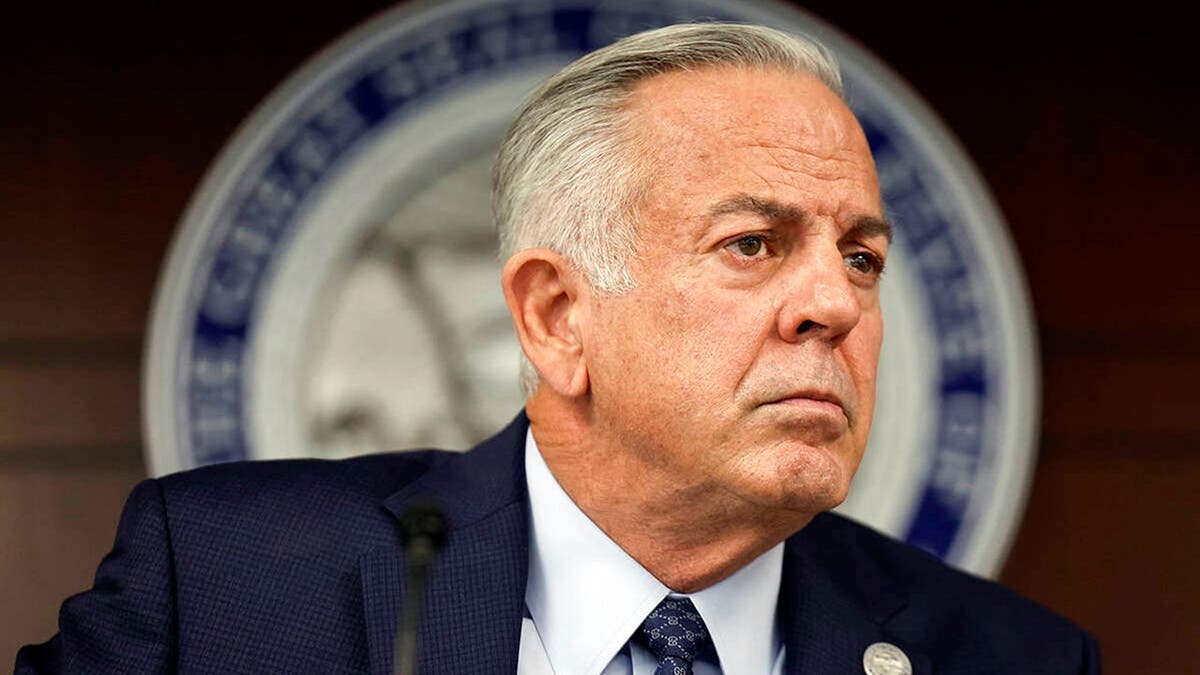
Adding to the scrutiny, Ford is currently under investigation by the Nevada Commission on Ethics. Documents obtained by local outlets indicate allegations that he accepted improper gifts or benefits and used his office to improperly benefit himself. These investigations, while distinct from the policy cost debate, contribute to a broader narrative about accountability and fiscal responsibility that could influence public perception in the upcoming election. For a candidate whose platform is being scrutinized for its financial implications, such past issues can become potent talking points for opponents.
The Stakes of the November Election
The fiscal clash between Governor Lombardo and Attorney General Ford is not merely an academic exercise; it forms a central pillar of the closely watched gubernatorial race slated for November. Lombardo, seeking a second term, will face Ford in a contest that is expected to be one of the most competitive midterm gubernatorial races in the nation.
This debate over policy costs and funding mechanisms forces Nevada voters to consider fundamental questions about the state’s future direction. Will Nevada embrace a more expansive government with potentially higher taxes or reallocated resources, as implicitly suggested by the Lombardo campaign’s analysis of Ford’s plans? Or will it prioritize fiscal conservatism and existing budgetary constraints, as Lombardo’s campaign advocates? The outcome of this election will not only determine who occupies the governor’s mansion but will also significantly shape Nevada’s economic and social policies for years to come.
The accusations and counter-accusations regarding the cost of Ford’s agenda underscore the high stakes. For Lombardo, portraying Ford’s plans as fiscally irresponsible is a key strategy to appeal to voters concerned about economic stability and tax burdens. For Ford, defending his agenda as affordable and beneficial, while simultaneously attacking Lombardo’s record, is crucial to demonstrate his viability as a progressive leader. As the election draws nearer, this fiscal battle is likely to intensify, providing voters with a clearer, albeit highly politicized, picture of the choices before them.