State Department Overhauls Human Rights Funding to Prioritize Western Conservative Movements and Afrikaner Rights

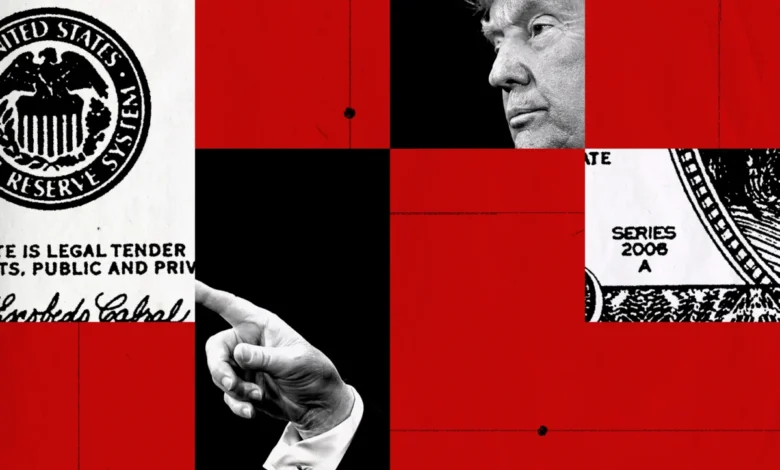
The United States Department of State is undergoing a fundamental transformation in how it allocates hundreds of millions of dollars in foreign aid, shifting away from long-standing programs that protect persecuted minorities in authoritarian regimes toward funding groups aligned with conservative, anti-immigration, and "America First" ideologies in wealthy Western democracies. For nearly half a century, the Bureau of Democracy, Human Rights, and Labor (DRL) has served as the primary vehicle for American "soft power," documenting war crimes, supporting torture survivors, and advocating for democratic reforms in the world’s most repressive corners. However, internal documents and interviews with current and former officials reveal a concerted effort by political appointees to bypass traditional non-partisan vetting processes in favor of a new "civilizational" agenda.
This pivot represents a significant departure from the established norms of American diplomacy. Traditionally, DRL grants were awarded through a rigorous, open-competition process. Career experts with deep regional knowledge would evaluate hundreds of proposals, selecting organizations based on their ability to operate in high-risk environments like Burma, Syria, or North Korea. Today, that process is being upended as political appointees present staffers with pre-selected lists of organizations, many of which are based in stable, high-income nations such as the United Kingdom and Germany. These proposed grants, totaling tens of millions of dollars, seek to address issues ranging from "cancel culture" and "digital overregulation" to the perceived victimization of white ethnic minorities in South Africa.
The Shift Toward "Civilizational Self-Confidence"
At the heart of this ideological shift is a new emphasis on Western Europe and the concept of "transatlantic renewal." One of the most prominent new initiatives is a $4.9 million program designed to develop "civilizational self-confidence in Europe." The funding is earmarked for research, conferences, and cultural engagements within wealthy democratic nations. Notably, the call for proposals explicitly instructs recipients not to attempt to reform legislative processes, a directive that has raised alarms among international observers. Experts suggest that the program is less about traditional human rights and more about influencing the domestic politics of American allies.
The German government has already issued warnings regarding potential election interference, as some of the proposed funding appears directed toward causes aligned with the MAGA movement and hard-right European parties. This focus on Western nations was further exemplified by a proposed $7 million grant to "878," a newly formed British-American think tank dedicated to "renewing Judeo-Christian culture." While the State Department recently abandoned this specific grant following intense pushback from Congress, the intent remains clear: to use federal resources to bolster specific ideological movements within the Western alliance.
A Chronology of Administrative Transformation
The reorientation of the State Department did not happen in a vacuum but followed a specific timeline of administrative actions that began shortly after the second inauguration of President Donald Trump in January 2025.
January 2025: During his first week in office, President Trump ordered a suspension of all foreign aid pending a comprehensive review. This freeze provided the opening for political appointees to begin reshaping the DRL’s mission.
March 2025: Samuel Samson, a 27-year-old deputy assistant secretary and former fundraiser for the "America First" group American Moment, emerged as a key figure. Samson traveled to the United Kingdom, where he met with prominent anti-immigration figures and criticized European governments for their "bureaucratic weaponization" against conservative activists.
April 2025: Secretary of State Marco Rubio, once a staunch defender of the DRL’s traditional mission, signaled a dramatic change in stance. In a public post, he characterized the bureau as a platform for "left-wing activists" and proceeded to close several of its offices. This was accompanied by massive budget cuts led by the Department of Government Efficiency, reducing the DRL’s budget from over $500 million in 2024 to approximately $190 million.
Late 2025 – Early 2026: Political appointees began presenting "sole-source" and "limited-source" grant proposals to career staff. These grants, which bypass public bidding, were directed at organizations handpicked by the administration rather than those selected through competitive merit.

Bypassing Competitive Bidding Standards
The use of no-bid grants has become a central point of contention within the State Department. Federal regulations typically require an open bidding process to guard against waste, fraud, and political favoritism. Sole-source awards are generally reserved for emergencies or situations where only one organization possesses the unique expertise required for a task—such as providing clandestine support to activists in a closed society like Iran.
Contracting experts argue that none of these justifications apply to the current list of recipients. The Free Speech Union, a British organization founded to counter "cancel culture," is slated for a $5 million grant to combat "digital overregulation" and "deplatforming." Because the organization operates in the United Kingdom—a stable democracy with a robust legal system—critics argue there is no "emergency" or "sensitive" justification for bypassing an open competition. Furthermore, the selection of recipients by political appointees rather than a panel of government experts has led to accusations of "ideological patronage."
Case Study: The Victims of Communism Memorial Foundation
The most significant proposed award is a $40 million grant to the Victims of Communism Memorial Foundation. While the foundation has a long history of bipartisan support and was established by an act of Congress in 1993, the scale of this award is unprecedented. In 2024, the organization’s total assets were valued at approximately $12 million. A $40 million infusion would nearly quadruple its previous budget, leading to concerns about the foundation’s capacity to manage such a massive influx of taxpayer funds.
The grant is intended to "amplify the voices of dissidents" and educate global audiences on the "dangers of communist and authoritarian regimes." However, internal critics have pointed to potential conflicts of interest. Samuel Samson, the appointee overseeing the grants, has a personal connection to the foundation’s leadership through his graduate studies at Hillsdale College’s Washington, D.C. campus. While the State Department maintains that these relationships played no role in the decision, the lack of a competitive process has made the award a focal point for congressional scrutiny.
Focus on South African Afrikaner Rights
The administration’s new priorities also extend to the African continent, specifically focusing on the rights of white Afrikaners in South Africa. The State Department has moved to fund organizations like Lex Libertas, which claims that white farmers are victims of "disproportionate violence" and "racial discrimination." The group is currently fundraising to place 3,000 white crosses on the National Mall in Washington to symbolize these attacks.
This focus has been met with skepticism by veteran diplomats. Extensive research, including data from the Institute for Security Studies, indicates that while crime in South Africa is high across all demographics, white farmers are not targeted at higher rates than other groups. Former agency officials have noted that prioritizing the victimization of a white minority in a region facing mass atrocities, famine, and political instability in countries like Sudan or the Democratic Republic of the Congo is a "stark departure" from traditional human rights priorities. This policy shift coincides with the administration’s decision to end PEPFAR (President’s Emergency Plan for AIDS Relief) funding for South Africa, citing the government’s alleged failure to protect the white minority.
Official Responses and Political Implications
The reaction from Capitol Hill has been polarized. Senator Jeanne Shaheen, the ranking member of the Senate Committee on Foreign Relations, described the proposals as an "appalling departure" from democratic practice. "These awards suggest that the Department intends to select awardees for federal funding based on their political ideology, not in the interest of American taxpayers or national security," Shaheen stated.
In response to inquiries, a State Department spokesperson emphasized that the programs are still in "active deliberation" and that receipt of a grant is not guaranteed until all federal standards are met. The official noted that the administration is simply aligning foreign assistance with the strategic priorities directed by the White House and the National Security Strategy.
The implications of this shift are far-reaching. By redirecting funds toward ideological allies in wealthy nations, the U.S. risks alienating traditional partners and abandoning marginalized communities in the Global South. For decades, DRL funding was a lifeline for LGBTQ+ activists in countries with "kill the gays" laws and for women’s rights groups in societies where sexual violence is pervasive. As the bureau’s remaining staff is reportedly tasked with removing "trigger words" from official documents and erasing mentions of "marginalized communities," the very definition of human rights as viewed through the lens of American foreign policy is being rewritten.
The transition from a merit-based, universalist approach to human rights to one based on "civilizational bonds" and ideological alignment marks what some experts call "crossing the Rubicon." As these grants move toward final approval, the role of the State Department as a neutral arbiter of international human rights standards appears to be giving way to a new era of ideologically driven diplomacy.