Autonomous Drones Emerge as Rapid-Response Tool in Escalating Wildfire Crisis Across California and Alaska

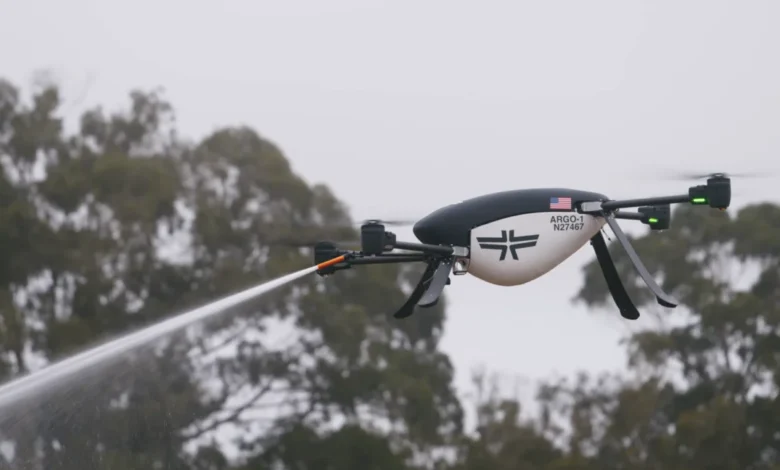
The escalating threat of wildfires, intensified by a rapidly changing climate, is driving a surge in innovative firefighting technologies, with autonomous drones capable of deploying water and fire retardants now undergoing rigorous field testing in California and Alaska. These demonstrations represent a pivotal step toward integrating rapid-response aerial robotics into the frontline defense against blazes, transforming wildfire season from a seasonal concern into a nearly year-round risk across vast swathes of the United States. While not designed to supplant the massive payloads delivered by traditional airtankers to remote, large-scale incidents, these smaller, agile uncrewed aerial vehicles (UAVs) are being evaluated for their potential to significantly accelerate initial attack efforts, extinguishing nascent fires before they can grow into destructive infernos.
The Intensifying Wildfire Landscape
Wildfires have become an increasingly devastating force globally, with the Western United States experiencing unprecedented fire seasons marked by extreme heat, prolonged droughts, and high winds—all exacerbated by climate change. According to the National Interagency Fire Center (NIFC), the past decade has seen an average of over 60,000 wildfires annually, burning an average of 7.5 million acres across the U.S. In California alone, recent years have witnessed several of the largest and most destructive fires in recorded history, leading to billions of dollars in property damage, widespread ecological devastation, and tragic loss of life. For instance, the 2020 fire season in California burned over 4.3 million acres, while the 2021 season saw the Dixie Fire become the second-largest in state history. The economic impact extends beyond direct losses, affecting air quality, tourism, and critical infrastructure. This grim reality underscores an urgent need for advanced tools and strategies that can complement traditional firefighting methods, which often struggle with the speed and scale required to contain rapidly spreading fires.
Traditional aerial firefighting, primarily relying on crewed aircraft like helicopters and large airtankers, faces inherent limitations. These assets are expensive to operate, require significant logistical support, and are often restricted by visibility, flight hours, and the safety of human pilots, particularly in challenging conditions such as dense smoke or turbulent winds. The time lag between fire detection and the arrival of ground crews or crewed aerial support can be critical, as small fires can explode in size within minutes under adverse conditions. This vulnerability in the initial attack phase is precisely where autonomous drone technology aims to provide a transformative advantage.
Pioneering Trials: Drones on the Front Lines
The summer of 2023 has been a crucial period for evaluating the practical capabilities of firefighting drones. The California Department of Forestry and Fire Protection, widely known as CAL FIRE, conducted a significant field test on July 15. This demonstration involved a coordinated swarm of five autonomous drones, which collectively deployed between 500 and 1,000 gallons of fire-suppressing foam. The exercise, detailed by TV station KPMH, was a collaborative effort, organized with the support of the nonprofit FireWERX and Seneca, a California-based company poised to make these drones commercially available starting in 2026.
Beyond California, similar testing initiatives are underway in Alaska, another state grappling with increasing wildfire activity due to warming temperatures and changing forest conditions. These parallel efforts highlight a broad consensus among fire agencies and technology developers regarding the urgent need to explore and integrate novel solutions.
Further propelling this innovation is the $11 million XPRIZE competition, an initiative designed to incentivize the development of groundbreaking technologies for global challenges. By focusing a portion of its resources on wildfire solutions, XPRIZE is fostering a competitive environment that encourages companies and research institutions to push the boundaries of drone capabilities for fire detection and suppression. This investment underscores the recognition that technological breakthroughs are essential to mitigate the growing threat.
The Argo-1 System: A Detailed Look
At the heart of the CAL FIRE demonstration was Seneca’s Argo-1 drone system. Each Argo-1 unit is engineered to carry approximately 100 pounds of water or fire retardant, operating most effectively when deployed in swarms of four to six drones. This swarm capability is critical, allowing for a concentrated and coordinated attack on specific fire areas, maximizing the impact of the relatively smaller payloads each individual drone carries.
The operational sequence of the Argo-1 system exemplifies its autonomous design and rapid-response potential. Once a human operator uploads a GPS waypoint marking the fire’s location, the drones independently navigate toward their target. Crucially, they are equipped with advanced onboard sensors capable of detecting the heat signature of a fire, as reported by HeliOps Magazine. This sensor suite allows the drones to precisely locate the blaze, even in complex or obscured terrain. Upon identification, the drones autonomously determine the optimal hovering altitude for effective deployment. They then line up, one after the other, to accurately spray the fire, ensuring a systematic and targeted application of suppressing agents. This sequential deployment maximizes efficiency and coverage, allowing the swarm to work together seamlessly.
Logistically, the Argo-1 drones are designed for agility and rapid deployment. With a fully loaded round trip range of approximately 10 miles and an average flight speed of about 30 miles per hour, their optimal use case involves prepositioning in fire-prone areas or rapid transport by ground vehicles. The drones’ compact design is a significant advantage: each unit can fit in the back of a pickup truck with the tailgate down, and two individuals can even manually carry the empty drones. This ease of transport and deployment means that a drone swarm can be quickly dispatched to a newly detected fire, potentially arriving on scene long before traditional ground crews or larger manned aircraft.
Strategic Advantages: Speed, Safety, and Precision
The primary strategic advantage of these autonomous firefighting drones lies in their ability to provide rapid initial attack. In wildfire suppression, the first few minutes or hours after ignition are often the most critical. A fire that starts small can quickly grow into an uncontrollable conflagration if not addressed promptly. Drones, with their potential for faster deployment and ability to reach difficult terrains, can act as a crucial first line of defense. They can reach remote areas, steep canyons, or dense forests that might be inaccessible or dangerous for human firefighters or larger aircraft in the early stages of a fire.
Beyond speed, drones offer significant enhancements in safety. By deploying autonomous systems for initial attack, the risk to human pilots and ground crews can be substantially reduced. Firefighting is inherently dangerous, and aerial operations, in particular, carry high risks. Drones can operate in conditions deemed too hazardous for manned aircraft, such as low visibility due to smoke or at night, when crewed aircraft operations are often restricted. This capability could allow for continuous suppression efforts around the clock, a significant boon in controlling rapidly spreading fires.
Furthermore, the precision offered by autonomous drones is a key benefit. Their onboard sensors and GPS capabilities allow for highly accurate targeting of hot spots. This precision minimizes waste of valuable water or retardant and ensures that the suppressing agent is applied exactly where it is most needed, maximizing its effectiveness. Drones can also provide real-time aerial intelligence, transmitting crucial data such as fire perimeter, intensity, and spread direction back to incident commanders, enabling more informed decision-making and resource allocation.
Statements and Perspectives from Key Stakeholders
CAL FIRE: Officials at CAL FIRE have consistently emphasized the need for innovative solutions to bolster their operational capabilities. While not replacing their extensive fleet of manned aircraft and ground resources, the integration of drones like the Argo-1 is seen as a vital complementary tool. A spokesperson, speaking on the condition of anonymity to discuss future strategies, stated, "Our mission is to protect lives, property, and natural resources. The increasing complexity of wildfire behavior demands that we explore every technological advantage. Autonomous drones represent a promising avenue for enhancing our initial attack capabilities, improving firefighter safety, and ultimately saving critical time in the early stages of an incident. We are evaluating these systems with an eye toward practical, scalable deployment that integrates seamlessly with our existing strategies."
Seneca: For Seneca, the commercial availability of the Argo-1 system in 2026 marks a significant milestone. A company representative highlighted their vision: "We believe the Argo-1 system offers a paradigm shift in how initial wildfire attacks are conducted. Our goal is to provide fire agencies with a rapidly deployable, cost-effective, and safe solution to stop fires before they become catastrophic. The scalability of our swarm technology, combined with its ease of transport and autonomous operation, makes it an invaluable asset for agencies facing the growing challenges of wildfire management."
XPRIZE Foundation: The XPRIZE Foundation, known for its bold incentive competitions, views the progress in drone firefighting as a testament to its mission. A representative commented, "The XPRIZE Wildfire competition aims to accelerate radical innovations that empower humanity to mitigate, detect, and respond to destructive wildfires. The advancements demonstrated by companies like Seneca are precisely what we envisioned – transformative technologies that can make a tangible difference in protecting communities and ecosystems from the devastating impacts of climate-fueled fires."
FireWERX: As a nonprofit facilitating the integration of technology, FireWERX plays a crucial role. A project lead from FireWERX noted, "Our role is to bridge the gap between cutting-edge technology developers and the operational needs of agencies like CAL FIRE. The drone trials are a perfect example of this collaboration, ensuring that innovative solutions are rigorously tested in real-world scenarios to meet the demanding requirements of wildfire suppression."
Challenges and the Path Forward
Despite the immense promise, the widespread integration of autonomous firefighting drones faces several significant challenges.
Regulatory Hurdles: One of the most substantial obstacles is navigating the complex regulatory landscape, particularly with the Federal Aviation Administration (FAA). Operations involving drones flying beyond visual line of sight (BVLOS) and the integration of autonomous systems into shared airspace with manned aircraft require robust safety protocols and certification. The FAA is actively working on frameworks for these advanced operations, but the process can be lengthy. Ensuring that drone operations do not interfere with or pose a risk to manned aerial firefighting assets is paramount.
Payload and Range Limitations: While effective for initial attack, the current generation of firefighting drones cannot replicate the sheer volume of water or retardant delivered by large airtankers. This means drones will serve as a complementary tool, not a complete replacement, particularly for large, established fires requiring massive suppression efforts. Improvements in battery technology and drone design will be crucial for extending flight ranges and increasing payload capacities in the future.
Cost and Infrastructure: The initial investment in drone fleets, associated ground support equipment, and training for operators can be substantial. Agencies will need to develop new logistical frameworks for deploying, maintaining, and recharging these drone systems, potentially requiring new infrastructure in remote areas.
Environmental Factors: Drones, like all aircraft, can be affected by adverse weather conditions such as high winds, heavy rain, or dense smoke. While potentially more resilient than manned aircraft in some scenarios, their operational limits in extreme conditions will need to be thoroughly understood and tested.
Public Acceptance and Safety Perceptions: As with any new technology, there will be a need to build public trust and address potential safety concerns related to autonomous aerial vehicles operating over populated or environmentally sensitive areas. Clear communication and demonstrable safety records will be key.
Broader Implications and the Future of Fire Management
The successful development and deployment of autonomous firefighting drones signal a broader evolution in wildfire management strategies. These systems are not merely tools for suppression; they represent a step towards a more technologically sophisticated, proactive, and data-driven approach to fire management.
Enhanced Intelligence and Data Collection: Drones can be equipped with a variety of sensors beyond thermal imaging, including multispectral cameras, LiDAR, and gas detectors. This allows them to gather unprecedented amounts of real-time data on fire behavior, fuel loads, and environmental conditions. This intelligence can be invaluable for predictive modeling, post-fire analysis, and informing prescribed burns.
Reduced Risk for Human Firefighters: By taking on the most dangerous initial attack missions, drones can significantly reduce the exposure of human firefighters to immediate hazards, allowing them to focus on safer, more strategic roles.
Global Applicability: The challenges posed by wildfires are global. From the Amazon rainforests to the Australian bush and the Mediterranean coasts, many regions could benefit from the integration of similar drone technologies, leading to international collaboration and sharing of best practices.
Integration with AI and Machine Learning: The future may see even greater autonomy, with drones potentially leveraging artificial intelligence and machine learning to make real-time decisions about suppression tactics, optimal flight paths, and resource allocation, further enhancing their effectiveness and speed.
In conclusion, the trials of autonomous firefighting drones in California and Alaska mark a significant inflection point in the battle against wildfires. As climate change continues to intensify fire seasons, the need for rapid, safe, and effective initial attack capabilities has never been more urgent. While challenges remain, the progress demonstrated by systems like Seneca’s Argo-1, supported by agencies like CAL FIRE and initiatives like XPRIZE, paints a hopeful picture for a future where advanced robotics play a crucial, complementary role in protecting communities and ecosystems from the escalating threat of wildfire devastation. The integration of these intelligent machines promises to fundamentally reshape the tactics of fire suppression, moving towards an era of greater efficiency, enhanced safety, and ultimately, more resilient landscapes.