Tennessee Valley Authority Pivots Energy Strategy to Fossil Fuels and Nuclear Amid Federal Policy Shifts

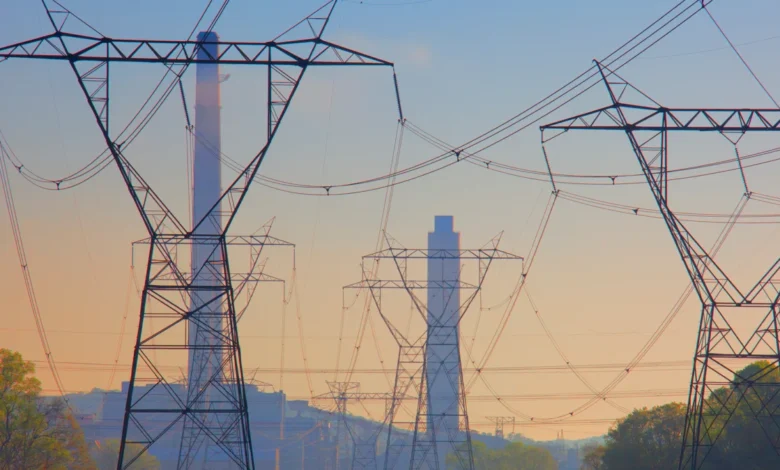
The Tennessee Valley Authority (TVA), the largest government-owned power provider in the United States, has unveiled a dramatic shift in its long-term energy strategy, signaling a renewed commitment to coal, natural gas, and nuclear power. This strategic pivot, detailed in the utility’s latest draft Integrated Resource Plan (IRP), marks a significant departure from previous initiatives that prioritized the expansion of renewable energy sources. The decision comes amidst a landscape of shifting federal priorities, leadership changes within the agency, and an unprecedented surge in energy demand driven by the proliferation of data centers across the Southeastern United States.
For the nearly 10 million residents served by the TVA across Tennessee and portions of Alabama, Mississippi, Kentucky, Georgia, North Carolina, and Virginia, the new roadmap outlines a future where fossil fuels remain a cornerstone of the regional grid for decades to come. The most striking element of this shift is the reversal of plans to decommission aging coal infrastructure, most notably at the Cumberland Fossil Plant in Montgomery County, Tennessee. Once slated for closure by 2028, the facility is now expected to remain operational alongside a new, adjacent gas-fired plant, a move that has sparked intense debate among environmental advocates, economists, and local communities.
A Reversal of Strategy: The 2026 Integrated Resource Plan
The Integrated Resource Plan is a foundational document that the TVA updates periodically to forecast energy needs and infrastructure investments over a 25-year horizon. The 2026 iteration, currently in its draft phase, serves as a "reboot" of a process that began in 2023 but was stalled by political and administrative upheaval.
The previous planning cycle, influenced by the 2019 IRP, had tentatively moved the needle toward a more diversified portfolio with a growing emphasis on solar and wind energy. However, the new draft reflects a starkly different set of economic and political assumptions. Under the new guidance, the TVA has slashed its projections for utility-scale solar generation. While a 2025 draft of the plan suggested the potential for up to 20 gigawatts of solar capacity, the current 2026 version expects no more than 5 gigawatts. Furthermore, wind energy has been removed from the utility’s primary expansion targets entirely.
In place of these renewables, the TVA is doubling down on traditional baseload power. The agency now plans to retain its existing coal fleet through at least 2039. Simultaneously, the utility is preparing to nearly double its investment in natural gas, with capacity estimates rising to as much as 26 gigawatts. To support this fossil-fuel-heavy mix, the TVA is also pursuing license extensions for its three nuclear power plants, including the Watts Bar Nuclear Plant, to ensure they remain operational well into the mid-century.
Chronology of Change: Leadership and Policy Shifts
The transition in the TVA’s energy outlook can be traced through a series of administrative and legislative shifts occurring over the past 24 months. The following timeline outlines the key events that led to the current strategic pivot:
- 2019-2021: The TVA operates under an IRP that focuses on retiring aging coal units and exploring the integration of renewable energy and battery storage.
- Early 2025: Following the second inauguration of President Donald Trump, a series of executive actions begin to reshape federal energy policy. This includes the rollback of specific provisions within the "One Big Beautiful Bill Act of 2025," which had previously provided robust tax incentives for renewable energy projects.
- Mid-2025: President Trump fires three members of the TVA’s nine-member board of directors, causing the board to lose its quorum and effectively halting all major decision-making for over nine months.
- Late 2025: CEO Don Moul steps down. He is replaced by Mike Skaggs, a veteran of the TVA’s nuclear operations department.
- Winter 2025-2026: Three new board members are appointed by the White House, restoring the quorum and allowing for the revision of the IRP under a new set of federal directives.
- Spring 2026: The Environmental Protection Agency (EPA) lifts several restrictions on coal plant emissions, characterizing them as "burdensome" to grid reliability. The Department of Energy announces a $175 million fund to modernize existing coal plants.
- June 2026: The draft 2026 IRP is released to the public, confirming the shift toward coal, gas, and nuclear power.
The Economic Drivers: Data Centers and Deregulation
TVA officials maintain that the pivot is not merely a political choice but a pragmatic response to market realities. Scott Brooks, a spokesperson for the TVA, emphasized that the utility must prioritize reliability and affordability above all else. "It’s all a reflection of what’s happening in the market," Brooks stated, noting that the agency is legally mandated to provide the lowest-cost power possible to its customers.
One of the most significant market shifts is the explosive growth of energy-intensive industries in the Tennessee Valley. Data centers, which house the servers necessary for artificial intelligence, cloud computing, and digital infrastructure, now account for approximately 20 percent of the TVA’s total industrial load. Projections indicate that this demand will double by 2030. The sheer scale of this energy requirement has forced the TVA to seek "firm" power—energy that can be generated consistently regardless of weather conditions—which the agency argues renewables cannot yet provide at the necessary scale.
Additionally, the rollback of federal renewable incentives has altered the financial math of the energy transition. Under current rules, new solar projects must break ground by 2027 to qualify for remaining federal credits. Without these subsidies, the TVA argues that large-scale solar becomes less competitive compared to natural gas or life-extended coal and nuclear plants.
Environmental Backlash and Legal Challenges
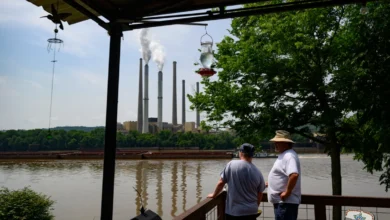
The decision to maintain coal operations at the Cumberland Fossil Plant has become a lightning rod for criticism. Cumberland is widely regarded as the largest and most significant source of air pollution in Tennessee. For residents like Angie Mummaw, an organizer for Appalachian Voices, the reversal feels like a betrayal of public health.
"To hear that they just decided to continue burning coal indefinitely was kind of a slap in the face," Mummaw said. Local advocates had spent years preparing for a transition to cleaner energy, only to see those plans discarded in favor of a dual-track approach that keeps coal running while building new gas infrastructure alongside it.
The Southern Environmental Law Center (SELC), representing a coalition including the Sierra Club and the Center for Biological Diversity, has already taken legal steps to challenge the TVA’s direction. On June 25, 2026, the group sent a formal notice of intent to sue the utility, alleging a flagrant violation of the Clean Air Act. The legal challenge centers on the argument that the TVA’s permits for the new gas plant were obtained under the premise that coal operations would cease. By continuing both, the SELC argues, the TVA is significantly exceeding allowable pollution thresholds for the region.
Analysis of Implications: Reliability vs. Stranded Assets
Energy analysts are divided on the long-term wisdom of the TVA’s new plan. Dennis Wamstead, an analyst at the Institute for Energy Economics and Financial Analysis (IEEFA), warns that the TVA may be walking into a financial trap. He argues that while political winds have changed, the fundamental economics of coal have not.
"Those plants are no longer economic and increasingly unreliable," Wamstead noted. He suggests that by investing hundreds of millions of dollars into aging coal infrastructure, the TVA risks creating "stranded assets"—facilities that are too expensive to run but too costly to close because of the debt incurred to modernize them. This could eventually lead to higher rates for consumers if the market for fossil fuels becomes more volatile or if future administrations reinstate carbon penalties.
Conversely, proponents of the plan argue that the TVA is the "canary in the coal mine" for a national trend. As the U.S. grid faces increasing pressure from electric vehicles and AI-driven computing, other utilities may find themselves forced to delay coal retirements to prevent rolling blackouts. From this perspective, the TVA’s move is a necessary safeguard for regional economic stability.
Official Responses and Public Comment
Despite the brewing legal and environmental storm, the TVA remains steadfast. CEO Mike Skaggs has signaled that the utility will continue to follow the guidance of the current administration while fulfilling its 90-year-old mission of regional development. "We’re always going to comply with the regulations to protect the environment," Scott Brooks reiterated. "And that’s been true with every administration for 90 years."
The TVA board has also discussed the possibility of establishing a specific electricity rate for data centers. This would ensure that these high-demand customers pay a premium that reflects the cost of the new infrastructure required to serve them, potentially shielding residential customers from significant rate hikes.
The public comment period for the draft 2026 Integrated Resource Plan is currently open and will remain so through July 22, 2026. Thousands of comments have already been submitted, reflecting a deeply divided public. A final recommendation on the plan is expected to be presented to the TVA Board of Directors on August 6, 2026. The outcome of this vote will determine the energy landscape of the American South for the next quarter-century, setting a precedent that could resonate across the entire national energy sector.