Trump Administration Energy Efficiency Analysis Sparks Controversy by Omitting Long Term Utility Savings

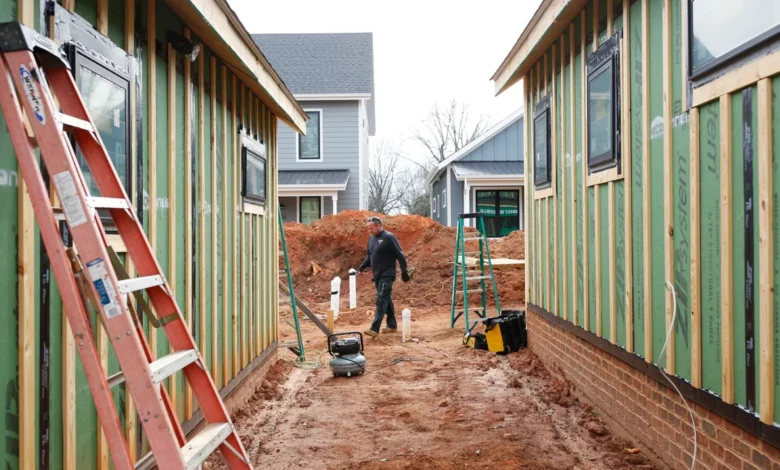
The United States Department of Energy has released a controversial new analysis regarding the 2024 International Energy Conservation Code, focusing exclusively on the immediate financial burden of construction while omitting the long-term economic benefits provided by reduced utility expenditures. This departure from decades of established methodology has sparked significant concern among energy policy experts, environmental advocates, and building science professionals who argue that the report provides a skewed perspective on the true cost of modern housing. By highlighting a projected $9.2 billion annual increase in national construction costs, the administration’s report ignores the secondary half of the economic equation: the substantial savings that accrue to homeowners and renters over the lifespan of a building.
For nearly fifty years, the Department of Energy (DOE) has conducted cost-benefit analyses on new iterations of building codes, typically finding that while more stringent standards may marginally increase the price of a home, those costs are recouped many times over through lower energy bills. The latest analysis, however, breaks with this precedent, potentially influencing state legislatures and local municipalities as they decide whether to adopt the most recent energy efficiency standards. Critics suggest that the omission of savings data is a tactical move intended to stall the adoption of higher efficiency standards, which are often viewed as a cornerstone of national efforts to reduce carbon emissions and improve energy security.
The Shift in Federal Energy Analysis Methodology
The core of the current controversy lies in the DOE’s decision to calculate only the "first-cost" impact of the 2024 International Energy Conservation Code (IECC). The IECC is a model building code developed by the International Code Council (ICC) and updated every three years to reflect advancements in technology and building science. Historically, the DOE has provided a comprehensive "life-cycle cost" analysis, which balances the upfront cost of insulation, high-efficiency windows, and advanced HVAC systems against the monthly savings on electricity, heating, and cooling.
In its recent announcement, the DOE estimated that if every state moved from building standards that are two decades old to the 2024 IECC, the collective increase in construction costs would reach $9.2 billion per year. This figure, presented in isolation, suggests a significant hit to housing affordability. However, energy experts point out that this methodology is fundamentally flawed because it treats energy efficiency as a sunk cost rather than an investment.
Donna Stanley, Vice President of Communications at the International Code Council, noted that the department is essentially contradicting its own historical findings. The ICC, which oversees the development of these codes through a consensus-based process involving architects, engineers, and government officials, maintains that the IECC is a vital tool for protecting consumers from volatile energy prices. The DOE’s sudden shift to a "cost-only" model remains, in Stanley’s words, a "deep mystery" that lacks transparency regarding the underlying data and reasoning.
A Chronology of Efficiency Standards and Policy Rescissions
To understand the impact of the DOE’s new analysis, it is necessary to look at the timeline of federal building policy over the last several years. The building sector accounts for approximately 40% of total energy consumption in the United States, making it a primary target for efficiency improvements.
- 1970s–2020: The IECC is established and updated regularly. Since its inception, the code has helped reduce energy use in new residential constructions by approximately 50%.
- 2021–2023: The Biden administration emphasizes building decarbonization, pushing for the adoption of the 2021 IECC. Federal agencies begin requiring that new homes meet these standards to qualify for certain government-backed mortgage loans.
- 2024: The 2024 IECC is finalized, introducing new provisions for electric vehicle charging readiness and heat pump integration.
- 2025: The Trump administration shifts federal policy. The Department of Justice initiates legal action against California cities that implemented "all-electric" building codes, arguing they overstepped federal preemption laws.
- Early 2026: The DOE bars households from using federal rebates for switching from fossil-fueled appliances to electric heat pumps. Shortly thereafter, the administration rescinds the requirement that new homes meet the 2021 IECC standard for federal mortgage eligibility.
- Mid-2026: The DOE removes a long-standing webpage estimating that updated building codes would save U.S. homes and businesses $182 billion through 2040. Weeks later, the $9.2 billion "cost-only" analysis is released.
This sequence of events illustrates a broader administrative strategy to decouple federal policy from energy efficiency mandates, prioritizing the reduction of immediate regulatory hurdles over long-term environmental or consumer savings.
Comparative Data: Upfront Costs vs. Life-Cycle Savings
The primary criticism of the DOE’s $9.2 billion figure is its lack of context regarding return on investment. Independent data from the Pacific Northwest National Laboratory (PNNL), which frequently conducts research for the DOE, provides a starkly different outlook when life-cycle costs are considered.
According to PNNL research conducted prior to the current administration’s policy shift, the 2024 IECC offers significant financial benefits. On average, a homeowner moving into a residence built to the 2024 standard would see a life-cycle cost saving of nearly $3,000 compared to the 2021 code. In colder climates or regions with high electricity rates, those savings could climb as high as $9,500 over the life of the building.
Furthermore, the PNNL found that for consumers who purchase their homes with a standard mortgage, the energy savings typically outweigh the increase in monthly mortgage payments within just one year. For cash buyers, the average payback period for the additional efficiency features is estimated at 2.5 years. By focusing only on the $14,000 average increase in construction costs per home (when compared to the outdated 2006 standards), the DOE’s report ignores the fact that these homes are cheaper to operate from day one for most mortgage-holders.
Ted Tiffany, a senior technical lead at the Building Decarbonization Coalition, likened the DOE’s analysis to judging a vehicle’s value solely by its MSRP while ignoring its fuel economy. A cheaper, less efficient home may have a lower purchase price, but it locks the occupant into decades of higher utility bills and leaves them more vulnerable to energy price spikes.
The Chilling Effect on State and Local Adoption
While the federal government does not mandate building codes—this power is reserved for states and local jurisdictions—the DOE’s analysis carries significant weight. Many state legislatures rely on federal technical assistance and cost-benefit studies to justify updating their building standards.
Currently, ten states have already adopted the 2024 IECC, but many others, including Massachusetts, Minnesota, and Ohio, are in the middle of the adoption process. Experts fear that the DOE’s new report will provide political ammunition for groups seeking to block these updates. In Missouri, for instance, members of the House of Representatives have already sought to restrict the implementation of more efficient codes, citing construction costs.
The use of a 20-year-old benchmark (the 2006 code) in the DOE’s analysis is also a point of contention. Because 49 states have already adopted standards more advanced than the 2006 version, the $14,000 cost-increase figure is largely irrelevant for the vast majority of the country. By using an antiquated baseline, the report appears to inflate the perceived cost of modernizing building standards, creating a narrative that efficiency is an expensive luxury rather than a standard evolution of construction quality.
Implications for Energy Affordability and Climate Goals
The omission of energy savings comes at a time when energy affordability is a growing concern for American households. Inflation in the energy sector has outpaced many other consumer goods, and low-income families often face a disproportionate "energy burden," spending a larger percentage of their income on utilities. By discouraging the adoption of modern codes, federal policy may inadvertently exacerbate these affordability issues.
From a climate perspective, the building sector is one of the most difficult areas to decarbonize. Buildings constructed today are expected to stand for 50 to 100 years. If they are built to inefficient standards now, they will continue to demand high levels of energy for decades, making it significantly harder for the nation to meet long-term emissions reduction targets. While the IECC remains "fuel-neutral"—allowing for the installation of gas or electric appliances—its requirements for better insulation and tighter building envelopes are essential for reducing the overall demand on the power grid.
Industry and Advocacy Reactions
The reaction from the building industry has been polarized. Some developer groups have welcomed the DOE’s focus on upfront costs, arguing that any increase in the price of a new home makes it harder for first-time buyers to enter the market. They contend that the market should dictate efficiency levels rather than government mandates.
Conversely, advocacy groups and building scientists argue that "affordability" must be viewed through the lens of total ownership costs. Ben Rabe of the New Buildings Institute emphasized that the DOE’s own data—prior to being removed from the website—showed that updated codes are the definition of cost-effectiveness.
"We are essentially building tomorrow’s slums if we don’t build to modern standards," Rabe noted. "A home that is expensive to heat and cool is a home that is at higher risk of foreclosure when energy prices spike."
The Building Decarbonization Coalition and other nonprofits are now calling for the DOE to release the full methodology behind the $9.2 billion figure and to restore the life-cycle savings data that has been a staple of federal energy policy for decades.
Conclusion: The Future of American Building Standards
The Department of Energy’s latest analysis represents a fundamental shift in how the federal government evaluates the intersection of construction, economics, and energy use. By isolating the costs of progress and ignoring the dividends of efficiency, the report provides a narrow view of the housing market that favors short-term industry interests over long-term consumer protection.
As states continue to navigate their own energy futures, the tension between upfront construction costs and long-term utility savings will remain a central point of debate. Whether the DOE’s new methodology becomes a permanent fixture of federal policy or is viewed as a temporary political anomaly remains to be seen. However, for the millions of Americans who will live in the homes built under these codes, the "mystery" of the missing savings will eventually be solved through the monthly reality of their utility bills.
Related posts: