The Congressional Standoff Over the Save Our Bacon Act and the Future of American Animal Agriculture

The United States Congress is currently embroiled in a high-stakes legislative battle over the reauthorization of the Farm Bill, a massive omnibus package that dictates federal policy on everything from food stamps to crop insurance. At the heart of the latest impasse is a controversial provision known as the Save Our Bacon (SOB) Act. This measure, championed by House Republicans but omitted from the Senate’s draft, seeks to preempt state-level animal welfare laws, effectively nullifying voter-led initiatives like California’s Proposition 12. As the federal government relies on stop-gap measures to keep agricultural programs running, the divide over animal confinement standards has become a symbolic and practical roadblock for one of the nation’s most critical pieces of legislation.
The Farm Bill, typically updated every five years, has not seen a full reauthorization since 2018. The current delay marks a significant departure from the historical bipartisan cooperation that usually characterizes agricultural policy. While disagreements over nutrition assistance and climate-smart conservation funding have long simmered, the inclusion of the Save Our Bacon Act in the House version of the bill has introduced a new "civil war" within the pork industry and a fundamental debate over states’ rights versus federal commerce authority.
The Legislative Conflict: House vs. Senate
The House Committee on Agriculture, led by Chairman G.T. Thompson (R-Pa.), formally included the Save Our Bacon Act in its version of the 2024 Farm Bill. The act is designed to prevent states from imposing their own standards on the production of agricultural products sold within their borders if those products originate in other states. This is a direct response to California’s Proposition 12, which prohibits the sale of pork, eggs, and veal from animals kept in "extreme confinement."
In contrast, the Senate Agriculture Committee, chaired by Senator Debbie Stabenow (D-Mich.), released a draft that pointedly excludes the SOB Act. Senate leadership, including ranking member John Boozman (R-Ark.), has signaled that the provision may be too polarizing to survive the upper chamber. This discrepancy has created a legislative "no-man’s land," where neither side appears willing to blink, threatening to push the Farm Bill’s completion into 2025 or beyond.
Chronology of the Conflict and Legal Precedent
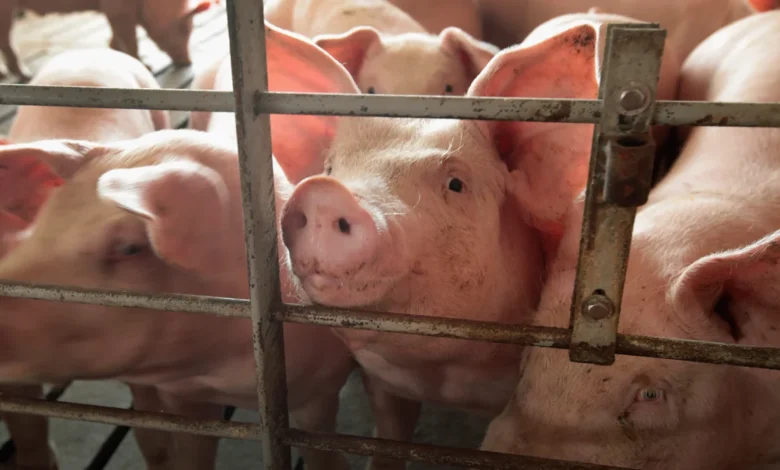
The roots of the current standoff date back to 2018, when California voters overwhelmingly passed Proposition 12. The law set specific square-footage requirements for egg-laying hens, breeding pigs, and calves raised for veal. For the pork industry, the most significant change was the ban on gestation crates—metal enclosures so small that sows cannot turn around.
The pork industry, led by the National Pork Producers Council (NPPC), immediately challenged the law, arguing it violated the Commerce Clause of the U.S. Constitution by placing an undue burden on interstate trade. However, in May 2023, the U.S. Supreme Court ruled in National Pork Producers Council v. Ross that California had the right to regulate products sold within its borders, even if those regulations influenced how farmers in other states operated.
Following this legal defeat, industry lobbyists turned to Congress to achieve through legislation what they could not through the courts. The Save Our Bacon Act is the latest iteration of this effort, following previous attempts like the Ending Agricultural Trade Suppression (EATS) Act.
Economic Data and the Shift Toward Compliance
While large-scale industrial trade groups argue that state mandates like Proposition 12 will lead to skyrocketing meat prices, recent data from the U.S. Department of Agriculture (USDA) suggests a more nuanced reality. According to a USDA analysis, approximately 27 percent of U.S. hog operations are already compliant with Proposition 12 standards. This indicates that a significant portion of the market has already transitioned or is in the process of doing so to meet consumer demand for humanely raised meat.
The American Meat Producers Association (AMPA), an industry group representing smaller and independent producers, has emerged as a vocal opponent of the Save Our Bacon Act. AMPA argues that many farmers have already invested millions of dollars into retrofitting their facilities to be crate-free. For these producers, Prop 12 compliance is a competitive advantage that allows them to command a premium price in the California market, which represents roughly 13 percent of total U.S. pork consumption.
"The industry is completely divided on this," noted Brent Hershey, a Pennsylvania hog farmer whose operation transitioned to crate-free three years ago. "Passing the SOB Act would be devastating for producers like me who invested the time and money to improve our operations based on what the market—and the voters—demanded."
Environmental and Public Health Implications
Beyond animal welfare, the debate over the Save Our Bacon Act touches on significant environmental concerns. Factory farming operations that utilize extreme confinement often produce massive quantities of manure, which is typically stored in large open-air lagoons. These lagoons are frequent sources of air and water pollution, releasing ammonia, hydrogen sulfide, and methane, while posing a risk of leakage into local groundwater.
Advocacy groups like Friends of the Earth argue that laws like Proposition 12 encourage a shift toward pasture-raised or more spacious housing systems, which can have a lower environmental footprint. Molly Armus, an animal agricultural policy expert at Friends of the Earth, emphasizes that the Farm Bill should prioritize sustainability rather than protecting outdated industrial practices. "The farm bill should be about supporting sustainable farming and food security, not a way for large industry groups to overturn the will of voters," Armus stated.
Official Reactions and Political Standoff
The political rhetoric surrounding the SOB Act reflects a deepening partisan divide. Rep. G.T. Thompson has defended the measure as a necessary protection for the "interstate commerce of food," arguing that a "patchwork" of state laws would create chaos for the national food supply chain.
On the other side, animal rights organizations and environmentalists have mobilized to ensure the Senate remains a firewall against the act. Sara Amundson, president of the Humane World Action Fund, praised the Senate’s decision to exclude the measure. "It’s critical to keep up the noise on this," Amundson said, noting that including the SOB Act would likely doom the entire Farm Bill’s chances of passing in a divided Congress.
The controversy has also raised alarms among legal experts who worry about the precedent such a law would set. J.W. Glass, a senior policy specialist at the Center for Biological Diversity, warned that if the federal government can override state animal welfare laws, it could eventually do the same for state laws regarding pesticide use, food labeling, and climate-related agricultural regulations. "How does this impact state laws to restrict the use of pesticides?" Glass questioned, suggesting the act could be a "Trojan horse" for broader deregulation.
Broader Impact and Future Outlook
The current deadlock has left American farmers in a state of uncertainty. The Farm Bill funds essential programs including:
- Crop Insurance: Protecting farmers against weather-related losses.
- Conservation Programs: Providing financial incentives for farmers to implement climate-smart practices.
- Nutrition Assistance (SNAP): Funding the nation’s primary hunger-relief program, which accounts for nearly 80 percent of the bill’s total spending.
- Rural Development: Investing in infrastructure and broadband for farming communities.
If Congress cannot reconcile the House and Senate versions, the most likely outcome is another one-year extension of the 2018 Farm Bill. While this prevents a total collapse of programs, it fails to address modern challenges such as rising production costs, volatile climate patterns, and shifting global trade dynamics.
The battle over the Save Our Bacon Act highlights a fundamental tension in modern American governance: the conflict between consolidated industrial interests and evolving public values regarding food ethics and environmental stewardship. As 14 states now have some form of animal confinement legislation on the books, the outcome of this legislative fight will determine whether the future of U.S. agriculture is shaped by state-level voter mandates or by centralized federal standards favored by the largest players in the industry.
For now, the "bacon" remains at risk, not of disappearing from breakfast plates, but of becoming the catalyst for a historic breakdown in the nation’s agricultural policy-making process. The coming months will reveal whether lawmakers can find a middle ground or if the "civil war" within the pork industry will lead to a long-term legislative freeze.