A Culinary Odyssey Through China Mapping the History and Diversity of the Worlds Most Influential Gastronomy

The vast geographical expanse of China, spanning from the subarctic plains of the north to the tropical coasts of the south, has fostered one of the most complex and diverse culinary landscapes in human history. To understand Chinese cuisine is to understand a civilization that views food not merely as sustenance, but as a central pillar of philosophy, medicine, and social harmony. While the sheer variety of flavors makes it impossible to define a single "best" dish, a curated examination of essential regional staples reveals a sophisticated tapestry of technique, history, and cultural evolution. From the imperial banquets of Beijing to the bustling street stalls of Xi’an and the refined tea houses of Guangzhou, the following dishes represent the foundational pillars of a global gastronomic powerhouse.

The Imperial Legacy and the Evolution of Roast Meats
The history of Chinese cuisine is inextricably linked to the shifts of imperial power. Perhaps no dish embodies this more than Peking Duck (Beijing Kaoya). While synonymous with the capital, the origins of roast duck trace back over 1,500 years to Nanjing, which served as the seat of several ancient regimes. When the Ming Dynasty relocated the capital to Beijing in the 1400s, the imperial chefs brought their roasting techniques with them. The current iteration—prized for its paper-thin, shatteringly crisp skin and succulent meat—is served with delicate pancakes, scallions, cucumber, and sweet bean sauce. This "mountain" of flavors represents a centuries-old refinement of the roasting process, where air is pumped between the skin and meat to ensure maximum crispness.
However, the "duck capital" title is often contested by Nanjing residents, who point to their city’s pervasive duck culture. In Nanjing, the bird is utilized in its entirety. The most emblematic street food is Vermicelli Soup with Duck Blood (Yaxue Fensi Tang). Utilizing a bone-based broth, the dish incorporates duck blood curds and offal, such as liver and gizzards. This commitment to "nose-to-tail" eating is a hallmark of Chinese culinary pragmatism, ensuring that no part of the animal is wasted while delivering an intense depth of flavor.

Further south, the Cantonese tradition elevates roast meats through the wood-fired oven. Cantonese Roast Goose (Shao’e) is often considered the pinnacle of the craft. Chefs frequently use camphor or lychee wood to impart a specific smoky profile to the bird. When executed correctly, the fat renders into the meat, creating a texture that collapses upon the palate. This is closely related to Char Siu (Barbecue Pork), a staple of the Siu Mei (roast meat) shops. Char Siu is defined by its balance of maltose sweetness and savory soy sauce, with "half-fat, half-lean" cuts being the preferred choice for gourmands seeking a melt-in-the-mouth experience.
Regional Powerhouses: The Spice and Salt of Sichuan and Hunan
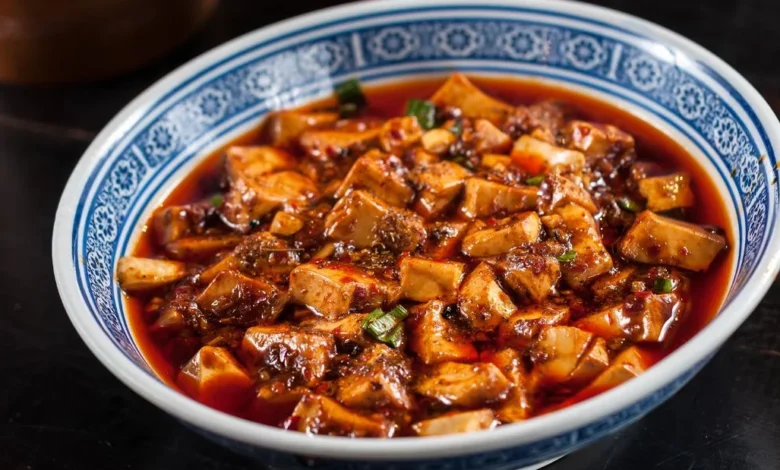
The southern provinces of Sichuan and Hunan are globally renowned for their bold use of chilies and peppercorns, yet their approaches to heat are distinct. Sichuan cuisine is defined by "Ma La"—a combination of numbing (ma) and spicy (la). Mapo Tofu, perhaps the province’s most famous export, relies on the precision of its ingredients: Hanyuan peppercorns for the numbing sensation and fermented broad bean chili paste from the Pidu district.

Similarly, Dan Dan Noodles (Dan Dan Mian) reflect the history of the region’s street vendors. Named after the "dan dan" (carrying poles) used by 19th-century hawkers, these noodles are served either dry or in a nutty, spicy broth, always topped with "rou saozi"—finely chopped pork fried in lard until golden. The complexity of Sichuan cooking is further evidenced by Kung Pao Chicken (Gongbao Jiding). Named after Ding Baozeng, a 19th-century governor, the dish is a masterpiece of stir-frying, balancing the heat of dried chilies with the crunch of fried peanuts and a subtle sour-sweet finish.
In contrast, Hunan cuisine (Xiang cuisine) favors "Duo Jiao," or chopped salted chilies. This is best represented by Steamed Fish Head with Chopped Chili (Duo Jiao Yu Tou). The chilies are fermented with ginger, garlic, and baijiu (Chinese liquor) for at least a week, creating a sharp, salty heat that penetrates the collagen-rich fish head. Hunanese culture is so deeply tied to this flavor profile that local folk songs proclaim a meal incomplete without the presence of chili.

Technical Mastery in Seafood and Dough
While the inland provinces master spice, the coastal regions of Guangdong and Fujian prioritize the preservation of "umami" and the natural flavors of fresh ingredients. Cantonese Steamed Fish (Qingzheng Yu) is often cited by chefs as the ultimate test of timing. The dish requires a precise calculation of seconds based on the fish’s weight and the stove’s power; a minute too long results in tightened flesh, while a minute too short prevents the meat from detaching from the bone.
In the seaside city of Chaozhou, the focus on freshness manifests in Cold Fish or Cold Crab (Dong Yu/Dong Xie). Lightly salted and steamed, the seafood is served at room temperature to highlight its natural sweetness, often accompanied by Poling soybean paste or a garlic-vinegar dip.

The northern regions, historically wheat-growing areas, contributed the vast world of "Bao" and "Jiaozi" (dumplings). Jiaozi are a cultural cornerstone, packing protein and vegetables into a single dough wrapper. In the south, these techniques were refined into the Xiaolongbao (Soup Dumplings) of Shanghai and the Sheng Jian Bao (Pan-fried Buns). The Xiaolongbao is a marvel of culinary engineering, containing a gelatinized broth that melts into a hot soup when steamed. The suspense of moving the delicate wrapper from the basket to the spoon without breaking it is a shared ritual in Chinese dining.
Comfort, Healing, and Traditional Chinese Medicine
In Chinese culture, the line between food and medicine is often blurred. This is most evident in Cantonese Herbal Soups (Laohuo Liangtang). These soups are simmered for hours with seasonal ingredients like snow fungus, wolfberries, or winter melon to balance the body’s "internal heat" or "humidity."

Comfort is also found in Congee (Zhou), the rice porridge that serves as a universal breakfast and a remedy for illness. Whether served plain or flavored with century eggs and pork floss, congee represents the gentler side of the Chinese palate. Similarly, Cross-the-Bridge Rice Noodles (Guoqiao Mixian) from Yunnan province carry a legendary backstory of a devoted wife who used a layer of chicken oil to keep soup hot while she traveled across a bridge to deliver lunch to her studious husband. Today, the dish remains a popular interactive meal, where raw ingredients are cooked instantly in a bowl of scalding broth.
Broader Impact and Global Implications
The global proliferation of Chinese cuisine has undergone a significant transformation in recent decades. What was once viewed through the narrow lens of "takeout" has evolved into a sophisticated appreciation for regional authenticity. According to data from the World Federation of Chinese Catering Industry, Chinese food is now the most popular international cuisine globally, with over 600,000 Chinese restaurants operating outside of China.

The "Wok Hei" (breath of the wok) technique used in Fried Rice and Chen Cun Fen (flat rice noodles) has become a subject of scientific study, with physicists analyzing the fluid dynamics of the "wok toss" to understand how it achieves the perfect Maillard reaction. Furthermore, cities like Shunde and Macau have been designated as UNESCO Creative Cities of Gastronomy, recognizing their roles in preserving culinary heritage while fostering innovation.
The implications of China’s culinary reach are economic as well as cultural. The export of specialty ingredients—such as Sichuan peppercorns and fermented pastes—has created a multi-billion dollar global supply chain. As culinary tourism to China continues to grow, dishes like Xi’an’s Rou Jia Mo (often called the world’s oldest hamburger) and the therapeutic soups of Guangdong serve as powerful tools of "soft power," inviting the world to experience the depth of Chinese history one bite at a time. In a rapidly modernizing world, these essential eats remain a steadfast connection to the past, proving that while dynasties may fall, the recipes that sustained them endure.