Representative Julia Letlow Secures Louisiana GOP Senate Nomination in Runoff Victory, Bolstered by Trump Endorsement.

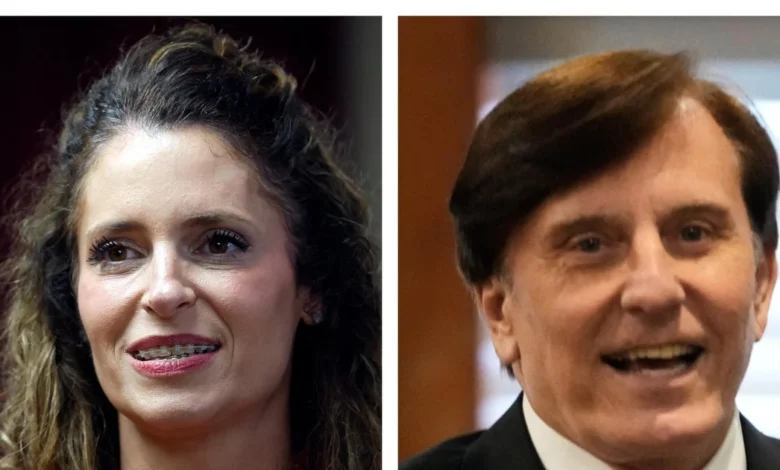
Washington D.C. – In a pivotal contest underscoring the enduring influence of former President Donald Trump within the Republican Party, Representative Julia Letlow was projected by The Associated Press on Saturday, June 27, 2026, to have won the Republican primary runoff for Senate in Louisiana. Letlow decisively defeated Louisiana state Treasurer John Fleming, securing the nomination for a seat currently held by Senator Bill Cassidy, who failed to garner sufficient votes in the preceding primary election to advance. This victory positions Letlow on a strong trajectory for the general election in a state recognized as a deep-red Republican stronghold, with the outcome signaling a significant win for the faction of the GOP aligned with the former president.
The pathway to the runoff was set in motion after no candidate managed to secure the requisite 50% of the vote in the initial primary held last month, a feature of Louisiana’s unique "jungle primary" system. This initial election saw the unexpected elimination of incumbent Senator Bill Cassidy, a veteran Republican who had represented Louisiana in the Senate since 2015. Cassidy’s defeat in the primary was widely attributed to a targeted campaign spearheaded by former President Trump, who had publicly endorsed Letlow and vehemently opposed Cassidy.
A Deep Dive into the Political Battleground
The Louisiana Senate race quickly became a high-profile proxy battle for the soul of the Republican Party, particularly in the wake of the 2024 presidential election and the continued dominance of Trump’s political brand. Former President Trump had openly encouraged Letlow to challenge Cassidy earlier in the year, a directive that transformed the race from a standard intra-party contest into a nationalized referendum on loyalty to the former administration.
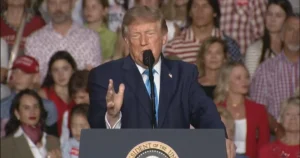
Senator Cassidy’s relationship with Trump had been fraught with tension, culminating in his vote to convict Mr. Trump during the impeachment trial following the January 6, 2021, attack on the U.S. Capitol. This vote, alongside other instances where Cassidy diverged from the Trump administration’s positions—such as his critical stance on some aspects of the administration’s healthcare policies and his eventual, though reluctant, vote to advance the nomination of HHS Secretary Robert F. Kennedy Jr. last year—marked him as a target for Trump’s ire. Ahead of the primary, Mr. Trump’s rhetoric escalated, labeling Cassidy a "disloyal disaster" and showering praise on Letlow, whom he championed as a "winner who will NEVER let you down." This explicit intervention from a former president, especially against a sitting Republican senator, highlighted the ongoing power dynamics within the GOP.
Chronology of a Contentious Primary
The timeline of this fiercely contested primary began months before the initial vote.
- Early 2026: Former President Trump publicly expresses his dissatisfaction with Senator Bill Cassidy, specifically citing his impeachment vote and occasional policy disagreements. He begins to float the idea of endorsing a challenger.
- February 2026: Representative Julia Letlow, already a rising star in Louisiana politics, announces her intention to challenge Senator Cassidy, aligning her campaign closely with the former president’s "America First" agenda.
- March 2026: Trump officially endorses Letlow, delivering a powerful blow to Cassidy’s incumbency. His endorsement is accompanied by sharp criticisms of Cassidy, framing him as a "RINO" (Republican In Name Only) and out of touch with the conservative base.
- April 2026: The primary campaign heats up, with Letlow actively campaigning on her Trump endorsement and her unwavering support for his policies. John Fleming, a former U.S. Representative and state Treasurer, also enters the race, positioning himself as a strong conservative but struggling to gain the same level of national attention or endorsement as Letlow. Cassidy, meanwhile, attempts to defend his conservative record, highlighting his legislative achievements for Louisiana, but finds himself constantly on the defensive regarding his perceived disloyalty to Trump.
- May 2026 (Primary Election): The initial primary election is held. Due to Louisiana’s open primary system, all candidates, regardless of party affiliation, appear on the same ballot. To avoid a runoff, a candidate must secure over 50% of the vote. In a stunning upset, Senator Bill Cassidy fails to reach this threshold and is eliminated, marking a rare instance of an incumbent U.S. Senator failing to advance past their party’s primary in recent history. Julia Letlow and John Fleming emerge as the top two Republican vote-getters, forcing a runoff.
- June 2026 (Runoff Campaign): The focus narrows to Letlow and Fleming. Letlow continues to leverage her Trump endorsement, portraying herself as the true conservative standard-bearer. Fleming, despite his own conservative credentials and past service in the Trump administration, struggles to differentiate himself sufficiently from Letlow, who had captured the former president’s unequivocal backing. Letlow’s campaign aggressively attacked Fleming as a "career politician," aiming to draw a contrast with her own relatively newer political profile.
- June 27, 2026 (Runoff Election): Voters head to the polls. The Associated Press projects Julia Letlow as the winner, solidifying her position as the Republican nominee for the U.S. Senate.
Candidate Profiles and Campaign Narratives
Julia Letlow, 45, has rapidly ascended through the ranks of Louisiana politics. She first made national headlines in 2021 when she won a special election for Louisiana’s 5th Congressional District, becoming the first Republican woman from the state to be elected to Congress. Her victory was particularly poignant, coming after the tragic death of her husband, Luke Letlow, who died in December 2020 from complications related to COVID-19 before he could be sworn into the same congressional seat he had just won. This personal tragedy, coupled with her subsequent political rise, garnered significant public sympathy and a powerful narrative of resilience. In her campaign for Senate, Letlow consistently touted her endorsement from Mr. Trump, pledging unwavering support for his agenda in the Senate. She positioned herself as a fresh voice for Louisiana, casting John Fleming as a career politician out of step with the state’s constituents. Her messaging emphasized loyalty to the GOP’s conservative base and a commitment to the "America First" principles championed by Trump. She famously critiqued Cassidy, claiming Louisiana "shouldn’t have to wonder how our senator will vote when the pressure’s on," a direct reference to his impeachment vote.
John Fleming, a physician by profession, also boasts a significant conservative track record. He previously represented Louisiana’s 4th Congressional District in the House from 2009 to 2017. Following his time in Congress, Fleming served in the first Trump administration as Assistant Secretary of Commerce for Economic Development. His experience in both legislative and executive branches, coupled with his strong conservative voting record, positioned him as a formidable candidate. However, in a race where Trump’s direct endorsement was a kingmaker, Fleming found himself at a disadvantage. While he could point to his service within the Trump administration, he couldn’t match the former president’s explicit and enthusiastic backing that Letlow received. His campaign struggled to break through Letlow’s narrative of being the chosen successor to the Trump legacy in Louisiana.
The Trump Factor: A Continued Force in the GOP
The outcome of the Louisiana primary runoff serves as yet another stark reminder of former President Trump’s enduring and formidable influence within the Republican Party, particularly in states where his base remains exceptionally strong. His ability to unseat an incumbent senator, even one with a generally conservative voting record, demonstrates the power of his endorsement and his capacity to mobilize voters against perceived disloyalty. This dynamic suggests that Republican candidates nationwide will continue to weigh the political cost of diverging from Trump’s positions or rhetoric, particularly in primary contests. The message from Louisiana is clear: challenging Trump’s authority or aligning against him on key issues, especially the January 6th impeachment, carries significant political risk.
Senator Cassidy, since his primary defeat, has reportedly shown an increased willingness to publicly break with the White House, even sparring with the president at a Senate Republican lunch meeting in recent days. This post-primary shift suggests that freed from the pressures of a reelection campaign, Cassidy may now feel emboldened to express his independent views, though his influence as an outgoing senator will be limited. His experience highlights a broader trend where some Republicans, once facing primary threats, might temper their criticism of Trump, only to revert to more independent stances once the electoral pressure is off.
Broader Implications for the Republican Party and the Senate
Letlow’s victory has several key implications. Firstly, it reaffirms the conservative direction of the Republican Party in Louisiana, emphasizing loyalty to the Trump wing. This could have a ripple effect on other statewide and national elections, potentially encouraging more candidates to seek Trump’s endorsement and adopt his populist messaging. Secondly, it signals a potential shift in the composition of the Senate Republican conference. Letlow, having campaigned explicitly on supporting Trump’s agenda, is expected to be a reliable vote for conservative causes and, crucially, for any initiatives backed by the former president. This could strengthen the conservative bloc within the Senate GOP, potentially leading to more unified opposition against Democratic legislative efforts or greater support for a future Trump administration’s agenda.
Political analysts infer that Letlow’s campaign strategy, heavily reliant on the Trump endorsement, proved highly effective in galvanizing the base. Statements from her campaign during the runoff consistently emphasized her commitment to "fighting for Louisiana values and for President Trump’s America First vision." Upon her victory, it is highly probable that Letlow issued a statement thanking her supporters, acknowledging the former president’s crucial backing, and reaffirming her commitment to conservative principles. Conversely, John Fleming, in conceding the race, likely thanked his supporters and urged party unity, perhaps acknowledging the power of the Trump endorsement in the primary outcome. Former President Trump, through his social media platforms, almost certainly celebrated Letlow’s victory as a testament to his continued influence and a vindication of his stance against Cassidy.
Looking Ahead: The General Election in a Solidly Red State
With Saturday’s runoff victory, Julia Letlow is now poised to enter the general election as the heavy favorite. Louisiana is undeniably a solidly red state, a political reality underscored by Mr. Trump’s resounding victory in the 2024 presidential election, where he secured approximately 60% of the vote. The state has not elected a Democrat to the U.S. Senate since Mary Landrieu’s initial victory in 1996, and her subsequent re-election in 2002 and 2008 were increasingly narrow and against a backdrop of unique local political dynamics. The last time a Democrat won a Senate seat in Louisiana was in 2008, a year that saw a nationwide surge for Democrats. Since then, the state has trended even further to the right.
The Democratic Party in Louisiana faces an uphill battle in challenging Letlow. While a Democratic candidate will undoubtedly emerge, they will contend with significant fundraising disparities, an entrenched Republican voter base, and the broader national political environment that favors Republicans in the Deep South. Historically, Democratic candidates in Louisiana Senate races often struggle to overcome the partisan lean, even when they are well-funded or locally popular. The demographic and ideological composition of the state’s electorate suggests that barring an unforeseen political earthquake, Letlow is on a "glidepath to the Senate," as projected by many political observers. Her victory in the primary runoff, therefore, largely seals the outcome of the general election, cementing a new chapter for Louisiana’s representation in the United States Senate and reaffirming the lasting impact of presidential endorsements in shaping intra-party contests. The focus now shifts to how Senator-elect Letlow will articulate her legislative priorities and represent the state’s interests in Washington, carrying the mantle of a campaign defined by loyalty and a clear mandate from a significant portion of the Republican base.