The Impact of USAID Shutdown on Violent Conflict and Food Insecurity in Africa

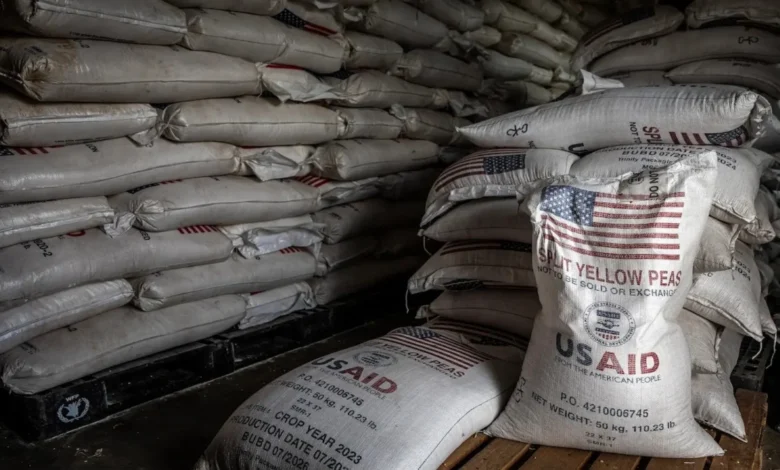
The sudden dissolution of the United States Agency for International Development (USAID) and the subsequent withdrawal of American developmental aid have been linked to a significant escalation in violent conflict across the African continent, according to a comprehensive study published in the journal Science. The research suggests that the removal of humanitarian, healthcare, and food security programs created a vacuum of stability, particularly in regions already grappling with the dual pressures of political fragility and climate change. By analyzing 870 subnational regions across Africa, researchers identified a direct correlation between the cessation of USAID funding and a double-digit percentage increase in overall conflict, raising urgent questions about the long-term consequences of American isolationism on global security.
The Dissolution of a Global Institution
The United States Agency for International Development was established in 1961 by President John F. Kennedy through the Foreign Assistance Act. For over six decades, it served as the primary vehicle for U.S. civilian foreign aid, operating with the dual mandate of furthering America’s foreign policy interests while improving lives in the developing world. At its peak, USAID managed a multi-billion dollar budget, funding initiatives ranging from emergency disaster relief and famine prevention to long-term infrastructure projects and healthcare systems, including the President’s Emergency Plan for AIDS Relief (PEPFAR) and the Feed the Future initiative.
The agency’s role began to shift dramatically following a change in executive policy that prioritized domestic spending over international development. Within days of the 2025 presidential inauguration, a stop-work order was issued, freezing nearly all overseas programs. This was followed by an informal dissolution of the agency in July of the same year, marking the most substantial withdrawal of American international aid since the post-World War II era. The move effectively dismantled a network of developmental infrastructure that had taken sixty years to build, leaving partner nations and international NGOs to scramble for alternative sources of support.
Findings of the Science Study
The study, led by Austin Wright, a researcher at the University of Chicago specializing in the political economy of conflict, utilized two expansive global datasets to track the relationship between funding disbursements and violent events. The research focused on the ten-month period following the immediate withdrawal of aid, comparing regions that had historically received high levels of USAID support against those with lower levels of involvement.
The data revealed a stark and immediate uptick in violence. In areas with high historical USAID funding, the researchers documented a 12.3 percent increase in total conflict. Within this broader category, specific types of violence saw even more pronounced surges: armed battles rose by 7.3 percent, while protests and riots increased by 6.8 percent. Perhaps most distressing was the 9.3 percent rise in battle-related fatalities during the observation window.
Wright characterized the magnitude of the shutdown as unprecedented in recorded human history. The study posits that the withdrawal of aid did not merely remove resources; it destabilized local economies and weakened the social contracts between governments and their citizens. In many African nations, USAID-funded programs provided the only reliable access to basic services, and their disappearance left a void that was quickly filled by civil unrest and militant activity.
The Nexus of Hunger, Climate, and Conflict
The relationship between food security and social stability is well-documented by sociologists and political scientists, often referred to as the "hunger-violence cycle." When agricultural markets are disrupted by conflict, food becomes scarce and prices skyrocket. Conversely, when communities face extreme food insecurity, the likelihood of social unrest and recruitment into armed groups increases.
USAID’s programs were frequently designed to break this cycle. By funding emergency food kitchens, therapeutic nutritional programs for children, and sustainable irrigation projects, the agency provided a critical buffer against the volatility of global food markets. Zia Mehrabi, a food security and climate change researcher at the University of Colorado Boulder, emphasized that these programs were more than just charity; they were essential components of regional stability. "It is undeniable that USAID programming provided a critical lifeline to millions," Mehrabi stated, questioning the logic of retracting such fundamental support so abruptly.
Climate change adds another layer of complexity to this crisis. According to United Nations reports, extreme weather events are now second only to armed conflict as a driver of global hunger. Rising sea levels, prolonged droughts, and cataclysmic storms have forced millions to migrate, often into regions where resources are already stretched thin. Historically, USAID played a key role in climate adaptation, helping farmers transition to drought-resistant crops and providing early warning systems for natural disasters. Without this support, climate-driven migration is increasingly leading to territorial disputes and inter-communal violence.
The Collapse of Global Monitoring Systems
Beyond the direct delivery of food and medicine, one of USAID’s most critical—yet often overlooked—functions was the collection and dissemination of data. The agency funded extensive localized weather monitoring and served as a primary sponsor for the Famine Early Warning Systems Network (FEWS NET). This system allowed the international community to anticipate food shortages months in advance, enabling proactive intervention rather than reactive crisis management.
Chelsea Marcho, a senior director for research and policy at the Food Security Leadership Council and a former USAID official, noted that the dissolution of the agency has severely compromised the world’s ability to monitor humanitarian crises. While some systems have been partially restored through private or multilateral funding, significant gaps remain. "The visibility that we have around food security is potentially in decline at the same time that the risks to the system are increasing," Marcho explained. The loss of this "data infrastructure" means that international organizations are often operating in the dark, unable to accurately measure the full extent of the damage caused by the aid withdrawal.
Analytical Critiques and Alternative Perspectives
Despite the compelling correlations presented in the Science study, some experts urge caution in attributing the rise in violence solely to the USAID shutdown. Zia Mehrabi, while acknowledging the importance of the research, argued that the ten-month observation window may be too short to draw definitive long-term conclusions. He also noted the difficulty in disentangling the effects of the USAID closure from simultaneous cuts to other U.S. international funding sources, such as the State Department and various diplomatic missions.
Furthermore, Mehrabi suggested that the focus on foreign aid might obscure deeper structural issues. He argued that true stability in resource-rich but economically fragile nations, such as the Democratic Republic of the Congo, would be better achieved through equitable benefit-sharing in global supply chains. The extraction of critical minerals—essential for the global transition to green energy—often enriches foreign corporations while leaving local populations in poverty. Mehrabi posits that reforming these economic relationships would provide benefits that "far outweigh" any amount of foreign aid.
Austin Wright acknowledged these limitations but defended the study’s robustness. The research team conducted extensive checks to account for external variables, and the findings remained consistent: the more a region had relied on USAID, the more violent it became once that aid was removed.
Broader Implications and the Path Forward
The withdrawal of USAID represents more than a change in budget priorities; it signifies a fundamental shift in the role of the United States on the world stage. For decades, developmental aid was a cornerstone of "soft power," allowing the U.S. to build alliances and promote stability without the direct use of military force. The Science study suggests that the erosion of this soft power has tangible, violent consequences.
The damage to international institutions and local trust may be difficult to reverse. Building the expertise and logistical networks required to manage multi-national aid programs takes decades, but as the recent shutdown demonstrates, they can be dismantled in a matter of months. Experts warn that even if a future administration seeks to restore USAID to its former capacity, the "institutional memory" and the relationships with local partners may be permanently lost.
As the African continent continues to face the compounding threats of political instability, economic inequality, and the accelerating climate crisis, the absence of a coordinated, well-funded international development strategy leaves a precarious future. The findings published in Science serve as a data-driven warning: in an interconnected global economy, the decision to withdraw support from the world’s most vulnerable regions does not just affect those far away—it destabilizes the geopolitical landscape for everyone. The surge in battles, riots, and fatalities documented in the wake of the USAID shutdown provides a sobering metric for the cost of isolationism in the 21st century.
Related posts: