Calls for De-escalation Intensify After White House Correspondents’ Dinner Shooting Amid Broader Concerns Over Political Violence.

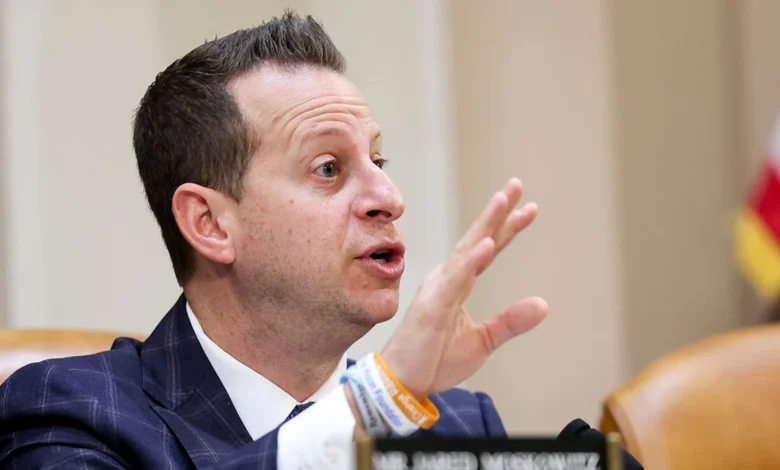
The recent alleged shooting incident at the Washington Hilton hotel during the annual White House Correspondents’ Dinner on Saturday night, April 25, 2026, has ignited a fervent debate across the American political spectrum regarding the escalating intensity of political rhetoric. Amidst the immediate aftermath and ongoing investigations, Rep. Jared Moskowitz, D-Fla., has emerged as a prominent voice, urging leaders from both Republican and Democratic parties to actively "bring the temperature down" in the nation’s often-heated political discourse. This plea for cooler rhetoric comes as the nation grapples with a series of high-profile incidents involving violence and threats against public figures, prompting a re-evaluation of the language used in political discourse and its potential real-world ramifications.
The Incident at the White House Correspondents’ Dinner
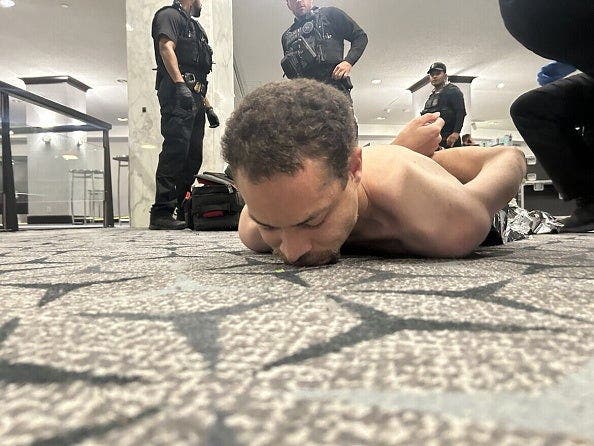
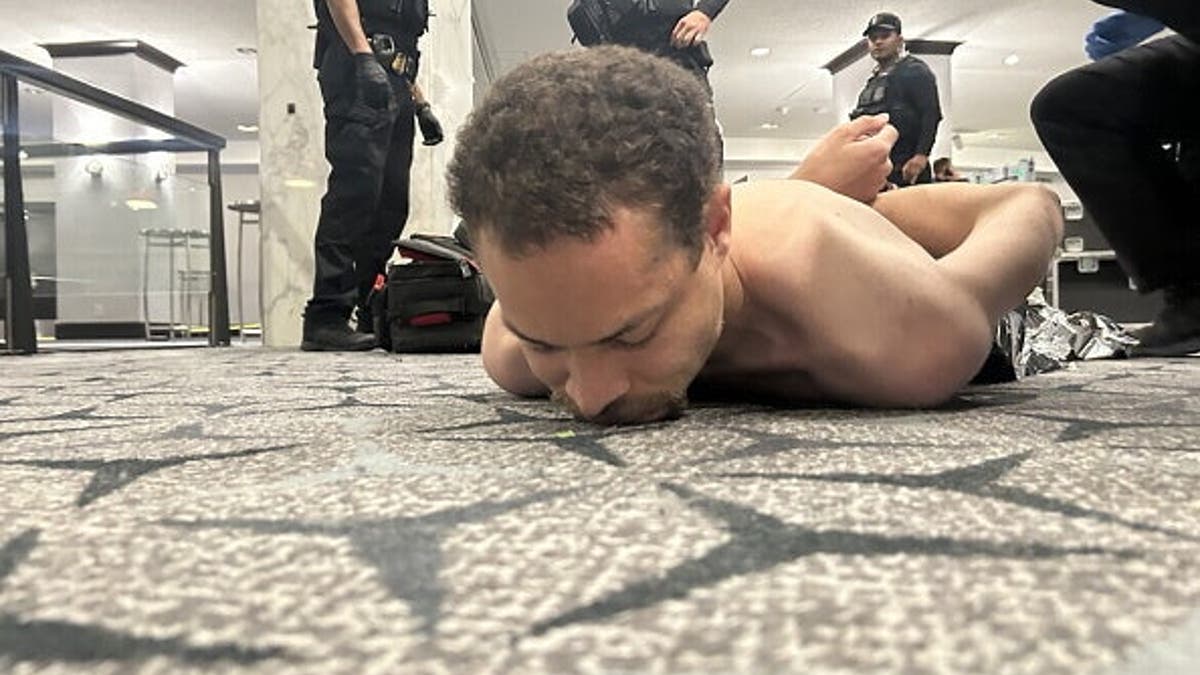
The tranquil atmosphere of one of Washington D.C.’s most anticipated annual events was shattered when Cole Allen, a 31-year-old individual from Torrance, California, allegedly stormed the lobby of the Washington Hilton hotel. Armed with a shotgun, a handgun, and multiple knives, Allen reportedly opened fire, causing immediate chaos and fear among the hundreds of journalists, prominent media personalities, and Cabinet officials gathered for the dinner. The swift and decisive action of the Secret Service prevented what could have been a far more catastrophic event, apprehending Allen and subsequently escorting attendees out of the building to safety. The incident not only disrupted a significant social and journalistic gathering but also cast a stark shadow over the state of political civility in the United States.
Cole Allen appeared in federal court on Monday, facing grave charges that underscore the seriousness of his alleged actions. These include attempting to assassinate the President of the United States, transporting a firearm across state lines, and discharging a firearm during a crime of violence. Further alarming details emerged during the investigation, revealing that Allen had reportedly sent a written manifesto to members of his family prior to the alleged shooting. This document, according to authorities, explicitly outlined his intent to target President Trump and other high-ranking Cabinet officials, suggesting a premeditated act driven by specific political grievances. The motive behind the shooting remains under intensive investigation, with authorities meticulously examining the manifesto and Allen’s background to ascertain the full scope of his intentions and any potential affiliations.
A Broader Pattern of Violence and Rhetoric
The alleged attack at the Correspondents’ Dinner did not occur in isolation but within a perceived context of rising political violence and increasingly vitriolic rhetoric. This incident is now being viewed by some as the latest in a troubling series of alleged assassination attempts targeting President Trump. According to reports, President Trump had previously been targeted twice in 2024: once, when he was reportedly shot in the ear at a campaign rally in Butler, Pennsylvania, and later that year, during an alleged incident at his Florida golf course. These prior events, combined with the recent hotel shooting, have intensified calls for heightened security measures for public officials and sparked a national conversation about the sources and consequences of extreme political animosity.
Beyond direct attacks on the President, the political landscape has also witnessed other significant acts of violence. In a particularly tragic event in September, Charlie Kirk, the founder of Turning Point USA, was reportedly assassinated while speaking at Utah Valley University as part of his "American Comeback Tour." This incident, widely condemned, further fueled anxieties about the safety of political figures and the potential for ideological divides to erupt into deadly violence. Such events contribute to a pervasive sense of unease and a growing perception that political disagreements are increasingly manifesting in dangerous ways, demanding a more introspective look at the state of public discourse.
Calls for De-escalation and Accountability
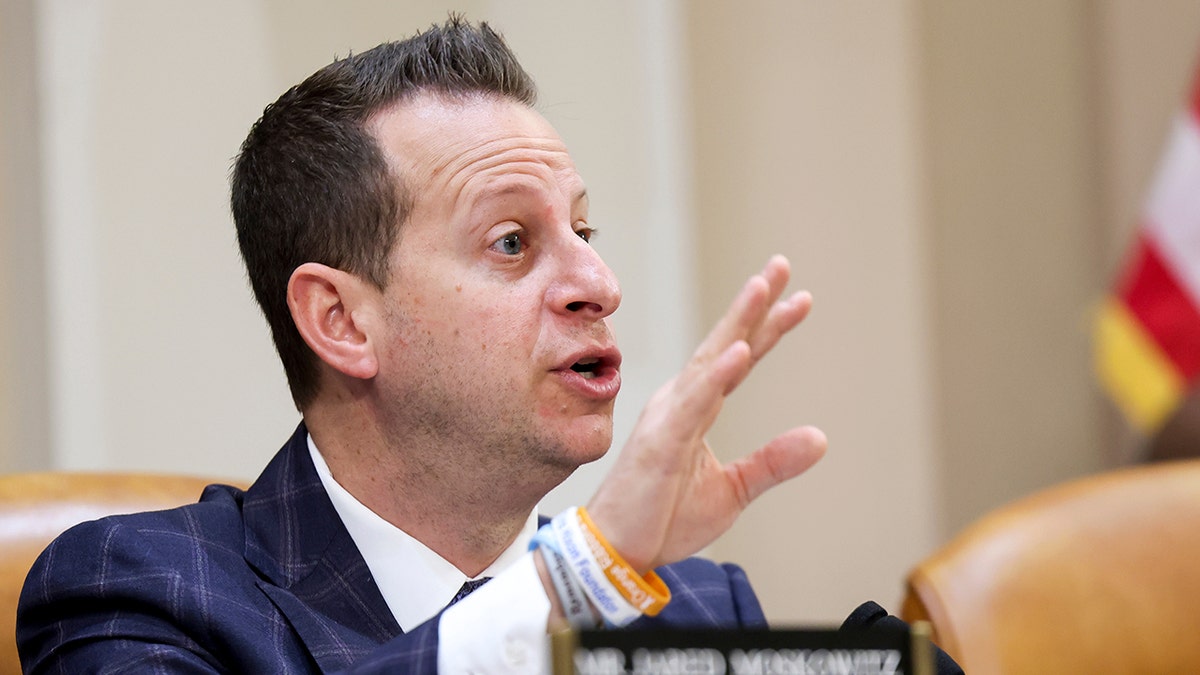
In the wake of the Correspondents’ Dinner incident, Rep. Jared Moskowitz, D-Fla., articulated a strong appeal for national unity and a reduction in inflammatory language. Speaking to Fox News Digital, Moskowitz emphasized, "It’s an opportunity, in my opinion, for everyone to bring the temperature down. If we do the finger pointing, then the temperature’s never going to come down… We’re like high schoolers." His comments reflect a concern that the current political climate is characterized by an unproductive cycle of blame that only exacerbates divisions.
Moskowitz did not shy away from acknowledging the role of leadership in contributing to the current atmosphere. He stated, "The rhetoric on both sides, for a while now, has been elevated, and listen, the president has had a part of that. He’s had responsibility in the rhetoric, and he should own that. His tweets exist. There’s a reality of that." This bipartisan acknowledgment of responsibility suggests a desire to move beyond partisan accusations and toward a collective effort to foster a more respectful political environment. He later reiterated his belief that "The American people don’t believe that [either side is blameless] and it’s why our poll numbers for both sides are in the tubes," indicating a public weariness with the current state of political conflict.
Accusations and Counter-Accusations
While Moskowitz advocated for a shared responsibility in de-escalating rhetoric, other political figures offered more pointed criticisms, often attributing blame to specific ideological camps. Rep. Lauren Boebert, R-Colo., was particularly vocal, directly linking the alleged shooter’s motivations to liberal media narratives. "The manifesto doesn’t sound much different than all of the talking heads on every liberal news station," Boebert asserted, implying that certain media outlets contribute to an environment that could inspire such actions.
Boebert further escalated her condemnation, stating, "You got psycho-frickin’ leftists trying to assassinate President Trump once again… the violence is always on their side. It is disgusting, and it needs to end, period." Her remarks underscore a deep-seated belief among some conservatives that the political left is inherently prone to violence. In response to the heightened security concerns, Boebert also endorsed President Trump’s proposed ballroom addition to the White House, asserting, "I want the ballroom built. This is a national security issue at this time, and it needs to be built." She connected the recent events to a larger pattern, referencing the assassination of Charlie Kirk: "Look what they did to Charlie Kirk, a man that wanted to sit down and have a conversation. They hated him so much, their rhetoric caused him to be assassinated. One of their liberal freaks assassinated him. This only happens with liberals," Boebert concluded, making a strong, unequivocal accusation.
White House press secretary Karoline Leavitt echoed a similar sentiment during a news conference on Monday, attributing the violence to a "left-wing cult of hatred." Leavitt also specifically criticized ABC late-night host Jimmy Kimmel for a recent comment about the first lady, where he allegedly said she had the "glow of an expectant widow." Leavitt condemned the remark as deeply offensive and insensitive, especially in the context of the recent alleged attack. "Who in their right mind says a wife would be glowing over the potential murder of her beloved husband?" she questioned, adding, "And having experienced what I did with the first lady on Saturday night, I can tell you she was anything but that." This particular exchange highlights how even satirical or comedic remarks by public figures can be drawn into the broader debate about appropriate political discourse, especially in a charged environment.
Internal Divides and Unanswered Questions
The call for de-escalation is not solely a bipartisan appeal but also highlights internal struggles within political parties to define acceptable boundaries for rhetoric. Rep. Moskowitz explicitly rejected the rhetoric of certain figures on the left, particularly far-left streamer Hasan Piker. Moskowitz stated, "I do reject people on my side, or trying to be on my side, like Hasan Piker, who’s advocating for senators to be killed and saying things like, ‘we deserve 9/11.’ He’s not a Democrat. He doesn’t belong in the Democratic Party." This indicates a recognition within the Democratic party that some forms of extreme rhetoric, even from those ideologically aligned, cross a line and are detrimental to the political process. Piker, for his part, has reportedly pushed back against these condemnations, labeling his critics as "propagandists for the state of Israel."
In contrast to the outspoken condemnations and calls for restraint, some political figures have remained silent. Fox News Digital’s attempts to question Rep. Ilhan Omar, D-Minn., about the shooting and the escalating political violence were reportedly ignored, leaving her stance on the matter unclear. Such silences, whether intentional or not, can be interpreted in various ways, from a refusal to engage in the blame game to a perceived unwillingness to address the issue.
Implications for Political Discourse and Security
The events surrounding the White House Correspondents’ Dinner and the broader pattern of alleged political violence underscore several critical implications for American democracy. Firstly, the incident has inevitably heightened security concerns for public figures, leading to calls for more robust protective measures at public events and a re-evaluation of current protocols. The presence of armed individuals with explicit manifestos targeting officials demonstrates a tangible threat that requires constant vigilance.
Secondly, the incident has brought the issue of political rhetoric to the forefront, forcing a national conversation about the impact of incendiary language on public behavior. While freedom of speech is a cornerstone of democracy, the line between passionate debate and incitement to violence is increasingly scrutinized. The debate centers on whether rhetoric, particularly from influential figures in media and politics, can inadvertently inspire individuals to commit violent acts. The accusation that Cole Allen’s manifesto mirrored "talking heads on every liberal news station" suggests a belief that media narratives contribute significantly to the political climate.
Finally, the polarization evident in the reactions to the shooting—with some calling for unity and others engaging in immediate blame—highlights the deep divisions within the country. Moskowitz’s observation that "poll numbers for both sides are in the tubes" suggests that the constant infighting and perceived extremism are alienating a significant portion of the American populace. As the nation approaches future elections, the ability of leaders to foster constructive dialogue and de-escalate tensions will be crucial in shaping a political environment that values civil discourse over violent confrontation. The ongoing investigation into the motive behind the Correspondents’ Dinner shooting, alongside a broader examination of political rhetoric, will undoubtedly continue to shape these vital discussions.