Iran War Updates: U.S. forces disable commercial ship that allegedly tried to breach blockade on Iranian ports

The geopolitical landscape of the Middle East has entered a period of extreme volatility, characterized by a complex web of regional security pacts, maritime blockades, and a series of lethal skirmishes that threaten to draw global powers into a protracted conflict. As of late November 2026, the intersection of the U.S.-led blockade of Iranian ports, the deepening domestic unrest within Iran, and the activation of trilateral defense agreements has created an environment of unprecedented instability.
A New Trilateral Defense Framework
In a significant shift in regional security architecture, Pakistan and Turkey have formally committed to supporting Saudi Arabia against persistent attacks by Iran-backed Houthi rebels in Yemen. This commitment was reaffirmed during high-level trilateral defense talks held this past Friday. The three nations operate under a defense pact that functions on the principle of collective security: an act of aggression against one member is viewed as a strike against the entire coalition.
Foreign Minister Ishaq Dar of Pakistan emphasized that the agreement is fundamentally defensive in nature. During a televised briefing, Dar stated that the participating nations remain dedicated to de-escalating regional friction and advocate for the resolution of disputes through diplomatic channels rather than military escalation. Turkish officials have echoed this sentiment, clarifying that while Ankara is evaluating the provision of military assistance to Riyadh, the "Joint Mecca Defense Agreement" does not mandate the deployment of Turkish ground troops to Yemeni battlefields, nor does it authorize offensive operations against the Houthis. Despite these assurances, the alignment of three major regional powers serves as a clear signal to Tehran that further proxy aggression will face a unified, coordinated response.
The Kuwait Drone Strike and Diplomatic Fallout
The regional climate was further darkened by a deadly drone attack in Kuwait on Thursday, which claimed the lives of two Italian technicians and wounded a Pakistani national and a Kuwaiti citizen. The incident has triggered a sharp diplomatic crisis. Kuwait’s Ministry of Foreign Affairs summoned the Iranian ambassador on Friday, delivering a formal note of protest and condemning the attack as a "flagrant violation of its sovereignty."
United Nations Secretary-General Antonio Guterres issued an urgent plea for restraint, expressing deep concern that the incident could catalyze a broader regional conflagration. "Renewed hostilities would have devastating consequences for the region and beyond," Guterres’ spokesperson, Stephane Dujarric, stated. While Kuwait has held the Islamic Republic of Iran directly responsible for the strike, Tehran has issued a categorical denial, with its embassy in Italy rejecting the allegations as baseless.
Maritime Blockades and the Strait of Hormuz
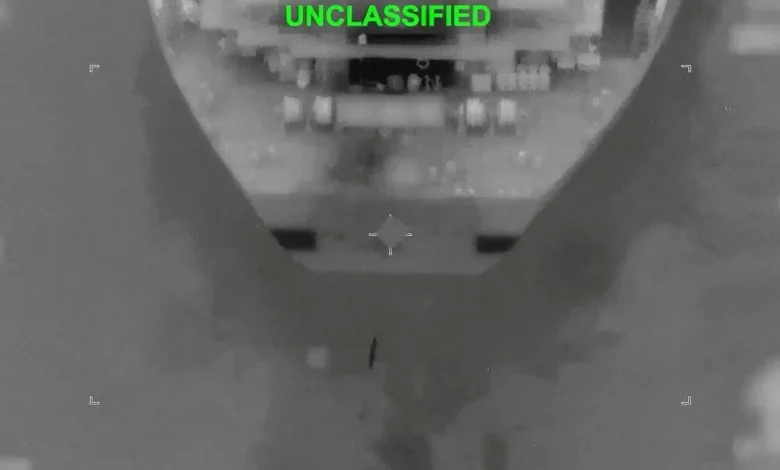
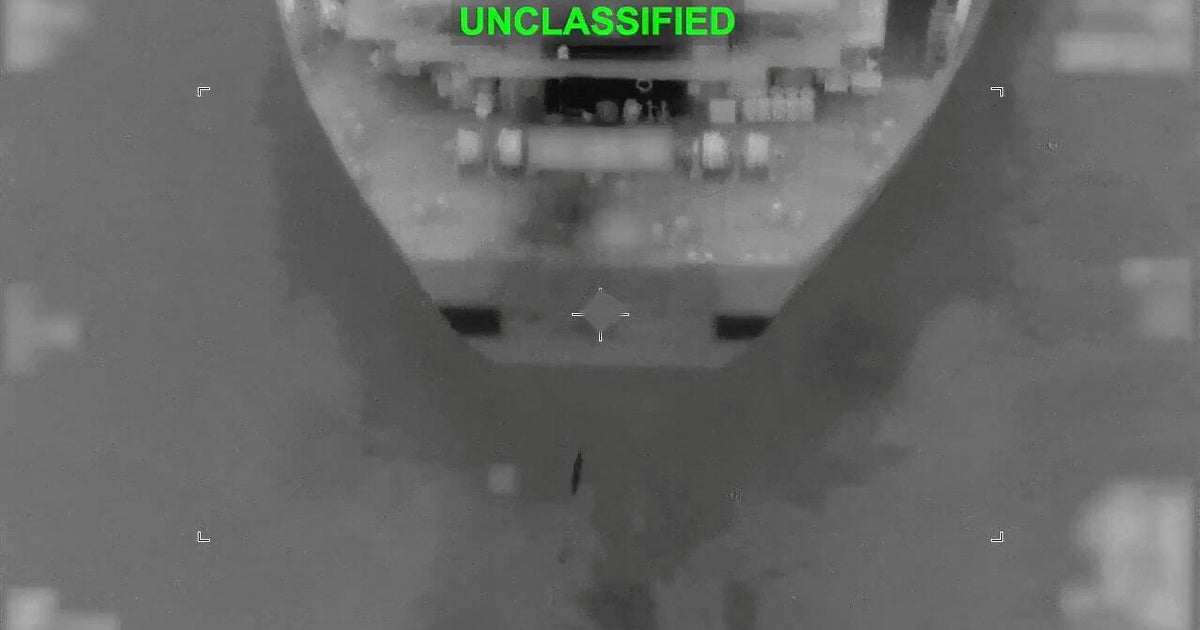
At sea, the U.S. military continues to enforce a rigorous blockade of Iranian ports, aimed at neutralizing the Islamic Republic’s ability to export oil and receive illicit supplies. Central Command (CENTCOM) reported that on Thursday, U.S. forces disabled the Palau-flagged M/V Pacific Archer in the Gulf of Oman after the vessel attempted to breach the blockade.
According to U.S. military statements, the ship, which had recently departed from the Iranian port city of Bandar Abbas, was struck in the stern by precision munitions fired from a U.S. military aircraft after failing to comply with multiple warnings. While the crew remained unharmed, the ship was left non-operational. This engagement marks a broader trend in maritime enforcement; CENTCOM has now disabled six vessels found to be in violation of the blockade, while successfully redirecting 158 others that chose to comply with international maritime directives.
Simultaneously, the situation near the Strait of Hormuz remains precarious. The Iranian Revolutionary Guard Corps (IRGC) claimed that a second oil tanker caught fire on Friday after striking a sea mine near an "unauthorized" shipping lane. Independent maritime analysts, however, note that these claims often serve to bolster Iran’s narrative of control over the waterway. Data from the maritime intelligence firm Kpler confirms that shipping volume through the strait has seen a marked decline, dropping from 217 weekly transits at the beginning of November to 147 by November 23, reflecting the severe impact of the ongoing standoff on global energy logistics.
Domestic Unrest and the Internal Cost of Conflict
While the Iranian government engages in external confrontations, it is simultaneously battling significant internal dissent. Rights groups, including Iran Human Rights (IHR) and Reporters Without Borders (RSF), have raised alarms over the arrest and reported torture of journalist Mehdi Mahmoudian. Mahmoudian was detained on Wednesday after publishing an internal judiciary document detailing the planned execution of two protesters, Milad Armoun and Navid Najaran, who were associated with the 2022 "Woman, Life, Freedom" movement.
The arrests are part of a broader crackdown on political prisoners as the regime attempts to stifle dissent amid the ongoing conflict with the United States and its regional allies. The case of singer Parastoo Ahmadi, who was sentenced to 74 lashes for performing without a hijab, serves as another grim indicator of the government’s efforts to enforce strict social codes during a time of extreme political instability.
Presidential Stance and International Alliances
In the United States, President Trump has adopted a posture of calculated patience regarding the war with Iran. Speaking from his Mar-a-Lago resort on Thanksgiving, the President remarked that victory is achievable "whenever I want it to be," but suggested he is providing the Iranian regime a final window of opportunity to negotiate a peace deal before the new year.
President Trump also addressed the role of external powers, specifically China and Russia, in the conflict. While reports have suggested that both nations provided intelligence to Iran to assist in targeting U.S. positions, the President downplayed these concerns. He described his recent trilateral meetings with President Xi Jinping and Vladimir Putin as "incredible," asserting that neither leader is significantly invested in the conflict and that both are ultimately interested in seeing the war conclude.
Broader Implications: A Fragile Balance
The combination of the trilateral defense pact between Pakistan, Turkey, and Saudi Arabia, the U.S. blockade, and the recurring maritime skirmishes has pushed the Middle East to a critical threshold. The potential for a single miscalculation to escalate the conflict is high, particularly as the humanitarian and economic costs—ranging from the loss of life in Kuwait to the $100 billion in losses due to oil smuggling cited by Iraqi authorities—continue to mount.
Iraq’s efforts to centralize control over its borders and energy resources, supported by the U.S., represent another front in the attempt to contain Iranian influence. By seeking to strip Iran of its ability to use Iraqi territory for sanction evasion, the Iraqi government, under Prime Minister Ali al-Zaidi, is attempting to assert sovereignty in a region where non-state, Iran-aligned militias have historically held sway.
As the international community watches these events unfold, the central question remains whether diplomatic efforts can overcome the momentum of military posturing. The convergence of these diverse crises—maritime, domestic, and regional—suggests that the coming weeks will be decisive in determining whether the region drifts further into open war or whether the current framework of containment and deterrence can stabilize the situation. For now, the region remains in a state of high alert, with all parties maneuvering for position in an increasingly fraught environment.