Smart Shoppers Capitalize on Black Friday to Fortify Emergency Readiness Kits Amid Rising Severe Weather Threats

Emergency preparedness has shifted from a fringe hobby to a mainstream necessity as extreme weather events increase in frequency and severity across the globe. With power grids facing unprecedented strain from winter freezes, summer heatwaves, and catastrophic hurricanes, emergency management agencies are continuously urging households to maintain self-sufficient disaster supply kits. Building a functional, reliable emergency kit does not require subscribing to extreme prepper mentalities, but it does demand careful planning and reliable gear. Fortunately, the annual Black Friday retail holiday offers a timely opportunity for consumers to acquire high-ticket items—such as portable power stations, heavy-duty vehicle jump starters, and durable lighting equipment—at significantly reduced prices.
The foundation of any effective emergency plan relies heavily on standardized frameworks provided by safety organizations. Consumer safety advocates frequently organize product recommendations around the Federal Emergency Management Agency’s Ready.gov basic disaster supplies list. Constructing a kit independently rather than purchasing a pre-packaged, generic bundle ensures that individuals thoroughly understand the operational mechanics of each tool before a crisis hits. Essential everyday items—including bottled water, non-perishable canned food, manual can openers, essential prescription medications, small denomination cash, pet provisions, and physical copies of vital identification documents—are best sourced directly from local grocery stores and personal filing cabinets rather than promotional retail sales.
The Evolution of Consumer Emergency Preparedness
Over the past decade, consumer habits surrounding disaster readiness have undergone a significant transformation. Historically, emergency kits consisted of little more than a dusty flashlight with corroded batteries, a pack of candles, and a battery-operated AM/FM radio. However, the modern digital household relies heavily on a stable electrical grid for communication, remote work, medical device operation, and home security.
Prolonged blackouts, such as those caused by Winter Storm Uri in Texas or Hurricane Ian in Florida, demonstrated that traditional emergency supplies are woefully inadequate for extended grid failures. This realization has driven a massive surge in demand for decentralized power infrastructure, specifically lithium iron phosphate (LiFePO4) portable power stations and solar generators. Retailers have responded by expanding deep seasonal discounts on these premium units during major shopping events like Black Friday, making high-end emergency technology accessible to a broader demographic of budget-conscious households.
Top-Tier Black Friday Deals on Essential Disaster Gear
Navigating retail discounts during major shopping holidays can be overwhelming, particularly when trying to separate gimmick-laden products from genuinely durable, life-saving hardware. Industry experts have evaluated several standout deals that align with FEMA preparedness guidelines, focusing on reliability, build quality, and value.
Portable Power Stations for Home Backup
Maintaining baseline electrical functionality during a blackout is critical for keeping communication lines open, preserving perishable medications, and running basic lighting.
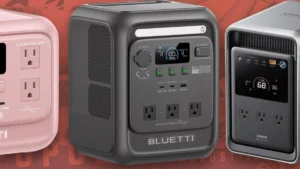
- Bluetti Elite 30 V2 Portable Power Station: Originally retailing for $449, this compact power station has seen a steep discount down to $227 on Amazon. Equipped with a 288Wh LiFePO4 battery rated for more than 3,000 charge cycles, the Elite 30 V2 can rapidly recharge to 80 percent capacity in just 45 minutes. Its 600W inverter is well-suited for powering internet modems, LED lamps, and charging mobile devices or laptops. Weighing in at approximately 9.5 pounds, it bridges the gap between portability and dependable backup power.
- Anker SOLIX C1000 Gen 2 Portable Power Station: For households requiring a more robust energy reserve, the Anker SOLIX C1000 Gen 2 offers a substantial markdown from its standard $799 price tag down to $469.99. Featuring a 1,024Wh capacity and a continuous output of 2,000W (with a 3,000W peak), this unit can sustain a household refrigerator, Wi-Fi router, and multiple communication devices simultaneously. It also boasts a rapid 10-millisecond Uninterruptible Power Supply (UPS) switchover, ensuring sensitive electronics remain powered without interruption when the main grid fails.
Automotive Emergency and Jump-Starting Equipment
Winter weather is notoriously harsh on automotive batteries, making reliable jump starters an indispensable component of any comprehensive vehicle or home emergency kit.
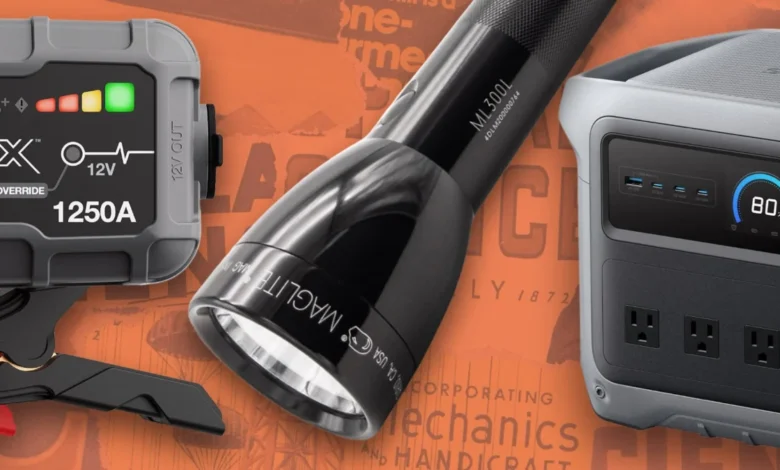
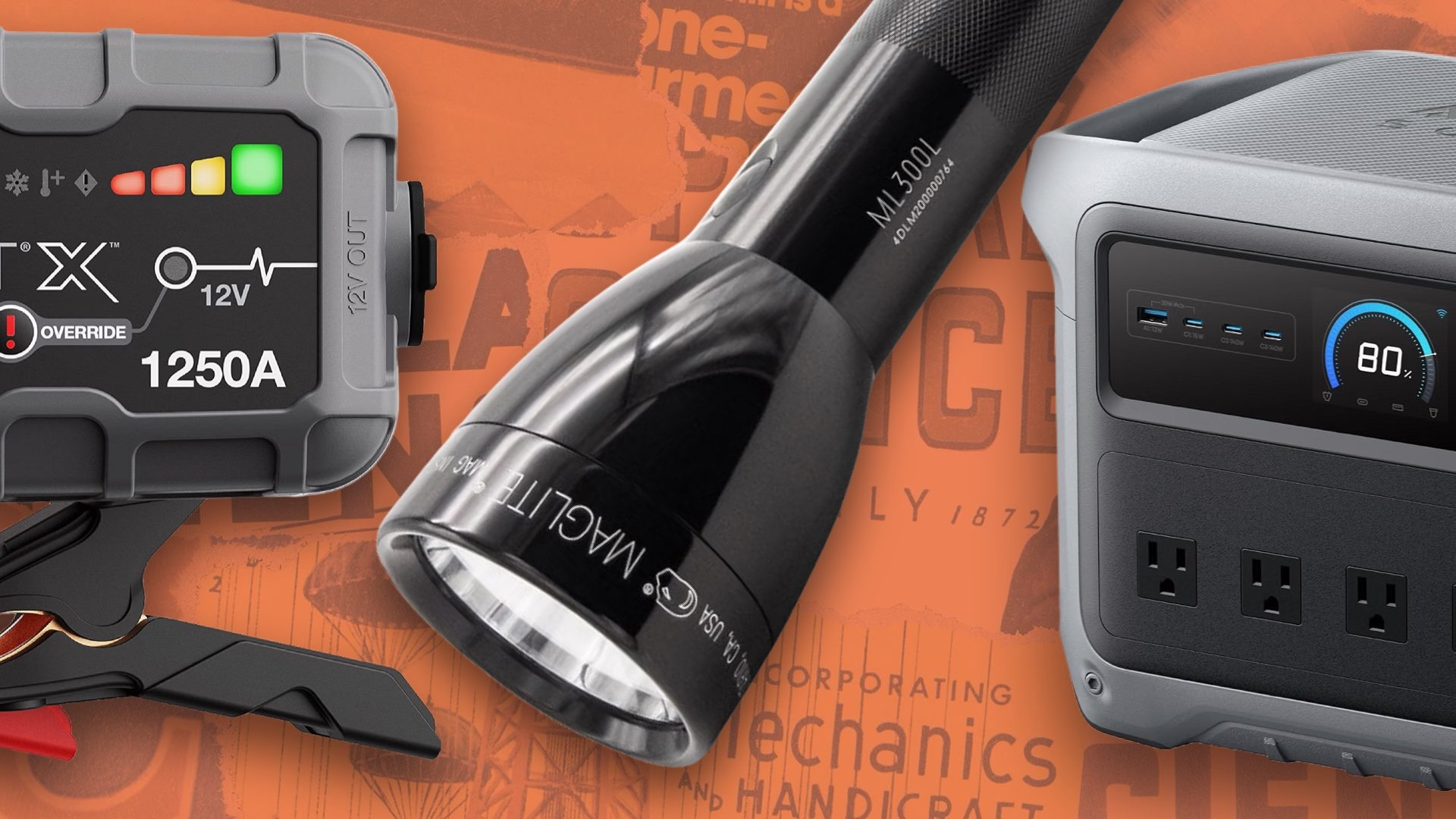
- NOCO Boost X GBX45 Jump Starter: Priced at $99.96, the NOCO Boost X GBX45 provides 1,250 peak amps of power, capable of safely jump-starting gasoline engines up to 6.5 liters and diesel engines up to 4.0 liters. Engineered with spark-proof technology and reverse-polarity protection, it eliminates the traditional dangers associated with jumper cables. Furthermore, its versatile 60W USB-C bidirectional port allows the unit to double as a high-capacity power bank for mobile phones, complemented by a built-in 100-lumen emergency LED light featuring SOS and strobe modes.
High-Durability Lighting Solutions
When rechargeable electronics and modern power grids fail completely, traditional, non-rechargeable hardware serves as a fail-safe backup.
- Maglite ML300L 4D LED Flashlight: Representing the pinnacle of traditional mechanical reliability, the Maglite ML300L operates on four standard D-cell batteries. On sale for $42.29 (down from $59.99), the flashlight delivers up to 1,002 lumens, a 511-meter beam distance, and an impressive runtime of up to 434 hours on its Eco setting. Its rugged, heavy-duty aluminum construction ensures it can withstand years of storage in a drawer and function immediately when rechargeable alternatives have exhausted their power reserves.
Strategic Allocation of Preparedness Budgets
Experts advise consumers to adopt a strategic approach when utilizing Black Friday sales to build an emergency kit. Rather than purchasing inferior, no-name bundled kits that often fail when tested, shoppers should allocate funds toward high-impact categories where quality directly correlates with safety and performance.
- Prioritize Power Management: Invest in reliable portable power stations and high-capacity power banks to keep vital communication lines operational.
- Secure Automotive Reliability: Ensure vehicles are equipped with modern lithium-ion jump starters, tire inflators, and battery maintainers to prevent being stranded during severe weather advisories.
- Invest in Redundant Lighting: Balance modern USB-rechargeable headlamps and lanterns with traditional, long-running battery-operated flashlights that do not rely on electrical grids for recharging.
- Acquire Safety Monitoring Devices: Never compromise on carbon monoxide alarms and fire suppression sprays, especially since alternative heating and cooking methods are frequently deployed during prolonged winter power outages.
The Broader Implications of Household Preparedness
The growing consumer interest in emergency preparedness reflects a broader psychological and structural shift in society. As municipal infrastructure ages and climate volatility increases, citizens are increasingly recognizing the limits of government and utility response times during catastrophic events. Emergency management officials frequently emphasize the concept of the "golden 72 hours"—the critical window immediately following a disaster during which individuals must be entirely self-reliant before organized emergency services can reach them.
By taking advantage of seasonal retail discounts to acquire professional-grade emergency equipment, households are not merely purchasing consumer electronics; they are investing in structural resilience and peace of mind. As retail trends continue to merge seasonal shopping holidays with practical life safety investments, consumers have a unique window of opportunity to build robust, reliable disaster kits without incurring prohibitive financial strain.