Australian Court Rules Convicted Murderer Has No Fundamental Right to Vegemite Behind Bars

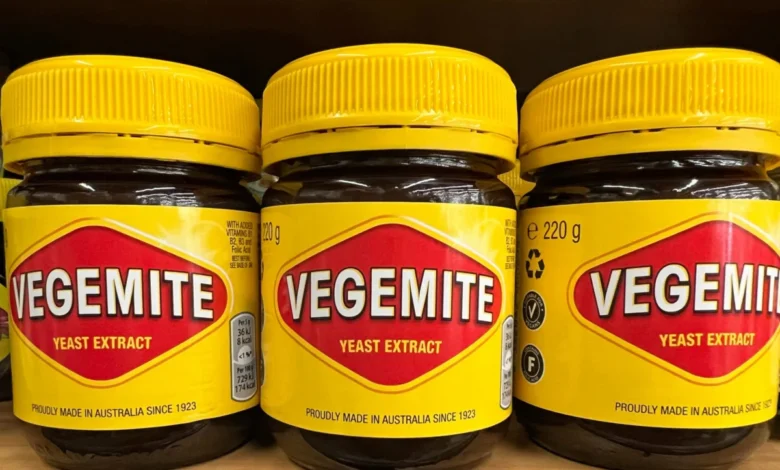
The Supreme Court of Victoria has decisively closed the lid on a most unusual legal battle, ruling that a convicted murderer serving a life sentence does not possess a fundamental human right to consume Vegemite while incarcerated. Justice Claire Harris handed down the decision, concluding that the security risks associated with the iconic Australian spread far outweigh an inmate’s cultural cravings. The ruling highlights the delicate and often contentious balance correctional facilities must maintain between prisoner welfare, human rights charters, and the rigid demands of institutional security.
Andre McKechnie, the inmate at the center of the litigation, is currently housed within Victoria’s maximum-security prison network after being convicted of murder. Last year, McKechnie initiated legal proceedings in the Supreme Court of Victoria, arguing that the correctional system’s blanket ban on Vegemite infringed upon his rights. Specifically, McKechnie contended that being denied the salty, dark-brown yeast extract violated his cultural identity as an Australian. He further claimed that the absence of the staple condiment left him feeling isolated, sad, and fundamentally disconnected from his family and the broader community on the outside.
To bolster his argument, McKechnie pointed across state lines to New South Wales, where correctional facilities permit inmates to purchase and consume Vegemite under specific commissary guidelines. He argued that Victoria’s prohibition was arbitrary, unnecessary, and disproportionately punitive. However, Justice Harris was wholly unpersuaded by these comparisons and arguments, noting that administrative differences between state penal systems do not automatically render a particular policy unlawful or a violation of human rights.
Security Realities Behind the Prison Walls
While the case may sound eccentric to outside observers—and has naturally drawn global media amusement—the justifications provided by prison authorities and upheld by the court are grounded in serious penological concerns. Correctional officials defended the ban by detailing two primary operational risks posed by the spread: contraband detection interference and illicit alcohol production.
First, the pungent, distinct aroma of Vegemite presents a tangible challenge to K-9 units. Correctional facilities frequently deploy drug-snatching dogs to detect illicit substances such as narcotics and synthetic cannabinoids smuggled into prisons. Prison administrators argued that the rich, yeasty scent of the spread can linger on inmates’ hands, clothing, and surfaces, potentially masking the scent of illegal drugs or generating false positives that compromise the efficiency of contraband detection protocols.
Second, and perhaps more critically, high-yeast and nutrient-dense food products can be weaponized by inmates for fermentation. In the subterranean economy of maximum-security prisons, yeast-rich items are frequently repurposed to brew "pruno" or illicit prison alcohol. The potential for large-scale illicit brewing operations introduces severe security complications, including increased violence, debt-related conflicts, and intoxication among the inmate population. Justice Harris accepted these institutional rationales as legitimate and proportionate measures necessary to maintain safety, order, and security within the prison environment.
The Legal Framing and Judicial Reasoning
At the heart of McKechnie’s lawsuit was an appeal to cultural identity and statutory human rights protections. Australia does not possess a federal bill of rights, but the state of Victoria operates under the Charter of Human Rights and Responsibilities Act 2006. This legislation requires public authorities, including corrections departments, to act compatibly with human rights and to properly consider human rights when making decisions.
McKechnie framed his desire for Vegemite as an expression of cultural participation and expression under the Victorian charter. He argued that the state was failing to respect his heritage by withholding a product that is deeply woven into the culinary fabric of Australian national identity.
Justice Harris directly addressed this argument in her written judgment, dismantling the premise that the state was responsible for McKechnie’s emotional distress. In a sharply worded passage, the judge emphasized that the primary constraint on the inmate’s lifestyle is not the absence of a condiment, but rather the lawful consequence of his criminal conviction and subsequent life sentence.
"The limitation on Mr. McKechnie’s ability to enjoy Vegemite in community with other persons of Australian background is primarily that he is a prisoner," Justice Harris wrote. She added that it was exceptionally difficult to accept the argument that the inability to consume Vegemite, rather than the profound reality of lifelong imprisonment, was a material cause of his sadness and disconnection from his family and community.
Broader Implications for Prisoner Rights and Correctional Policy
The Victorian Supreme Court ruling serves as a notable case study in the ongoing evolution of prisoner litigation. In recent decades, human rights charters have opened new avenues for incarcerated individuals to challenge various aspects of prison administration, ranging from medical care and dietary requirements to religious accommodations and living conditions.
Legal scholars note that while courts are increasingly willing to scrutinize prison regulations to ensure they do not cross into cruel, inhuman, or degrading treatment, a wide margin of appreciation is routinely granted to correctional administrators. Courts are generally hesitant to second-guess the day-to-day security assessments of prison wardens unless a clear, bad-faith violation of fundamental rights can be demonstrated.
The Vegemite verdict reinforces the legal principle that incarceration inherently curtails numerous rights and freedoms enjoyed by the general public. While prisoners retain baseline protections against abuse and neglect, the right to personal culinary preferences—even those tied deeply to national culture—does not rise to the level of a legally enforceable human right when weighed against institutional security.
The Cultural Phenomenon of Vegemite in Australia
The intense emotional attachment McKechnie expressed toward Vegemite underscores the unique cultural status the spread holds in Australia. Invented in 1922 by chemist Cyril Callister for the Fred Walker Company (which later became part of Kraft Foods Australia), Vegemite is a thick, black spread made from leftover brewer’s yeast extract combined with various vegetable and spice additives.
For generations, the brand has marketed itself aggressively around national identity, cementing its place in Australian households through memorable advertising campaigns, most notably the iconic 1950s jingle proclaiming, "Happy little Vegemite." To many Australians living abroad or facing long separations from home, the salty, savory taste serves as a powerful sensory anchor to their homeland.
It is precisely this cultural potency that made Vegemite a central rhetorical tool in McKechnie’s legal strategy. By framing the ban as an assault on his connection to Australian society, he sought to elevate a mundane commissary dispute into a significant civil liberties issue. Ultimately, however, the Victorian Supreme Court drew a hard line where culinary nostalgia collides with the gritty, high-stakes reality of maximum-security prison management.
Conclusion
As the legal dust settles on the Supreme Court of Victoria, the decision leaves the Victorian prison ban firmly intact. Andre McKechnie will finish his life sentence without access to the beloved national spread, and correctional authorities across Australia can continue to regulate commissary items through the lens of institutional safety. The case will likely be remembered as a curious footnote in the annals of Australian jurisprudence—a momentary collision between national culinary pride and the unyielding iron bars of the correctional system.
Related posts: