Detroit City Officials Move to Curb Industrial Expansion in Cadillac Heights Following Years of Community Activism

After years of sustained community opposition and mounting environmental concerns, the city of Detroit has initiated a pivotal regulatory shift aimed at halting the encroachment of heavy industrial operations into the residential enclave of Cadillac Heights. Detroit City Council members are slated to deliberate on a significant rezoning proposal that would effectively freeze the footprint of the controversial Kronos concrete facility, preventing further expansion while reclassifying surrounding parcels to favor residential and light commercial use.
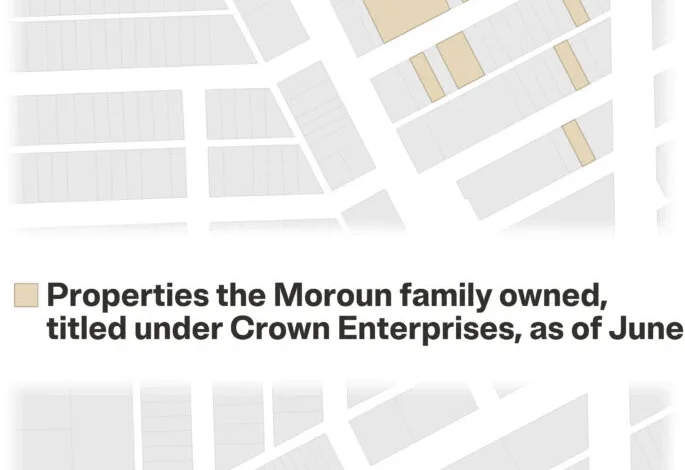
This legislative maneuver, recommended by the City Planning Commission on October 22, follows a series of investigative reports by BridgeDetroit and ProPublica. These investigations exposed a complex web of property acquisitions and regulatory leniency that allowed Crown Enterprises—a real estate entity controlled by the influential Moroun family—to solidify its industrial presence in a neighborhood long characterized by its working-class residential roots. While the proposed ordinance would allow the existing Kronos plant to maintain its current scale, it signals a dramatic shift in municipal policy regarding land use in the shadow of the burgeoning Joe Louis Greenway project.
A Chronology of Contention
The friction between Cadillac Heights residents and the Moroun-backed operations is not a recent development but the culmination of nearly seven years of aggressive land consolidation. The timeline of this corporate expansion provides critical context to the current legislative debate:
- 1966–2018: The Moroun family begins a multi-decade process of acquiring individual lots within Cadillac Heights through various corporate shells, eventually consolidating ownership under Crown Enterprises.
- May 2019: The city of Detroit enters a land-swap agreement with Crown Enterprises. While framed as a deal to facilitate the construction of a major Stellantis automotive plant elsewhere in the city, the agreement provides the mechanism for Crown to acquire dozens of additional parcels in Cadillac Heights.
- 2020–2022: As Crown acquires more land, the neighborhood experiences an uptick in industrial activity. Residents report increasing incidents of noise, traffic, and particulate pollution.
- 2022: The city grants a "first-of-its-kind" compliance agreement to Crown, effectively providing a grace period for the facility to address environmental violations before the city imposes financial penalties.
- 2023: Council Member Scott Benson, representing the district, formally requests an evaluation of zoning along the Joe Louis Greenway, citing the need for public health and safety protections.
- October 2024: The City Planning Commission votes to recommend a rezoning from heavy to light industrial, setting the stage for the upcoming November 19 City Council public hearing.
The Land-Use Conflict: Heavy vs. Light Industrial
The core of the dispute rests on the classification of land. For decades, the area surrounding the Kronos site has been zoned for heavy industry, a designation dating back to the mid-20th century when the site served as a trucking depot and rail hub. However, the demographic and social landscape of the area has shifted significantly. Despite the zoning, families remained in the neighborhood, and the area became a symbol of local history, most notably as the birthplace of the iconic Buddy’s Pizza.
The City Planning Commission’s current proposal aims to downgrade this zoning to "light industrial," which accommodates warehouses and logistics centers but prohibits the high-intensity processes inherent in concrete mixing. By creating this buffer, city planners hope to reconcile the existence of the existing plant with the long-term vision of the Joe Louis Greenway—a multi-modal trail intended to revitalize the urban core by connecting neighborhoods with parks and pedestrian-friendly infrastructure.

Economic Stakes and Legal Threats
Crown Enterprises has responded to the rezoning threat with legal posturing. In correspondence directed to city officials in September and October, legal counsel representing the company argued that a zoning change would constitute an unlawful devaluation of their property assets. Attorney Melvin Butch Hollowell, representing Crown, emphasized that the city’s actions could be interpreted as a breach of the implicit commitments made during the 2019 land-swap deal.
From the company’s perspective, the investment is substantial. A spokesperson for Crown, Kenneth Dobson, stated that the company has committed upwards of $10 million into the facility, operating under the assumption that the city had sanctioned their plans. Crown contends that the proposed rezoning would render planned site improvements—such as new sidewalks and landscaping—commercially unviable or technically prohibited under the new light industrial code.
Conversely, city planning officials have countered these claims, suggesting that the requested site improvements remain entirely permissible even under the proposed rezoning. This disagreement highlights the broader tension between corporate development interests and the city’s evolving urban planning objectives.
Community Impact and Environmental Concerns
For residents like Sharon Buttry, the struggle has always been about the basic quality of life. The environmental toll of the Kronos plant—documented in roughly 80 official complaints filed with city and state environmental departments—includes consistent reports of "whiteout conditions" caused by fugitive dust.
The city’s 2024 fugitive dust ordinance was designed specifically to address these types of industrial nuisances, requiring operators to submit and adhere to strict dust-mitigation plans. Despite this, inspectors continue to find evidence of non-compliance. A notable incident occurred on October 7, when an inspector discovered that the facility had allowed dust to migrate off-site and found that raw materials were stored in a manner that violated visibility screening requirements. While Crown eventually rectified these specific issues, the recurring nature of these violations has fueled public distrust.
The supporters of the facility, including some employees like Terrell Daniel, argue that the economic benefits—specifically the creation of jobs for local residents who have been historically marginalized—outweigh the environmental complaints. They contend that the facility represents a necessary economic "backbone" for a city seeking to retain its industrial identity.

Broader Implications for Detroit
The situation in Cadillac Heights serves as a case study for the challenges facing post-industrial cities. As Detroit pivots toward a future defined by greenways, sustainable urban living, and residential revitalization, the legacy of heavy industrial zoning presents a recurring obstacle.
The upcoming November 19 City Council hearing is expected to be a flashpoint for this debate. If the council proceeds with the rezoning, it will mark a definitive shift in how the city prioritizes resident health over legacy industrial land rights. If they stall, it may suggest that the binding nature of historical development agreements and the influence of major private entities remain significant hurdles to urban reform.
Furthermore, the case underscores the importance of municipal transparency. The fact that the city claimed to be unaware of Crown’s plans to build a concrete facility during the 2019 land transfer has raised questions about the oversight mechanisms governing public-private real estate deals. Moving forward, the outcome of this vote will likely influence how Detroit handles similar rezoning petitions, especially as the Joe Louis Greenway continues to weave through disparate neighborhoods with competing land-use needs.
Ultimately, the residents of Cadillac Heights are looking for more than just a buffer zone; they are seeking a long-term strategy that addresses the blight of vacant, corporate-owned land and restores the neighborhood’s viability for families. As the council weighs the legal threats from a powerful real estate interest against the public health demands of its constituents, the decision will reflect the city’s priorities in a rapidly changing urban landscape. The resolution of this standoff will not only define the future of the Kronos plant but will also set a precedent for how the city balances the rights of property owners with the fundamental rights of its citizens to breathe clean air and live in safe, well-maintained communities.