Why Hotels Are Implementing Strict Stay Limits to Avoid Landlord-Tenant Legal Risks

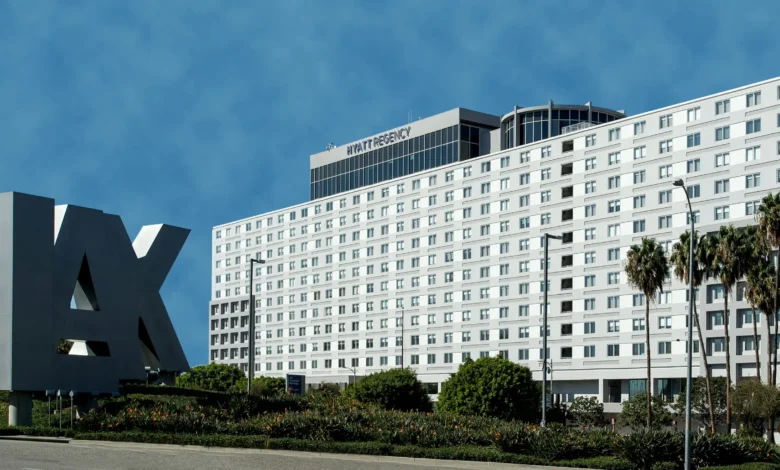
The hospitality industry is increasingly adopting restrictive stay policies, with major properties like the Hyatt Regency LAX enforcing strict limits on consecutive nights to mitigate the risk of guests acquiring residential tenancy rights. Under the current policy at the Hyatt Regency LAX, guests are prohibited from staying longer than 21 consecutive days, a rule that explicitly blocks the circumvention of this limit through back-to-back reservations. This shift reflects a growing concern among hoteliers regarding the complex intersection of commercial hospitality regulations and residential tenant protection laws, which vary significantly across jurisdictions.
The Legal Landscape of Tenancy vs. Hospitality
At the heart of these policies is the desire to avoid the "tenant" designation. In many U.S. cities, if an individual occupies a hotel room for a duration that exceeds a certain threshold—often 30 days—they may be legally classified as a permanent resident or tenant. Once this threshold is crossed, hotel operators lose the ability to use standard eviction procedures. Instead, they are forced to adhere to strict local housing codes, which may include providing formal notices, navigating court-ordered evictions, and potentially complying with rent stabilization ordinances.
In Los Angeles, the Rent Stabilization Ordinance (RSO) plays a pivotal role in this calculus. The ordinance defines certain hotel accommodations occupied as a primary residence for more than 30 days as rental units. By setting a 21-day limit, the Hyatt Regency LAX creates a "buffer zone" of nine days, ensuring that even if a guest experiences a minor departure delay, the hotel remains safely outside the 30-day window that would trigger residential protections.
However, these policies are not uniform. While Hyatt properties in Los Angeles often cite a 21 to 28-day cap, other luxury hotels, such as the Wynn Las Vegas, impose even more stringent limits, with a 14-day maximum stay policy clearly outlined in their terms and conditions. The Oasis at Gold Spike, also in Las Vegas, enforces a similar 14-night restriction. These variations highlight how hotel management, legal teams, and risk management departments assess local real estate law to protect their assets from becoming de facto long-term rental housing.
A Chronology of Risk: The Case of the New Yorker Hotel
The legal vulnerabilities faced by hotels are best illustrated by the protracted and high-profile case of the Wyndham New Yorker Hotel. In 2018, an individual named Mickey Barreto checked into the hotel for a single night at a rate of $149. Upon arrival, he invoked a provision of New York City’s rent stabilization laws, requesting a six-month lease. When the hotel refused and attempted to remove him, the situation escalated into a years-long legal battle.
The hotel’s attempt to evict Barreto failed in initial housing court proceedings, where the court granted him a possessory interest in his room. The dispute centered on whether the hotel qualified for an exemption from rent stabilization laws, which required the property to prove the room’s rental rate on a specific date in 1968. Because the hotel could not produce definitive, court-admissible documentation regarding the room’s exact price on May 31, 1968, the eviction case was dismissed.
The situation spiraled further when Barreto, emboldened by the court’s decision to allow him to remain, filed fraudulent documents claiming ownership of the entire building. He subsequently attempted to collect rent from other tenants and engaged with lenders as if he were the property owner. It took until 2024 for the legal system to fully resolve the matter, culminating in Barreto pleading guilty to fraud in February 2026. This case serves as a cautionary tale for the industry: a single, short-term booking can, under the right—or wrong—legal circumstances, lead to years of litigation, threats to ownership titles, and significant financial loss.

Comparative Industry Standards and Stay Caps
The implementation of these policies is not limited to a single chain or city. A review of major hotel policies across the United States reveals a clear trend toward codifying occupancy limits:
| Hotel Property | Stay Limit |
|---|---|
| Hyatt Regency Valencia | 28 Days |
| Hyatt Regency Westlake | 28 Days |
| Best Western Los Angeles Worldport | 28 Days |
| The LINE Los Angeles | 29 Days |
| Wynn Las Vegas | 14 Days |
| Oasis at Gold Spike | 14 Days |
| The LINE Austin | 29 Days |
| The LINE Washington, D.C. | 28 Days |
For many of these properties, the policy is not just about the law; it is about operational flexibility. Hotels are designed for transient guests who require housekeeping, maintenance, and front-desk services. When a guest remains for months, the room experiences wear and tear beyond the standard turnover cycle, and the nature of the relationship shifts from a service-based agreement to a residential one.
The Regulatory Counter-Balance
While hotels strive to maintain their status as transient accommodations, legislators have also acted to prevent abuse by hotel owners. In California, Section 1940.1 of the Civil Code prohibits residential hotels from forcing occupants to check out and re-register solely to avoid the 30-day residency threshold. This law was designed to protect low-income individuals who rely on single-room occupancy (SRO) hotels as their only form of housing.
Similarly, in New York City, regulations are even more aggressive. Occupants of certain hotels who have never signed a lease can, under specific conditions, request one at any time. Once that request is made, the property owner is legally obligated to provide a lease of at least six months within 15 days. These laws are intended to protect the vulnerable, but they place a significant administrative and legal burden on commercial hoteliers, who must navigate these rules while simultaneously trying to manage a business that relies on high turnover and room availability.
Implications for the Future of Extended Stays
The trend toward shorter stay limits creates a genuine conflict for a specific segment of the traveling public. Corporate consultants, individuals displaced by home repairs, and patients receiving long-term medical care near major hospitals often require stays that bridge the gap between a week-long vacation and a permanent lease.
When hotels refuse these guests due to fear of tenancy laws, those travelers are often pushed toward the unregulated "short-term rental" market, such as private residential apartments listed on digital platforms. This migration of demand complicates the housing supply in major urban centers, as residential apartments are increasingly used for commercial purposes.
From an industry standpoint, the implications are clear: hoteliers will continue to use legal buffers—such as the 21-day limit—to insulate themselves from the complexities of landlord-tenant law. As long as the legal definitions of "tenant" and "transient guest" remain blurred in local municipal codes, the burden will fall on the consumer to find alternative accommodations for stays exceeding three weeks.
Ultimately, the Hyatt Regency LAX and similar institutions are responding to a climate of heightened litigation risk. By codifying these limits, they are prioritizing the stability of their business models over the convenience of extended-stay guests. For the traveler, this means that the era of the "indefinite" hotel stay is effectively over, replaced by a rigid, rule-based approach to occupancy that favors legal certainty for the hotelier above all else. As property owners continue to tighten their terms of service, it is likely that more hotels will follow suit, adopting shorter stay caps to insulate themselves from the precedent set by cases like the New Yorker, where a single guest became a multi-year administrative and legal nightmare.