The Legendary 25s: How Three 2001 Masterpieces Redefined the Trajectory of Indian Cinema

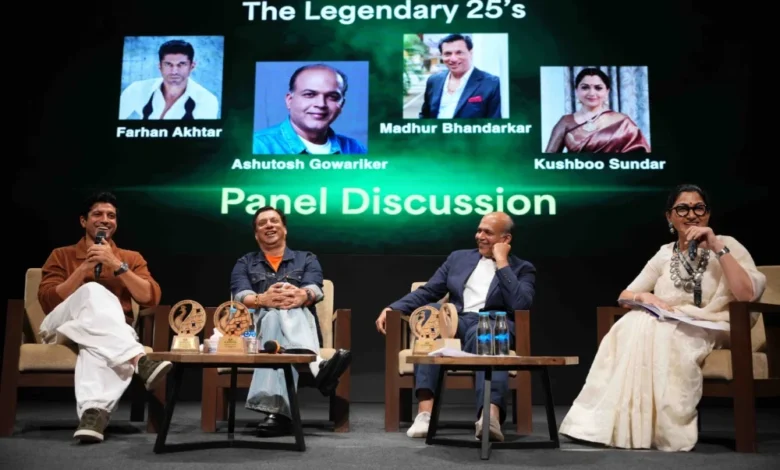
The landscape of Hindi-language cinema underwent a profound seismic shift in 2001, a year that serves as a demarcation line between the traditional commercial “potboiler” era and the advent of contemporary, character-driven storytelling. Three films—Farhan Akhtar’s Dil Chahta Hai, Ashutosh Gowariker’s Lagaan, and Madhur Bhandarkar’s Chandni Bar—collectively dismantled the rigid conventions of Bollywood, proving that artistic integrity could coexist with, and often thrive within, the mainstream market. Twenty-five years later, the visionaries behind these seminal works gathered at the 57th International Film Festival of India (IFFI) in Goa for a marquee session titled “The Legendary 25s.” Moderated by the veteran actor and producer Khushboo Sundar, the event served as both a retrospective of these landmark achievements and a critical examination of how the Indian film industry has evolved in the quarter-century since.
The Catalyst for Change: A Chronology of Artistic Defiance
To understand the weight of 2001, one must look at the climate of Indian cinema in the late 1990s. The industry was largely dominated by formulaic narratives, high-octane melodramas, and a reliance on established star hierarchies. The three filmmakers in attendance at IFFI shared a common narrative arc: they each possessed a clear, non-conformist vision that required them to bypass the prevailing industry skepticism.
For Ashutosh Gowariker, the stakes could not have been higher. Having suffered two consecutive commercial failures early in his career, he found himself at a crossroads. The concept of Lagaan—a period drama centered on a high-stakes cricket match between impoverished villagers and their British colonial overlords—was viewed by many as a commercial suicide mission. "My next film had to be something I believe in, something that I want to make first, and then hope to God that the audience also likes it," Gowariker remarked during the session. His persistence eventually brought Aamir Khan on board, but only after a grueling three-hour narration that moved the actor to tears and convinced him of the script’s emotional resonance. The subsequent Oscar nomination for Lagaan in the Best Foreign Language Film category provided global validation for a project that the domestic industry had initially deemed too risky.
Similarly, Madhur Bhandarkar’s path to Chandni Bar was paved with intense, on-the-ground research. Moving away from the escapist tropes of the time, Bhandarkar sought to illuminate the harrowing realities of Mumbai’s dance bars. His six-month immersion into this subculture resulted in a gritty, unflinching narrative anchored by a career-defining performance from Tabu. For Bhandarkar, the box-office outcome was secondary to the authenticity of the documentation. This commitment to the “unseen” became his signature, later reflected in his exploration of the media (Page 3), the corporate world (Corporate), and the fashion industry (Fashion).
Farhan Akhtar’s directorial debut, Dil Chahta Hai, offered a different kind of revolution. By focusing on the nuances of urban male friendship and the complexities of modern romantic relationships, Akhtar effectively modernized the visual language of Hindi cinema. The film’s depiction of three friends—portrayed by Aamir Khan, Saif Ali Khan, and Akshaye Khanna—was heralded for its naturalism, a stark contrast to the "cheesy, filmy" portrayals that had long plagued the genre.
Supporting Data and Industry Context
The legacy of these films is not merely anecdotal; it is reflected in the shifting metrics of the Indian film industry. In 2001, the concept of the "multiplex" was in its infancy, yet the success of these three films accelerated the demand for urban-centric, high-concept narratives. Data from the era indicates that while traditional distributors were wary of the "niche" appeal of Chandni Bar or the unconventional length of Lagaan, the positive reception among urban audiences led to a 15-20% increase in screen density in major metropolitan areas over the following three years.
Furthermore, the "100-day run" or "Golden Jubilee" metrics, which had been the standard for decades, began to face obsolescence following the success of these films. As Gowariker noted, the industry’s shift toward opening-weekend revenue has made cross-generational comparisons difficult. "Every new film is a reset to zero," he explained, highlighting that the modern fixation on weekend box-office numbers often obscures the long-term cultural impact of a film.
The Human Element in a Digital Age
A significant portion of the IFFI discussion centered on the evolving craft of filmmaking. Akhtar, in particular, emphasized that a screenplay is a “living, breathing thing.” He noted that the creative process—often involving collaboration with actors and crew members during the editing phase—is essential to maintaining the fluidity of a story.
The panel also addressed the encroaching influence of artificial intelligence and advanced visual effects (VFX). While these tools have expanded the aesthetic possibilities for contemporary directors, Bhandarkar was firm in his assertion that technology cannot replace the human touch. "AI and VFX can certainly enhance the visual experience, but they can never replace the human touch," he stated. This sentiment underscores a growing anxiety in the industry regarding the preservation of authentic, human-centric storytelling amidst a surge in CGI-heavy productions.
Comparative Analysis: The Legacy of 2001
The implications of 2001 on the contemporary Indian film industry are manifold. By prioritizing character depth over formula, these filmmakers paved the way for the current generation of writers and directors who operate within a more diverse and accepting creative landscape.
- Gender Portrayal: Bhandarkar’s work, in particular, challenged the industry to move beyond idealized female archetypes. From the vulnerability of the lead in Chandni Bar to the political ambition of the protagonist in Satta, he forced audiences to engage with complex, morally ambiguous women.
- Narrative Structure: Akhtar’s Dil Chahta Hai introduced the concept of the “buddy movie” with psychological depth, a template that has since been emulated in dozens of successful films.
- Genre Expansion: Gowariker’s Lagaan proved that historical narratives do not have to be dry or exclusionary; they can be emotionally charged, crowd-pleasing epics that resonate on a global stage.
When asked about the possibility of re-imagining each other’s work, the filmmakers showed a deep mutual respect for the finished products. Akhtar suggested that if he were the producer, he would simply ask Gowariker to direct Lagaan again, noting that the film was essentially perfect in its execution. Bhandarkar, conversely, expressed that he would find it daunting to attempt a remake of such seminal works, reinforcing the idea that these films captured a unique lightning-in-a-bottle moment that defined their respective eras.
Looking Toward the Future: Advice to the Next Generation
As the 57th IFFI concluded its reflection on these milestones, the underlying message to aspiring filmmakers was one of radical self-belief. Akhtar urged the younger generation to look inward, drawing upon their own unique experiences rather than attempting to replicate existing successes.
The “Legendary 25s” session was more than a nostalgic look back at the turn of the millennium; it was a testament to the power of conviction. In an industry that is increasingly governed by algorithms and data-driven predictability, the stories of 2001 remain a vital reminder: the most enduring films are often the ones that the industry initially dismissed. As the panelists agreed, while the tools of the trade—from film stock to digital sensors—may change, the fundamental requirement for cinema remains the same: a human story, told with honesty, which acts as a mirror to society.