Marriott International Confirms Global Corporate Workforce Reductions Impacting Administrative and IT Disciplines

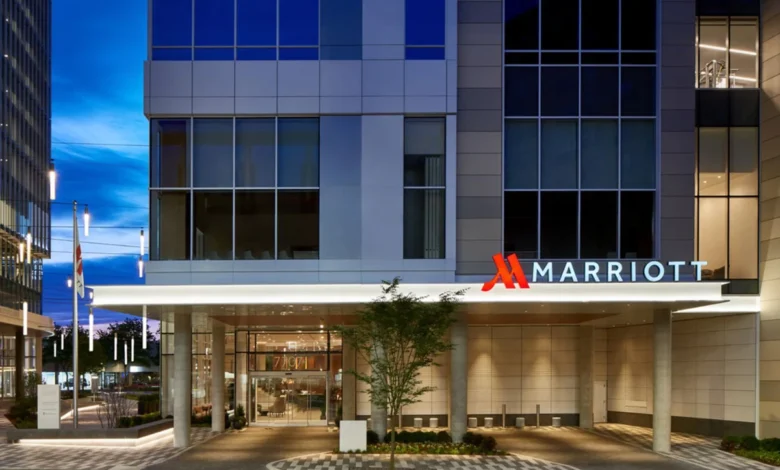
Marriott International, the world’s largest hotel company by room count, has confirmed that it is implementing a round of corporate job cuts affecting its global workforce. The restructuring initiative, which was officially acknowledged by company representatives on Wednesday, targets various administrative and operational departments at the corporate level, though property-level hotel staff have been explicitly excluded from the reductions. While leadership at the Maryland-based hospitality giant has declined to disclose the exact magnitude of the layoffs, online employee discussions and industry insiders point toward concentrated impacts within human resources, information technology, guest relations, and quality assurance divisions.
The move marks a notable shift in operational strategy for the lodging titan as it navigates a complex macroeconomic environment characterized by fluctuating travel demand, inflationary pressures on operational overhead, and a broader industry-wide push toward technological integration and digital efficiency.
Scope and Targeted Corporate Disciplines
According to corporate communications and internal disclosures shared by affected personnel across professional networking platforms, the job reductions are not uniform across the enterprise but rather strategic trims within specific administrative ecosystems. Marriott has characterized the move as an effort to streamline operations within "some corporate disciplines."
The departments bearing the brunt of these structural adjustments include human resources, where automation and centralized talent management platforms have increasingly reduced the need for large, legacy personnel teams. Similarly, corporate IT infrastructure and systems management divisions have faced downsizing as the hospitality sector leans heavily toward cloud-based property management systems, outsourced technology vendors, and artificial intelligence-driven customer service solutions. Additionally, corporate-level guest complaints resolution desks and brand quality assurance oversight teams are undergoing reorganization.
Crucially, the company has emphasized that property-level operations remain insulated from these corporate-level cuts. Housekeeping personnel, front desk agents, food and beverage staff, property general managers, and on-site maintenance crews at Marriott’s thousands of franchised and managed hotels globally will not see reductions as part of this specific initiative. This distinction underscores that the restructuring is an overhead-reduction exercise aimed at corporate headquarters and regional support offices rather than a contraction of daily hospitality services delivered to guests.
Background Context and Recent Financial Trajectory
To understand the catalysts behind Marriott’s corporate restructuring, it is necessary to examine the company’s recent financial performance and the post-pandemic trajectory of the global hospitality industry. In the years immediately following the disruptions of 2020 and 2021, Marriott experienced a vigorous recovery fueled by pent-up consumer demand for leisure travel, commonly referred to as revenge travel. Average daily rates (ADRs) surged across luxury, premium, and select-service tiers, allowing major hotel chains to post robust revenue figures and expand their global pipelines.
However, as the post-pandemic rebound normalizes, the macro-environment has grown increasingly challenging. Corporate travel—a vital, high-margin revenue stream for Marriott and its competitors—has recovered at a slower and more erratic pace. Businesses have adopted permanent hybrid work models, reduced travel budgets, and increasingly relied on video-conferencing technology for internal meetings and client interactions. Simultaneously, persistent global inflation has driven up labor, food, and utility costs, compressing operating margins across the hospitality ecosystem.
Marriott’s corporate leadership, helmed by President and Chief Executive Officer Anthony Capuano, has continuously emphasized operational agility and margin expansion. In recent quarterly earnings calls, executives have highlighted the imperative to leverage technology to drive efficiency and reduce administrative friction. The decision to trim corporate headcounts aligns with a broader corporate philosophy of lean management, ensuring that administrative overhead scales efficiently relative to overall system-wide growth.
Chronology of Structural Shifts at Marriott International
Corporate restructurings at Marriott are rarely isolated events; rather, they reflect an ongoing evolution in how large-scale hospitality enterprises manage global footprints. A review of the company’s structural adjustments over recent years reveals a pattern of periodic organizational streamlining:
- Pre-2020 Expansion: Following its monumental $13 billion acquisition of Starwood Hotels & Resorts in 2016, Marriott operated with an expanded administrative footprint, integrating diverse brand portfolios and disparate corporate cultures into a unified global engine.
- The 2020 Pandemic Disruption: The onset of COVID-19 forced unprecedented contraction across the entire travel sector. Marriott implemented widespread furloughs, salary reductions, and localized layoffs as global occupancy rates plummeted to historic lows.
- The 2022–2023 Post-Recovery Realignment: As travel demand rebounded, Marriott consolidated several corporate functions, moving into its state-of-the-art, glass-walled global headquarters in Bethesda, Maryland. The move was designed to foster collaboration, yet it also highlighted a transition toward more modern, flexible corporate workspaces.
- Late 2024 Corporate Right-Sizing: The current confirmation of job cuts represents a targeted effort to optimize administrative workflows, removing layers of middle management and consolidating technology infrastructure to counteract softening profit margins and slower corporate travel growth.
Official Responses and Stakeholder Reactions
Marriott International has maintained a measured public posture regarding the restructuring. In an official statement provided to media outlets, a company spokesperson reiterated the organization’s commitment to long-term growth while acknowledging the difficult nature of workforce reductions.
"As part of Marriott International’s ongoing efforts to optimize our operations and support our properties and owners more effectively, we are making targeted organizational changes within some of our corporate disciplines," the company statement read. "These decisions are never easy, as they impact valued colleagues. We are committed to supporting those affected through this transition with severance packages, outplacement services, and assistance in identifying new career opportunities."
Labor advocates, industry analysts, and investor relations observers have offered varied interpretations of the announcement. While Wall Street typically views corporate overhead reduction favorably in terms of earnings per share (EPS) and operational efficiency, labor groups have expressed concern over the human toll of corporate downsizing, particularly within specialized support roles like human resources and quality assurance.
Hospitality unions and employee advocacy networks have monitored the situation closely, emphasizing that corporate employees—while often separated from unionized property-level workers—face significant vulnerability in an economic climate where white-collar job openings in the tech and administrative sectors have narrowed compared to previous years.
Broader Industry Implications and Market Analysis
Marriott’s corporate downsizing is not occurring in a vacuum. Across the global hospitality and tourism landscape, major hotel brand groups, including Hilton Worldwide, Hyatt Hotels Corporation, and InterContinental Hotels Group (IHG), have similarly focused on cost discipline and digital transformation.
The Rise of Automation and Artificial Intelligence
One of the primary drivers behind corporate job reductions in IT and customer service is the rapid acceleration of artificial intelligence and automated guest interaction platforms. Chatbots handle a growing percentage of routine guest inquiries, mobile check-ins and digital room keys reduce front desk administrative burdens, and automated backend data analytics streamline quality assurance monitoring. As these technologies mature, the necessity for large corporate teams dedicated to manual data processing, basic IT support, and routine guest complaint resolution diminishes significantly.
Asset-Light Business Model Dynamics
Marriott operates primarily on an "asset-light" business model, meaning it predominantly manages or franchises hotels rather than owning the physical real estate. In an asset-light model, the company’s primary product is its brand equity, loyalty program (Marriott Bonvoy), and central reservation systems. Consequently, corporate overhead represents a critical expenditure category. By trimming corporate fat, Marriott can protect its fee-based revenue streams and maintain strong returns for shareholders, even if macroeconomic conditions introduce volatility into global travel patterns.
Implications for the Labor Market
The displacement of corporate personnel in specialized disciplines such as human resources and information technology underscores a broader contraction in white-collar corporate support roles across corporate America. As companies prioritize automation and efficiency, professionals in administrative support functions are increasingly forced to upskill or pivot toward roles that require complex strategic oversight, data science expertise, or direct human-centric operational management.
Looking Ahead
As Marriott International presses forward with its strategic realignment, the ultimate test of these corporate reductions will lie in their impact on property-level support and owner satisfaction. Hotel owners and franchisees—who pay significant fees to affiliate with Marriott brands—rely heavily on robust corporate infrastructure for marketing, loyalty program distribution, and operational guidance.
Leadership at Marriott maintains that the current restructuring will ultimately enhance responsiveness and agility, allowing the company to support its sprawling portfolio of over 30 hotel brands more efficiently. However, as the travel industry braces for a dynamic economic future defined by technological disruption and shifting consumer habits, balancing cost containment with operational excellence remains a delicate and continuous challenge for the world’s leading hospitality enterprise.