Michigan Governor Puts Brakes on Line 5 Pipeline Permits Following Supreme Court Ruling and Environmental Concerns

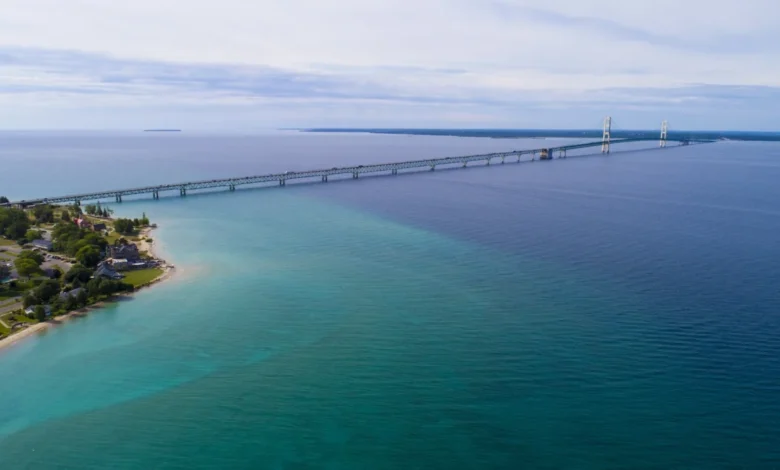
Michigan Governor Gretchen Whitmer announced a decisive halt to both pending and previously issued state permits tied to the controversial plan to replace a vital segment of the Line 5 oil pipeline beneath the Straits of Mackinac. The decision marks a significant development in the nearly decade-long battle over the fossil fuel infrastructure that crosses some of the nation’s most ecologically sensitive and culturally significant waterways.
Whitmer’s directive instructs environmental regulators at the Michigan Department of Environment, Great Lakes, and Energy (EGLE) to reexamine the full scope of environmental and ecological threats posed by the infrastructure project. This pause comes in direct response to a pivotal Michigan Supreme Court ruling handed down earlier this year. In that decision, state justices invalidated a permit issued by a separate state agency, ruling that the initial environmental review failed to comprehensively evaluate potential harms to the surrounding ecosystem.
The administrative action throws fresh uncertainty into the multi-billion-dollar initiative spearheaded by Calgary-based Enbridge Energy. The project aims to encase a replacement segment of the 645-mile pipeline inside a protective concrete tunnel buried deep beneath the lakebed where Lake Michigan and Lake Huron meet. While federal entities, including the U.S. Army Corps of Engineers, have previously granted certain approvals for the tunnel design, the state-level regulatory freeze leaves the immediate future of the project hanging in the balance.
The Chronology of a Decades-Old Energy Corridor
To understand the weight of Governor Whitmer’s recent executive intervention, it is necessary to examine the long history of Line 5. Constructed in 1954 by Lakehead Pipe Line Company—a predecessor to Enbridge—the pipeline was designed to transport light crude oil and natural gas liquids from Western Canada through Wisconsin and Michigan, terminating in Ontario, Canada.
For the vast majority of its 645-mile journey, the pipeline operates quietly underground. However, the infrastructure becomes visibly contentious along a four-mile stretch where it splits into two parallel pipes resting directly on the lakebed in the Straits of Mackinac. This narrow channel is a dynamic hydrological highway, experiencing currents that flow in both directions and at speeds up to ten times greater than those found in the Detroit River.
Over the past decade, public scrutiny has intensified dramatically. Environmental advocates, commercial fishermen, and indigenous tribes have raised alarms regarding the vulnerability of the dual pipelines, which are more than 70 years old. These concerns were amplified in 2018 when an anchor from a commercial vessel struck and dented the pipeline infrastructure, underscoring the daily risks posed by maritime traffic in the straits.
In response to mounting public pressure and mounting fears of an ecological catastrophe, Enbridge and the State of Michigan reached an agreement under former Governor Rick Snyder in 2018 to construct a protective underground utility tunnel. However, when Gretchen Whitmer assumed the governorship in 2019, her administration quickly pivoted toward a more aggressive stance, asserting that the existing dual pipelines violated the public trust doctrine and demanding their complete decommissioning. The subsequent legal battles have wound their way through state and federal courts, transforming Line 5 into a national flashpoint for climate policy, Indigenous treaty rights, and energy security.
Environmental Risks and Cultural Significance
The Straits of Mackinac are not merely a commercial shipping lane; they represent a ecological nexus of global importance. The surrounding region harbors delicate coastal wetlands, rare ecosystems, and critical fish spawning grounds that support local economies, commercial fisheries, and thriving tourism industries. Oceanographers and environmental scientists have repeatedly warned that a major hydrocarbon release in the straits could devastate hundreds of miles of shoreline across multiple Great Lakes, contaminating municipal drinking water sources and inflicting billions of dollars in economic damage.
These environmental stakes are compounded by profound cultural considerations. The straits hold deep sacred value for the Anishinaabe peoples, serving as a foundational anchor in their creation narratives and functioning as ancestral burial grounds. All twelve federally recognized Native American tribes in Michigan have maintained a unified, vocal opposition to Line 5, arguing that the pipeline constitutes an ongoing, unacceptable threat to their sovereign resources and cultural heritage.
"No matter who the governor is, it’s in all of our interests to keep the Great Lakes free of oil and to transition away from Line 5," said Laura Berglan, a senior attorney with the environmental legal nonprofit Earthjustice, which represents the Bay Mills Indian Community, the Sault Ste. Marie Tribe of Chippewa Indians, and the Little Traverse Bay Bands of Odawa Indians. "We need to protect our shared resources and our tribal resources for the future."
The Ripple Effects of Regional Incidents
Governor Whitmer’s permit freeze did not occur in a vacuum. Just weeks prior to the state’s announcement, regulators in Wisconsin confronted an operational emergency involving a separate segment of the Line 5 network. Enbridge was forced to temporarily suspend work along a reroute project in Wisconsin after a significant spill released approximately 1.3 million gallons of drilling fluid and related materials into the environment.
While the Wisconsin incident involved drilling fluids rather than crude oil, it served to heighten anxiety among regulators and environmental watchdogs regarding Enbridge’s operational safety practices. Critics argue that accidents of this nature demonstrate the inherent volatility of managing aging pipeline networks across sensitive terrain.
Governor Whitmer invoked the specter of environmental disaster during her announcement, emphasizing that her administration’s overarching objective has consistently been the complete removal of the pipeline from the water.
"I have always said my ultimate goal is to get Line 5 out of the water," Whitmer stated. "Just one spill threatens irreparable damage to our water, our economy, and our way of life." With her second and final term concluding at the start of the year, the administrative pause serves as one of the final major environmental policy levers pulled by her administration.
Corporate Response and Defense of Infrastructure
Enbridge Energy has vigorously defended the operational integrity of Line 5, maintaining that the pipeline remains safe, structurally sound, and essential to regional energy stability. Company executives point out that the pipeline supplies vital propane and petroleum products that heat homes, fuel vehicles, and power manufacturing facilities throughout Michigan, the broader Midwest, and Ontario.
In a formal statement responding to the governor’s decision, Enbridge spokesperson Ryan Duffy emphasized the company’s extensive compliance history and its commitment to the regulatory process. Duffy noted that the pending EGLE permit was intended to serve as a routine renewal of authorization originally granted in 2021.
"Line 5 delivers the energy people depend on every day," Duffy said. "At Enbridge, we remain committed to that purpose and equally committed to safeguarding the Great Lakes."
Enbridge contends that building the replacement segment inside a state-of-the-art, concrete-lined tunnel beneath the lakebed would virtually eliminate the risk of a pipeline strike by marine anchors while providing unprecedented containment capabilities. The company argues that delaying or blocking the tunnel project counterproductively leaves the existing, decades-old exposed pipelines resting directly on the lakebed for a longer duration, thereby failing to achieve the very risk-reduction outcomes desired by environmentalists.
Reactions from Environmental Advocates and Political Implications
The governor’s decision has been hailed as a major victory by environmental groups that have mobilized against the pipeline for years. Organizations such as the Groundwork Center for Resilient Communities praised the administration for translating previous rhetoric into tangible regulatory action.
"I think this is a really, really excellent step in the right direction," remarked Ashley Rudzinski, climate and environment program director for the Groundwork Center. "We’re seeing the Whitmer administration, finally, putting some real strength behind the words that she had already spoken."
As the political landscape in Lansing prepares for a transition to the administration of Governor-elect Jocelyn Benson—a fellow Democrat—tribal legal representatives and environmental advocates are expressing cautious optimism that the state’s defensive posture regarding the Great Lakes will persist. While executive leadership will change hands, the underlying legal maneuvers involving federal courts, state agencies, and tribal sovereignty will continue to shape the trajectory of regional energy policy.
Broader Economic and Energy Implications
The ongoing standoff over Line 5 encapsulates the complex tension at the heart of modern American infrastructure policy: the immediate, everyday reliance on fossil fuel distribution networks versus the long-term imperative to transition toward renewable energy economies and protect irreplaceable natural resources.
Economically, a forced shutdown or prolonged delay of Line 5 carries potential ramifications for regional energy pricing and supply chains, particularly regarding propane heating supplies in Michigan’s Upper Peninsula and industrial manufacturing operations in Ontario. Conversely, proponents of decommissioning argue that the economic costs of a catastrophic crude oil spill in the Great Lakes basin would dwarf any short-term logistical disruptions associated with transitioning to alternative energy and supply routes.
As the legal battles grind onward and state environmental regulators absorb the mandate to conduct a more rigorous, expansive review of the project’s potential harms, the future of the Straits of Mackinac pipeline remains uncertain. What is clear, however, is that the regulatory pause has raised the stakes for Enbridge Energy, emboldened tribal and environmental coalitions, and permanently altered the landscape of environmental governance in the Great Lakes state.
Related posts: