The Curious Case of the Oxnard Coffee Dispute and the Changing Standards of Hotel Hospitality

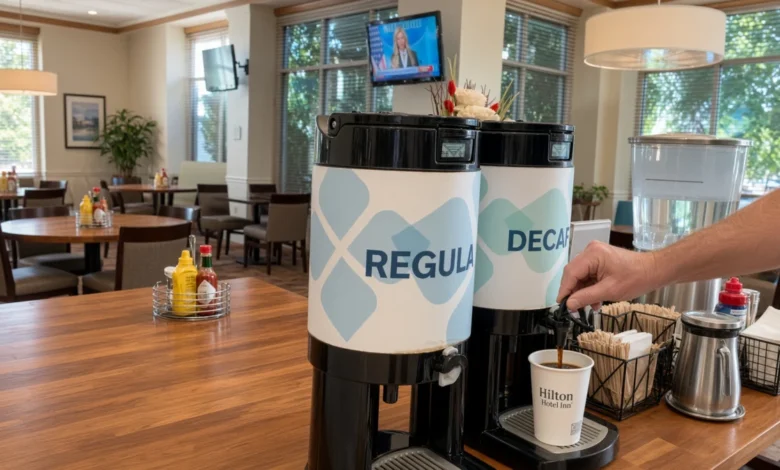
A seemingly minor request for a morning cup of coffee at a Hilton-branded property in Oxnard, California, has escalated into a public relations quandary, highlighting the complexities of guest loyalty programs and the increasingly rigid operational boundaries between adjoining hotels. The incident, involving John Konrad, a Hilton Diamond member and founder of the maritime news outlet gCaptain, began when he found his primary lodging, the Hilton Garden Inn, unable to provide coffee service. Following staff direction to visit the neighboring Homewood Suites—a property under the same management—Konrad was met with a series of confrontations that have sparked a broader debate regarding service expectations, the treatment of elite status members, and the growing trend of "breakfast policing" in the hospitality industry.
The incident unfolded on the morning of November 21, 2026, creating a digital trail of frustration that played out across social media platforms. According to Konrad’s account, the breakdown in service began at the Hilton Garden Inn, where a lack of available coffee prompted him to walk to the adjacent Homewood Suites. While he successfully obtained the beverage, the encounter quickly shifted from a simple hospitality request to a security-oriented interrogation. Konrad reported that upon attempting to return to his primary hotel, he was followed into the parking lot by a manager from the Homewood Suites, who warned him against accessing the complimentary breakfast service provided to guests of that specific property.

The friction intensified when Konrad attempted to re-enter the Homewood Suites facility later that morning to access the lobby area. His digital key—a feature standard to the Hilton Honors mobile app—failed to grant him entry, necessitating assistance from hotel staff. Once inside, the interactions became increasingly adversarial. The manager on duty reportedly insisted on verifying his room number multiple times, despite Konrad’s stated intent to simply retrieve coffee from a station located outside the primary dining area. As the interaction continued, the discussion shifted toward the specific amenities offered by the Homewood Suites, including their signature overnight oats. When Konrad expressed interest in the item, he was denied access, leading to a heated verbal exchange. The situation reached a breaking point when the manager suggested that Konrad, a frequent traveler with top-tier Hilton Honors status, should attempt to "calm down," a directive that typically serves to exacerbate, rather than resolve, guest dissatisfaction.
Structural Context and Operational Ambiguity
The two hotels in question, the Hilton Garden Inn Oxnard and the Homewood Suites by Hilton Oxnard/Camarillo, operate under the umbrella of the Mian Companies. This shared ownership creates a unique operational dynamic where guests are often encouraged to utilize cross-property amenities. For instance, signage at the Hilton Garden Inn directs guests to utilize the fitness center located at the Homewood Suites, particularly during periods of ongoing construction or facility maintenance at the Garden Inn property.
This shared infrastructure, however, creates a gray area regarding food and beverage entitlements. Under the standard Hilton Honors program, Gold and Diamond members staying at a Hilton Garden Inn in the United States are eligible for a $10 daily food and beverage credit per person, rather than a complimentary breakfast buffet. Conversely, the Homewood Suites brand model typically includes a complimentary breakfast for all registered guests, regardless of status. The discord in Oxnard appears to stem from a lack of clear, consistent policy enforcement regarding how guests from the "credit-based" model should interact with the "buffet-based" model when the properties are physically connected or share management.

The Phenomenon of Breakfast Security
The Oxnard dispute is not an isolated incident but rather a symptom of a growing concern among hotel operators: the unauthorized consumption of complimentary breakfast by non-guests. In recent years, limited-service properties have struggled with the rising cost of food supplies and the logistical difficulty of vetting every person who enters a breakfast area.
Industry data suggests that many hotels now operate on an "honor system," where the social cost of verifying every guest’s identity is deemed higher than the marginal cost of the food consumed by an occasional non-guest. However, as food inflation impacts the bottom line of franchised properties, some management teams have adopted more aggressive surveillance tactics. This "breakfast policing" often results in the exact scenario observed in Oxnard: an overzealous attempt to protect assets that ends up alienating high-value, legitimate guests.
For a Hilton Diamond member, the expectation is that their status facilitates a seamless experience. When an individual is treated with suspicion—or, as Konrad described, "cross-examined over chia seeds"—the fundamental value proposition of the loyalty program is undermined. The situation is further complicated by the human element; Konrad noted that his physical appearance, including clothing stained from previous boat repairs, may have contributed to the staff’s heightened suspicion. This highlights an implicit bias in hospitality, where the perception of a guest’s socioeconomic status or current state of dress can dictate the level of service and scrutiny they receive.

Historical Precedents and the "Coffee Problem"
The importance of accessible, high-quality coffee cannot be overstated in the context of business travel. For travelers crossing multiple time zones or adhering to strict business schedules, the availability of coffee is often the primary metric by which a hotel’s service quality is judged.
The industry has a storied history of failures in this department. In 2015, a high-profile incident occurred at the Sheraton Macao, where a guest was effectively "investigated" by staff after requesting additional pots of coffee for his suite. The staff’s insistence on verifying the mechanical output of the coffee machine rather than providing the requested service resulted in a corporate apology and a compensatory offer of loyalty points. The Oxnard incident echoes these previous failures, demonstrating that when hotel staff prioritize policy adherence over common-sense hospitality, the resulting reputational damage often far exceeds the cost of a few cups of coffee or a bowl of oats.
Implications for Hotel Management
The fallout from the Oxnard incident suggests that there is a critical need for standardized communication between properties that share ownership or physical proximity. If guests are encouraged to use shared facilities like gyms, the hotel must establish a clear protocol for the consumption of food and beverage amenities to avoid public confrontations.

Furthermore, the incident serves as a case study in the risks of escalation. By choosing to follow a guest into a parking lot to issue a warning, the manager shifted the dynamic from a customer service issue to a confrontational security matter. In the modern era of social media, where any interaction can be recorded and disseminated instantly, hotel staff are increasingly required to balance the protection of property assets with the necessity of maintaining a positive brand image.
Ultimately, the dispute at the Oxnard properties is a reminder that hospitality is as much about psychological comfort as it is about physical amenities. When a guest feels interrogated, the physical environment of the hotel—no matter how upscale—becomes hostile. For Hilton and its franchisees, the lesson is clear: the cost of providing a guest with a cup of coffee is negligible compared to the long-term impact of a public service failure. As the travel industry continues to evolve, the challenge for managers will be to balance the enforcement of brand standards with the human element that has traditionally defined the hotel experience. Until such policies are refined and communicated clearly to both staff and guests, the risk of "breakfast disputes" will remain an avoidable, yet recurring, facet of the modern travel landscape.