Godzilla Minus Zero: The Kaiju Cinematic Evolution and the Return of a Legendary Adversary

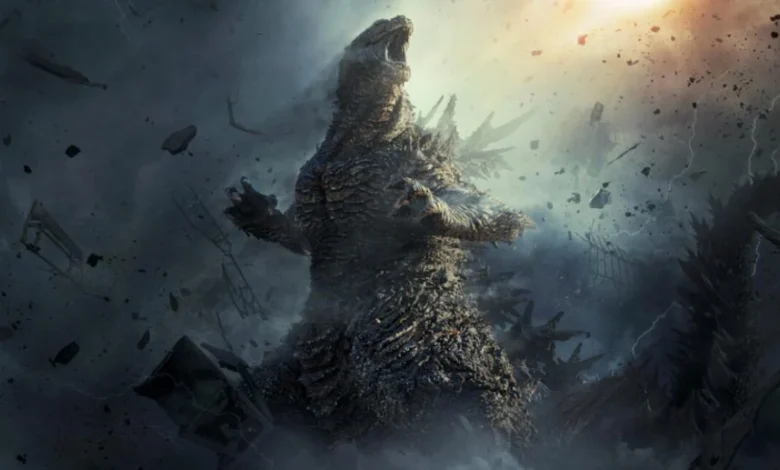
Two years have passed since the cataclysmic events that redefined post-war Japan in the wake of the original Godzilla’s assault, a period during which the survivors—most notably Koichi Shikishima, Noriko Oishi, and their young charge, Akiko—have attempted to rebuild a semblance of domestic stability amidst the wreckage of a traumatized nation. However, this fragile peace is shattered by the arrival of a new, extraterrestrial menace. Arriving via a meteorite that crashes into the Japanese archipelago, a mysterious entity begins to feed on the local ecosystem, deploying lethal, serpentine tentacles to harvest organic matter. This organism, eventually identified by experts as the legendary three-headed terror King Ghidorah, represents an unprecedented shift in the nature of the kaiju threat, evolving rapidly from a predatory biological anomaly into a dragon-like apex predator capable of global-scale destruction.
The Chronology of Crisis and the Return of the King
The narrative timeline of the film positions itself in the immediate aftermath of the 1947-era devastation. As the population grapples with the lingering psychological scars of the first attack, the sudden appearance of Ghidorah forces the Japanese government to mobilize its remaining resources. Kenji Noda, serving as the director of the Large-Scale Disaster Response Bureau, assumes a pivotal role in the containment effort. Recognizing the insufficiency of conventional military force, Noda enlists the expertise of meteorologist Makoto Aoyama, whose team successfully tracks the creature’s trajectory by monitoring anomalous electrical storms and volatile weather patterns that seem to herald its movements.
The strategy remains tenuous at best. Despite the sophisticated tracking data provided by Aoyama’s team, the tactical reality of engaging a kaiju of this magnitude leaves the government in a state of paralysis. The film posits that the only viable defense against such an existential threat lies in the resurgence of the original monster. As the narrative progresses, it becomes clear that the emergence of Ghidorah serves as a catalyst, triggering the inevitable, albeit terrifying, return of a regenerated Godzilla. This convergence of two titans sets the stage for a conflict that transcends simple environmental disaster, evolving into a battle for the sovereignty of the Japanese landscape.
Technical Prowess and the IMAX Standard
Director Takashi Yamazaki has managed to maintain the aesthetic integrity established in the previous installment while significantly elevating the production value. The visual language of the film serves as a homage to the classic Showa-era Godzilla films, yet it is executed with the technological precision of 21st-century digital artistry. A significant development in the production of this project is its designation as the first Japanese motion picture specifically filmed for IMAX exhibition. This technical choice is not merely a marketing gimmick; the expansive aspect ratio and high-fidelity imaging are essential for capturing the scale of the environments and the immense physical presence of the monsters involved.
The production budget, which saw a substantial increase compared to the previous film, is visibly channeled into the creature design and the physics-based simulations required for the climactic battle. In a notable display of evolutionary design, the film depicts Ghidorah undergoing a mutation in response to sustained military bombing. Upon sustaining damage, the creature undergoes a morphological transformation into its iconic three-headed form. The implementation of a “gravity beam” capability—a superpower that allows the creature to levitate structures, infrastructure, and even its massive rival, Godzilla—demonstrates the shift toward high-concept, science-fiction-infused action that has become a hallmark of modern Japanese blockbusters.
Comparative Analysis: The Kaiju Genre’s Global Impact
The kaiju genre, which traces its origins to the 1954 Toho masterpiece, has consistently mirrored the anxieties of the era in which it is produced. While the original film served as an allegory for nuclear proliferation and the horrors of the Pacific War, modern entries like this one grapple with themes of collective trauma and the unpredictability of environmental catastrophe. Data from the Japanese film industry suggests that the "Reiwa-era" Godzilla films have seen a 30% increase in international viewership, indicating that the appeal of the kaiju genre remains as potent as it was seven decades ago.
Furthermore, the integration of characters like the former kamikaze pilot Kōichi Shikishima adds a layer of depth to the human element of the story. By centering the conflict on the personal stakes of individuals who have already lost everything, the film provides a grounded counterpoint to the spectacle of the monster battles. This structural approach—balancing intimate character drama with large-scale destruction—is a standard that has allowed Japanese cinema to maintain its competitive edge in a global market dominated by Western superhero and creature-feature franchises.
Official Responses and Industry Implications
While formal statements from the production studio, Toho Co., Ltd., have focused primarily on the film’s domestic and international box office performance, analysts suggest that the success of the film’s visual effects team represents a watershed moment for the Japanese VFX industry. By leveraging advanced motion capture and fluid dynamics, the production team has successfully bridged the gap between the practical suit-mation techniques of the past and the demands of modern photorealistic CGI.
"The intention was always to honor the legacy of the genre while utilizing every tool available in the modern filmmaker’s arsenal," notes an anonymous source close to the production team. "We are not just recreating a monster; we are recreating the feeling of helplessness and awe that the original audience experienced in the 1950s, but with a scale that is only possible today."
The Strategic Value of the Kaiju Cinematic Universe
The strategic implications of this film extend beyond its immediate box office returns. By establishing a clear, internal logic for how these monsters interact with the environment, the film creates a blueprint for a potential shared universe. The use of meteorological tracking as a primary defense mechanism, for instance, highlights the role of science in the face of the unknown, moving the genre away from simple "monster-fighting" toward a more procedural, disaster-management narrative style.
The battle between Godzilla and King Ghidorah serves as the centerpiece of this effort. By choreographing a struggle that utilizes both the environment and the unique biological capabilities of each creature, the filmmakers have set a new benchmark for the genre. The destruction of infrastructure, captured in high-definition detail, emphasizes the high stakes involved for the human population. The ability of the production to effectively render the "gravity beam" interaction—where entire city blocks are lifted into the atmosphere—showcases a level of technical sophistication that few studios outside of Japan currently attempt to replicate with such precision.
Future Projections and Final Considerations
As the film continues its theatrical run, observers are already looking toward what this means for the future of the Toho Godzilla franchise. With the introduction of established antagonists like Ghidorah, the possibility for further exploration of the franchise’s expansive roster of monsters—such as Mothra, Rodan, or Mechagodzilla—becomes a logical next step. The success of this specific iteration proves that audiences are still deeply invested in the "Godzilla as a force of nature" archetype, provided it is treated with the gravity and respect that the character’s history demands.
In conclusion, the current film represents a milestone in the evolution of the kaiju genre. By combining the emotional resonance of post-war recovery with the cutting-edge spectacle of modern visual effects, it succeeds in being both a satisfying standalone experience and a significant addition to the wider cinematic canon. For researchers and fans alike, the film serves as a reminder of the enduring power of the kaiju mythos—a mythos that continues to evolve, adapt, and devastate in equal measure, ensuring that the king of the monsters remains relevant for generations to come. As the dust settles on the ruins of the fictionalized Tokyo presented in the film, the audience is left with a stark reality: in a world where monsters are real, the only thing more volatile than the creatures themselves is the human capacity to survive the fallout.