New York City Horse-Drawn Carriage Operators File Federal Lawsuit Challenging Newly Passed Ban as Unconstitutional

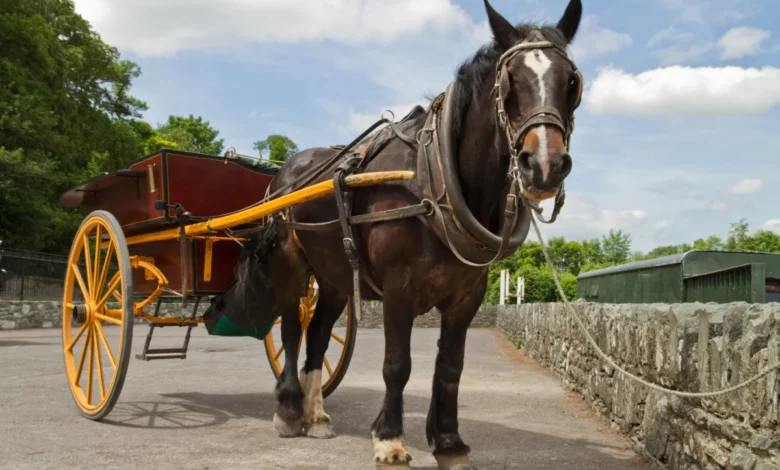
The ongoing debate over the future of Central Park’s iconic horse-drawn carriages reached a critical legal juncture on Thursday, November 20, 2026, when a union representing carriage owners and operators filed a federal lawsuit against New York City. The legal action comes on the heels of a decisive New York City Council vote earlier that same day, which successfully passed legislation to ban horse-drawn carriages across all five boroughs. Under the newly enacted measure, supported by Mayor Zohran Mamdani, the historic 168-year industry faces a mandatory phase-out, with a complete sunset date set for June 1, 2028.
The federal lawsuit seeks an immediate injunction and a permanent ruling striking down the ban, arguing that the city’s legislation unlawfully strips operators of their livelihoods, violates established property rights, and bypasses valid commercial contracts. Plaintiffs characterize the city’s legislative maneuver as heavy-handed and economically devastating, asserting in court filings that the city’s approach can be summarized as an effort to "immediately cripple the owners, ignore property interests and contracts, and maybe compensate."
Background Context and Legislative Anatomy
The ban represents the culmination of decades of tension between animal welfare advocates, tourists, carriage drivers, and local politicians. Horse-drawn carriages have been a staple of New York City tourism since 1858, weaving through the scenic paths of Central Park and offering visitors a nostalgic glimpse into nineteenth-century transit. For generations, the industry operated with relative stability, serving as both a prominent symbol of the city’s romanticized past and a lucrative commercial enterprise supporting dozens of independent owner-operators, drivers, stable hands, and veterinarians.
However, the industry has faced mounting scrutiny in recent years. Animal rights organizations, most notably groups like NYCLASS (New Yorkers for Clean, Livable, and Safe Streets), have campaigned aggressively for the elimination of carriages. Activists have frequently raised concerns over the welfare of the horses, citing the challenges the animals face when navigating congested modern Manhattan traffic, enduring extreme seasonal weather conditions, and spending long hours standing on hard asphalt surfaces.
The legislative momentum for the ban accelerated significantly following a tragic incident earlier this year. An 18-year-old tourist suffered fatal injuries after jumping from a runaway carriage in Central Park—the first fatality recorded since the introduction of the carriage trade to the park. While investigators and industry representatives debated the precise causes of the accident, the tragedy galvanized political opposition, providing the final impetus for the New York City Council to take definitive legislative action.
Chronology of Events Leading to the Ban
- 1858: Horse-drawn carriages officially begin operating in Central Park, establishing a transit and tourism tradition that would endure for more than a century and a half.
- Decades of Advocacy (2000s–2020s): Animal rights groups ramp up lobbying efforts, introducing various city council bills aimed at replacing horse-drawn carriages with electric vintage-style replica vehicles.
- Early 2026: An 18-year-old tourist dies after jumping from a runaway carriage in Central Park, marking the first recorded fatality in the history of the trade and intensifying public safety debates.
- November 20, 2026: The New York City Council passes legislation banning horse-drawn carriages across all five boroughs. Mayor Zohran Mamdani announces plans to fully sunset the industry by June 1, 2028.
- Late November 20, 2026: A union representing carriage owners and operators files a federal lawsuit challenging the constitutionality of the ban, citing violations of due process, property rights, and existing contracts.
Official Responses and Stakeholder Perspectives
The passage of the ban and the subsequent federal lawsuit have exposed deep divisions among city leadership, labor representatives, and animal welfare organizations.
Mayor Zohran Mamdani defended the City Council’s decision as a necessary step toward modernizing New York City’s public policy and animal protection standards. In a public statement following the bill’s passage, Mamdani emphasized that municipal laws must evolve alongside changing societal values. "Our city has changed, and now it is time for our laws to change, too," Mamdani stated, highlighting the administration’s commitment to prioritizing public safety and humane treatment.
The new law also outlines provisions for the "humane disposition" of the horses currently working in the industry, an issue that has sparked intense debate regarding the logistics of rehoming dozens of large, working animals. City officials have maintained that provisions will be made to ensure the animals are transferred to reputable sanctuaries and rescue farms.
Conversely, the union representing the carriage workers argues that the city’s plan offers inadequate solutions for the humans whose financial survival depends on the trade. Carriage owners and drivers have invested significant capital in stable leases, veterinary care, specialized carriages, and licensed medallion systems. According to the federal complaint, the legislation disregards these investments, offering little to no meaningful economic transition or fair market compensation for displaced workers.
Legal experts observing the case note that the plaintiffs face a high legal hurdle in proving that the city exceeded its police power. Municipalities generally possess broad regulatory authority to legislate for the health, safety, and welfare of the public, which includes regulating or prohibiting certain commercial activities. However, the lawsuit’s focus on property interests, contractual interference, and potential regulatory takings may open a complex constitutional debate over whether the sudden elimination of a licensed, long-standing industry constitutes an unconstitutional taking of private property without just compensation.
Broader Economic and Cultural Implications
The potential elimination of New York City’s horse-drawn carriages carries significant symbolic and economic repercussions. For the tourism sector, the carriages have long served as an iconic marketing image for Manhattan, frequently featured in films, literature, and promotional travel guides. While proponents of the ban argue that modern electric carriages can easily absorb the sightseeing demand without the associated animal welfare controversies, traditionalists contend that the mechanical alternatives lack the authentic charm that draws millions of visitors annually.
Furthermore, the resolution of this federal lawsuit could establish a vital legal precedent for how municipalities across the United States manage transitions away from traditional, animal-based commercial industries. As urban centers increasingly re-evaluate the ethical dimensions of animal labor, local governments balancing economic protection for heritage workers against modern animal rights standards will be watching the proceedings in the federal court closely.
As the litigation unfolds, the timeline established by the city remains in place, keeping the June 1, 2028 sunset date active while the courts determine whether the 168-year-old tradition will be brought to an abrupt halt by judicial mandate or allowed to fight for its continued existence in the courtroom.
Related posts: