Delta Elevates the Skies with a Billion-Dollar Overhaul of its Premium Cabin Experience

The aviation industry is witnessing a significant shift in the definition of luxury travel as Delta Air Lines rolls out its most comprehensive refinement of the Delta One cabin to date. By integrating high-end culinary partnerships, designer collaborations, and a rigorous focus on personalized service, the airline is attempting to bridge the gap between boutique hotel hospitality and long-haul commercial flight. This initiative, which centers on a $1 billion investment in fleet and service upgrades, represents a strategic move to capture the high-spending demographic that increasingly prioritizes comfort and customization over basic connectivity.
A New Benchmark for In-Flight Hospitality
The centerpiece of Delta’s “next era” of travel is a reimagined dining and amenity program that mirrors the standards of top-tier steakhouses and luxury resorts. Central to this is the introduction of a new menu featuring high-quality proteins, including a Wagyu brioche burger, Hong Kong-style sea bass, and Japanese grilled salmon. These selections are presented on bespoke, Delta-branded tableware, marking a move away from standard airline catering toward a curated, restaurant-quality dining experience.
The service protocol has also seen a distinct upgrade. Flight attendants are now equipped to provide "fresh cracked pepper service," a small but symbolic gesture that brings the interactive table-side attention of a fine-dining restaurant into the cabin. This attention to detail extends to the beverage program, where the airline has introduced a curated list of sommelier-approved wines—notably, a Silver Oak Cabernet Sauvignon from Napa Valley—and the inclusion of Blanton’s Single Barrel Bourbon, served in its iconic horse-and-jockey-stopper mini-bottles.

For those traveling on transpacific routes, the airline has deepened its regional commitment. Flights to and from Tokyo-Haneda now feature a specialized sake program designed by the renowned brewery Dassai 45, complemented by regional menus developed in collaboration with Michelin-starred chef Norio Ueno.
The Evolution of the Cabin Environment
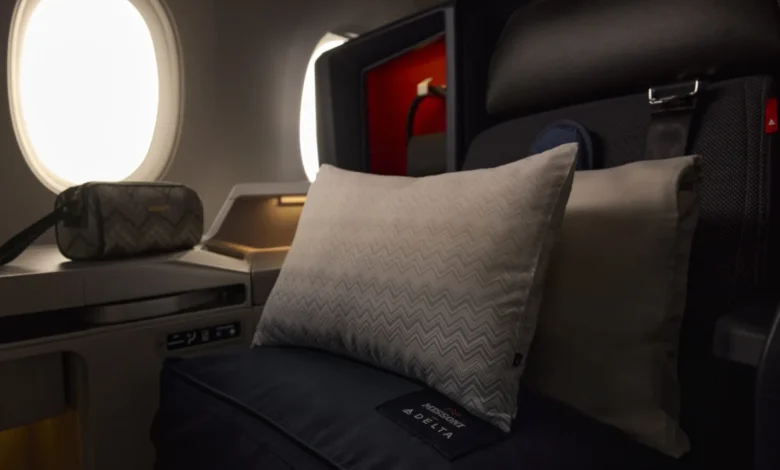
While the hardware of the flying experience—the suites themselves—is slated for a major physical transformation starting in 2027, the current cabin experience is being bolstered by a strategic partnership with Italian fashion house Missoni. This collaboration introduces a cohesive aesthetic, featuring Missoni-branded amenity kits, pillows, and bedding.
The amenity kits have been designed as "collectible" items, echoing the successful, long-standing tradition of KLM’s Delft Blue ceramic houses. By rotating the prints on these kits in sync with Missoni’s annual runway collections, Delta is tapping into the "in-the-know" culture of frequent travelers who value brand prestige and exclusive design. Beyond the aesthetics, the functional side of the cabin has been upgraded with Bombas compression socks and an over-the-seat mattress pad, adding approximately one-quarter inch of cushioning to the lie-flat experience.
Chronology of the Investment
Delta’s current strategy is the culmination of two decades of intensive customer research and market analysis. The airline’s board and leadership team began formulating the $1 billion investment roadmap in the early 2020s, identifying a growing consumer demand for "premium for all" experiences.

- 2023–2024: Extensive customer insights gathered via surveys and onboard focus groups identified specific pain points, such as the desire for more flexible meal timing and improved sleep quality.
- Late 2026: The official launch of the "next era" of Delta One, beginning with transoceanic routes departing from Los Angeles International Airport.
- 2027 and Beyond: The planned rollout of next-generation Delta One suites, which will feature expanded lie-flat seating, larger entertainment screens, and improved ergonomic features like dedicated glasses hooks. The service enhancements are also scheduled to propagate across the entire global network during this period.
Data-Driven Service Design
According to Stephanie Laster, Delta’s Managing Director of Onboard Experience, every aspect of the new service has been scrutinized for its performance at altitude. This includes engineering the exact temperature and moisture consistency of hot towels and perfecting the texture of whipped cream used for ice cream sundaes.
Data provided by the airline suggests that whiskey is currently the top-consumed spirit category among Delta One passengers. This statistic informed the decision to partner with Blanton’s, as market research indicated the brand was viewed as the "most premium" option among a competitive set of bourbons. Similarly, the "Lighter Later" dining option—which allows passengers to pre-select lighter, diet-specific meals or skip a heavy breakfast in favor of a to-go coffee and pastry—is a direct response to customer data showing that modern travelers prioritize flexible, wellness-oriented travel schedules over traditional, rigid meal services.
Implications for the Aviation Market
The move by Delta is a calculated effort to secure market share in the premium segment. By positioning itself as an "end-to-end" provider of high-end travel, the airline is competing not just with other domestic carriers, but with global flag carriers that have historically dominated the ultra-premium market.
The "premium for all" strategy, while currently focused on the Delta One cabin, has significant implications for the rest of the fleet. The airline has stated that it intends to eventually cascade these service improvements into the premium economy and economy cabins. This approach mirrors a broader industry trend where the "trickle-down" of amenities is used to build brand loyalty across all tiers of service.

However, the strategy is not without its challenges. Maintaining a high-touch service model—such as table-side pepper grinding and complex, multi-option dining—requires a significant investment in crew training and supply chain logistics. Scaling these operations globally by 2027 will test the operational efficiency of the airline’s catering partners and cabin crews.
Official Perspective and Future Outlook
Kristen Manion Taylor, SVP of Brand Experience, has framed these upgrades as a response to the changing definition of luxury. "Luxury is about having the experience designed around you," she stated in a recent press release. "Today’s premium traveler values choice as much as quality."
This shift toward personalization—exemplified by the ability to customize meal times and select specific menu items—suggests that the future of air travel will be defined by the capacity for individualization. As Delta prepares for the 2027 rollout of its next-generation suite, the industry will be watching closely to see if this blend of high-fashion branding, culinary excellence, and technological flexibility can sustain the premium price points required to justify such a massive capital expenditure.
As the airline moves to expand these offerings to its global network, the success of this strategy will be measured by passenger satisfaction scores and the airline’s ability to maintain these high standards across diverse international flight paths. For now, the integration of Italian luxury design and Kentucky bourbon culture in the skies serves as a clear signal that the battle for the premium traveler is shifting away from simple utility toward an immersive, lifestyle-driven experience.