The End of the Tesla Cybertruck Marks a Pivotal Shift Toward Efficiency in the Electric Vehicle Market

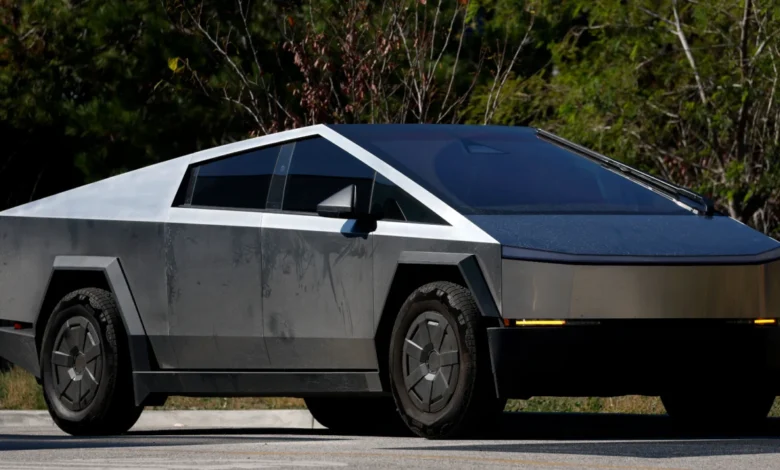
Tesla is set to cease production of the Cybertruck at its Texas Gigafactory next year, a strategic pivot that signals the end of a high-profile, if controversial, era for the electric vehicle manufacturer. The decision to retire the stainless-steel vehicle, which became a cultural touchstone for its unconventional, angular design and immense physical footprint, reflects a broader industry movement away from the "bigger is better" philosophy that dominated early electric truck development. This transition is not merely a reflection of Tesla’s internal production adjustments but a response to shifting consumer demands, economic pressures, and the practical realities of battery supply chain constraints.
A Chronology of the Cybertruck Era
The Cybertruck was first unveiled by Elon Musk in November 2019, promising a revolution in the pickup truck segment. Its path to production was fraught with delays, design iterations, and public scrutiny. By the time it officially hit the road in late 2023, the automotive landscape had already begun to shift.
The vehicle’s lifecycle was marked by a series of technical challenges, including high-profile recalls related to the accelerator pedal and various software and hardware adjustments. Despite the initial hype and massive pre-order numbers, the vehicle struggled to find a consistent foothold in the mass market. As production enters its final phase in 2026, the Cybertruck stands as a case study in the risks of prioritizing aesthetic novelty over the logistical and efficiency requirements of modern mass-market mobility.
The Problem of Mass and Efficiency
At the heart of the move away from vehicles like the Cybertruck is the issue of energy density and weight. The Cybertruck utilizes a 123-kilowatt-hour (kWh) battery, a massive component that accounts for approximately 1,600 pounds of the vehicle’s total curb weight. In the context of global EV supply chains, such a high capacity for a single vehicle is increasingly viewed as inefficient.
This trend mirrors the fate of other large-format electric trucks. Ford, for instance, ended production of the F-150 Lightning late last year, shifting its focus toward hybrid technology and more compact electric offerings. The battery packs in the F-150 Lightning, which ranged from 98 kWh to 131 kWh, required significant mineral resources—lithium, nickel, and cobalt—that are currently subject to volatile global pricing and supply chain bottlenecks. By scaling down vehicle size, manufacturers can significantly reduce the amount of raw materials required per unit, effectively allowing them to produce more vehicles with the same amount of battery inventory.
The Rise of the Compact and Mid-Sized EV
As automakers step back from the "behemoth" truck segment, the market is seeing a surge in interest for smaller, more versatile platforms. Ford’s upcoming "Fathom" pickup, slated for release next year, is designed to be roughly the size of the compact Maverick, signaling a return to practicality. Similarly, the Rivian R2, launched earlier this year, represents a more modest approach to the SUV segment compared to the flagship R1S. With an 88-kWh battery, the R2 offers a balance between range and resource efficiency that resonates with a wider demographic of consumers.
Startups like Slate are also entering the fray with compact, budget-conscious electric pickups designed to meet the actual daily utility needs of most drivers. These vehicles, often starting at price points well below $25,000, are gaining traction precisely because they address the primary barrier to entry for many potential EV buyers: affordability.
Economic and Political Context
The current state of the EV market is heavily influenced by the prevailing political and economic environment. Following the removal of federal EV incentives last year, the domestic market experienced a sharp decline in sales. The subsequent rise in fuel prices, exacerbated by global geopolitical instability, such as the ongoing conflict in Iran and its impact on oil markets, has kept the conversation surrounding alternative fuel sources front-and-center.
While the current administration has maintained a firm stance against climate-focused subsidies, the industry is bracing for potential shifts in policy should the political landscape change in 2028. Automakers are currently positioning their portfolios to be resilient regardless of federal support, prioritizing lower-cost, high-efficiency models that can compete on their own merits. The average transaction price for a new vehicle in the United States remains elevated at approximately $55,800, according to data from Cox Automotive, making the move toward smaller, more affordable EVs a logical step for manufacturers looking to capture a broader share of the consumer market.
Official Rationales and Future Implications
Tesla has framed the discontinuation of the Cybertruck as a necessary sacrifice to streamline production capacity for its newer initiatives, most notably the Cybercab. This dedicated autonomous vehicle is designed to operate with a 48-kWh battery, less than half the capacity of the Cybertruck. The shift underscores a fundamental change in how Tesla, and indeed the broader automotive industry, views the future of urban transport: moving away from heavy, private-ownership-focused trucks and toward smaller, highly efficient, and increasingly autonomous fleet vehicles.
The implications for road safety and urban infrastructure are significant. Large EVs with heavy battery packs present distinct challenges for infrastructure, such as parking garage load limits and increased wear on roadways. Furthermore, research consistently indicates that the increased mass of large electric trucks creates elevated risks for pedestrians and cyclists in the event of a collision. By pivoting to smaller, lighter designs, the industry is inadvertently aligning itself with broader public safety goals.
Conclusion: A Maturity Phase for the Industry
The end of the Cybertruck is not a failure of electric vehicle technology, but rather a maturity milestone for the industry. It marks the transition from the "demonstration" phase—where companies sought to prove that electric vehicles could be as big, fast, and powerful as their internal combustion counterparts—to an "optimization" phase.
In this new chapter, the priority is on sustainability, accessibility, and utility. By focusing on smaller battery packs and more compact vehicle architectures, automakers are better positioned to handle the realities of a constrained supply chain and a cost-conscious consumer base. While the Cybertruck will remain a notable artifact of automotive design history, its retirement signals that the future of the electric vehicle is, quite literally, smaller and more efficient than previously imagined. As manufacturers refine their lineups for the coming years, the focus will remain on delivering high-value, practical transportation that addresses the core needs of the modern driver while navigating the complexities of a volatile global economy.